

What is IP ratings?
IP ratings, or Ingress Protection ratings, serve as a measure of a device's resistance to the infiltration of external elements, including dust, dirt, and moisture. Developed by the International Electrotechnical Commission (IEC), this rating system has become a global standard for evaluating the robustness and reliability of electrical equipment. Comprising two numerical values, the IP rating provides a comprehensive assessment of a device's protective capabilities.
The first number in the IP rating signifies the level of defense against solid objects, such as dust and debris. A higher first digit indicates increased protection against these particulates. On the other hand, the second number denotes the device's resistance to liquids, with a higher value indicating a higher degree of protection against moisture.
In essence, the IP rating system offers a clear and standardized way to communicate the durability and dependability of electronic devices, allowing consumers and industry professionals to make informed decisions based on the specific environmental conditions in which the device will be used. The principle is simple: the higher the IP rating, the more resilient the device is to external elements, providing users with confidence in its performance and longevity.

(IP rating from IEC)
Understanding IP54 and IP65 is only the first step when selecting an EV charger.
In real charging projects, how a manufacturer engineers and validates ingress protection plays a critical role in long-term reliability. To see how IP54 is applied in real EV charging equipment — from component design to multi-stage testing — read our in-depth guide:
IP54 in EV Charging Equipment: What It Really Means for Injet EV Chargers
Why IP Ratings Are Important for EV Chargers
Ensuring the resilience of Electric Vehicle (EV) charging stations is paramount, with IP ratings playing a pivotal role in safeguarding these crucial infrastructures. The significance of these ratings becomes particularly pronounced due to the outdoor placement of charging stations, exposing them to the unpredictable elements of nature such as rain, snow, and adverse weather conditions. The absence of adequate protection against moisture can not only compromise the functionality of the charging station but also pose serious safety risks.
Consider the scenario where water infiltrates a Home EV charging station – a seemingly innocuous occurrence that can have severe consequences. The intrusion of water has the potential to induce electrical shorts and other malfunctions, culminating in hazardous situations like fires or electrocution. Beyond the immediate safety concerns, the insidious impact of moisture extends to the corrosion and degradation of vital components within the charging station. This not only jeopardizes the station's operational efficiency but also entails the prospect of costly repairs or, in extreme cases, complete replacements.
In the quest for sustainable and reliable electric mobility, addressing the vulnerability of EV charging stations to environmental factors is indispensable. Recognizing the pivotal role played by IP ratings in mitigating risks, the integration of advanced protective measures becomes a cornerstone in ensuring the longevity and safety of these vital charging infrastructures. As the global transition towards electric vehicles accelerates, the resilience of charging stations in the face of diverse weather conditions emerges as a crucial consideration for the seamless adoption of eco-friendly transportation solutions.

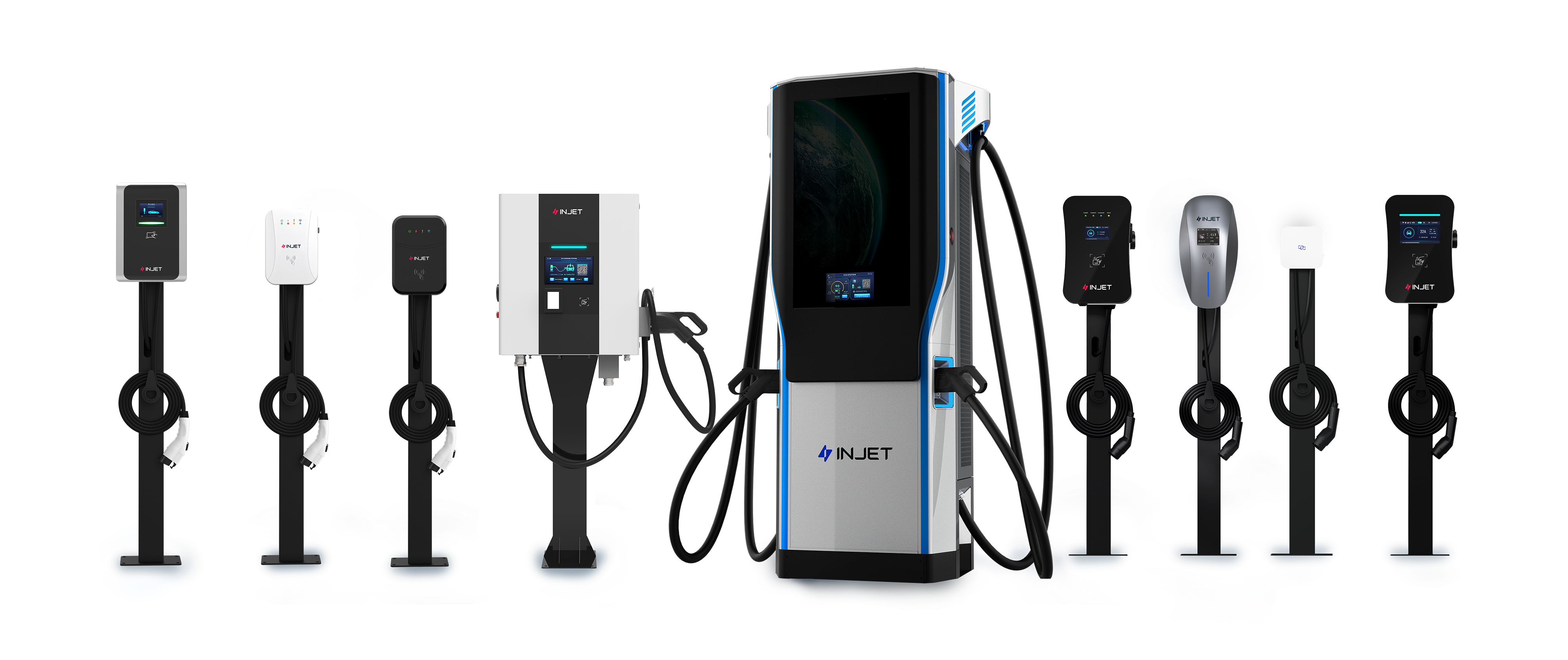
(Ampax commercial EV charging station from Injet New Energy)
Minimum IP Ratings Recommended for Home EV Chargers
Selecting EV charging stations with a high IP rating is crucial. We advise a minimum IP54 for outdoor use, shielding against dust and rain, or In harsh conditions like heavy snow or strong winds. Even so, IP65 remains the best choice for dealing with these situations.
Why Injet ’s IP65 Home and Commercial Chargers are recommend?
Injet New Energy's home and commercial AC chargers(Injet Swift2.0/Injet Vision/Injet Eco) utilize the higher IP65 currently available on the market. IP65 offers robust defense against dust, reducing particles entering equipment. It also protects against water jets from any direction, making it ideal for damp environments.
Browse Our IP65 Rated EV Chargers!