


For years, the EV charging conversation has centered on charging speed, network coverage, and uptime. But a quieter problem has been building beneath the surface — literally lying on the ground at charging stations around the world: EV charging cable management. As overseas charging networks scale up, operators are discovering that how a cable is handled, stored, and protected can matter just as much as how fast it charges.
A Problem That’s Finally Getting Attention
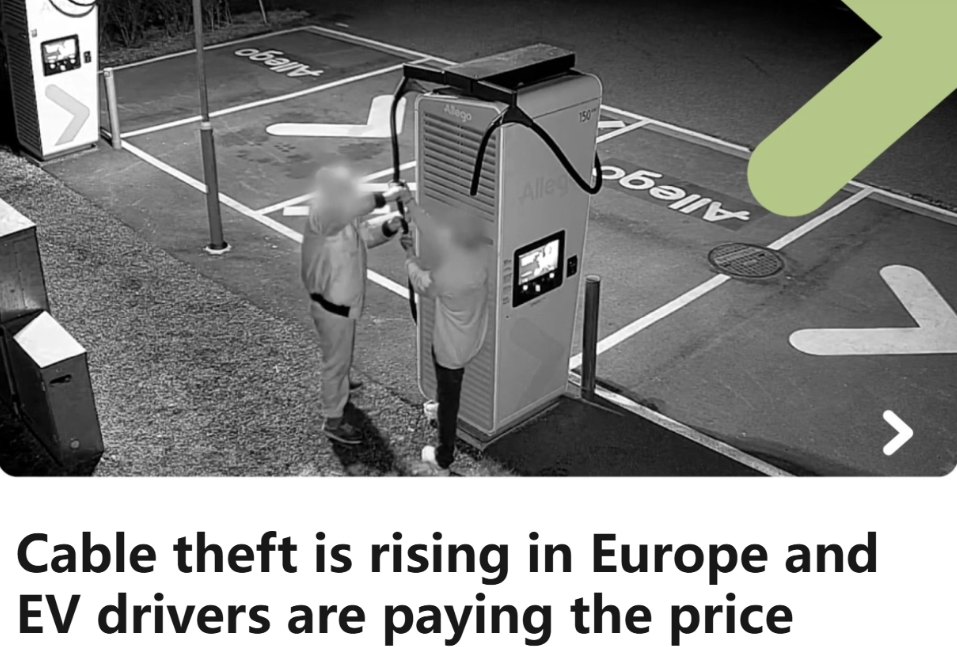
Recent reporting shows just how serious this has become. In the UK, freedom-of-information requests found that police recorded more than 200 incidents of theft and vandalism at EV chargers between 2022 and mid-2025, with one provider reporting 33 separate incidents across just 13 sites in a single year. In the US, Electrify America alone reported 215 cables cut in 2024 — more than double the previous year — and in May 2026 the U.S. Cybersecurity and Infrastructure Security Agency (CISA) issued a formal cross-sector alert on copper wire theft from EV charging stations, warning that the damage “can threaten public safety and disrupt transportation, energy systems, and other critical infrastructure.”
Meanwhile, in Ireland and the UK, local councils have been experimenting with footpath cable channels to stop charging cables from becoming a public trip hazard — a sign that charging cable management has moved from a minor inconvenience to a genuine safety and policy issue. And in fleet charging depots, industry guides published in early 2026 note that loose cables across drive lanes are now recognized as a real liability exposure, not just a tidiness issue.
In short: the industry has spent a decade optimizing kilowatts. It’s now catching up on cables.
Pain Point #1: Trip Hazards and Liability Exposure
A charging cable left on the ground between a dispenser and a vehicle is, functionally, a tripping hazard. For public and commercial sites, this isn’t just a customer-experience issue — it’s a liability issue. Injuries from unmanaged cables can lead to compensation claims and legal exposure for site operators, especially where cables cross walkways or shared parking areas.
Pain Point #2: Cable Wear, Tear, and Replacement Cost
Charging cables are dragged across concrete, run over, coiled awkwardly, and yanked at odd angles dozens of times a day at high-traffic sites. Connectors — the most fragile and expensive part of the assembly — take the brunt of this damage. Over time, this shortens cable lifespan and drives up maintenance costs, particularly for DC fast chargers where cables are heavier and harder to manage manually.
Pain Point #3: Cable Theft and Vandalism
This is the pain point that has escalated fastest. With copper prices near record highs, thieves have targeted charging cables across the US and Europe — sometimes disabling every cable at a site in under three minutes. The direct repair cost frequently runs into the thousands of dollars per incident, and the indirect cost — a disabled station, frustrated drivers, and reputational damage to a charging brand — is often larger still.
The Industry Response: Cable Management as a Design Priority, Not an Afterthought
These pain points are pushing charging cable management from an accessory into a core design consideration. Retractable cable arms that lift cables off the ground, overhead routing systems, and tamper-detection technology are increasingly seen as standard requirements in RFPs for new charging infrastructure — not nice-to-haves.
Injet New Energy has built this thinking directly into two of its newest product lines: HanHui and HanYuan.
The Solution: How Injet HanHui and HanYuan Address Cable Management
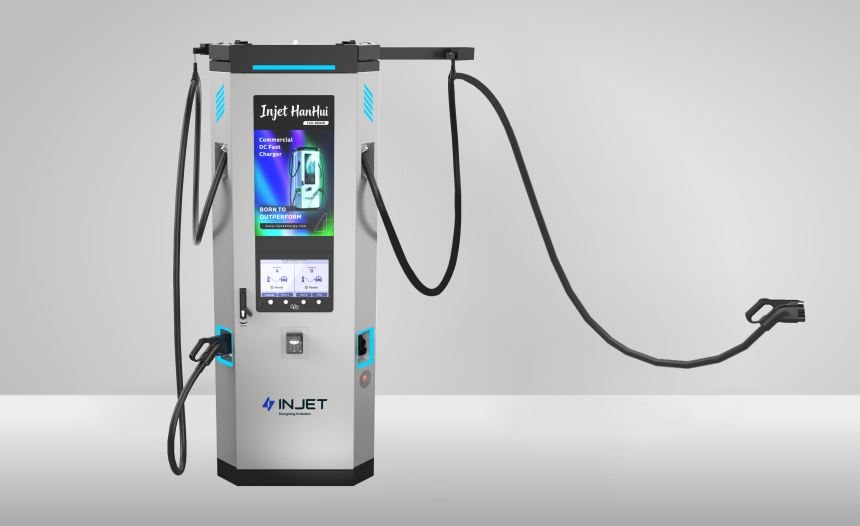
Injet HanHui 480 DC Fast Charger — Self-Retracting Arm + Cable Anti-Theft Design
The HanHui 480 tackles both the wear-and-tear problem and the theft problem directly:
- Self-retracting arm with a reach of 4.5–4.8m, giving drivers smooth, easy plugging and unplugging without dragging the cable across the ground — directly addressing the trip-hazard and wear-and-tear pain points described above.
- Cable anti-theft design, built with grounding resistors. If the cable is cut, the charger immediately reports the event to the OCPP platform and triggers an on-site alarm — turning a silent, costly incident into an instantly detected one, in line with the kind of tamper-detection approach safety authorities have been recommending.
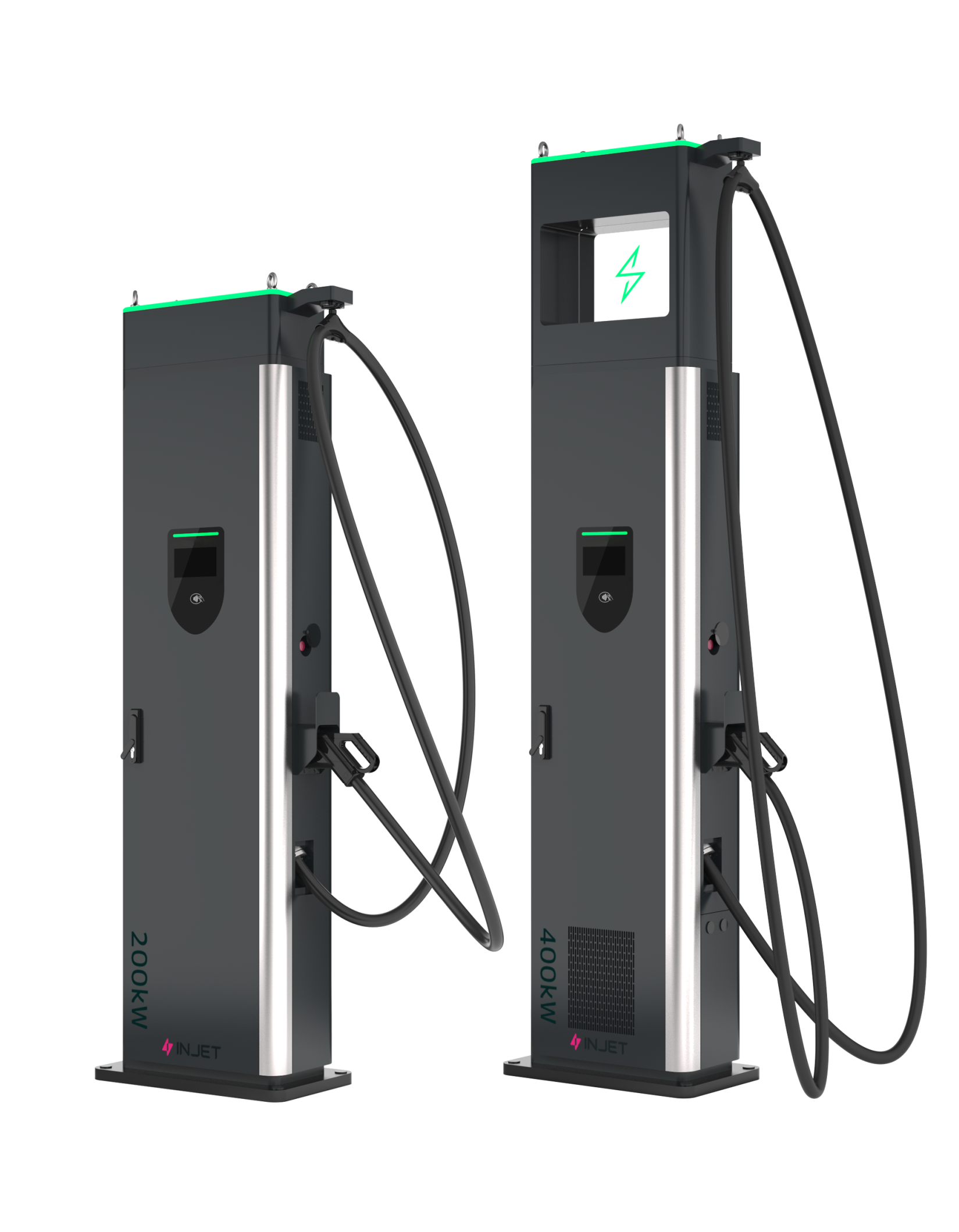
Injet HanYuan Distributed Charging System — 360° Integrated Cable Management
The HanYuan dispenser/satellite terminal takes a different approach, built for sites with multiple parking orientations:
- 360° integrated cable management system keeps heavy charging cables off the ground entirely, significantly reducing physical wear and eliminating the costly trip hazards that have drawn regulatory and legal attention overseas.
- 360-degree extension capability means the system adapts to any vehicle parking direction, maximizing parking space efficiency while keeping the site clean, professional, and compliant.
Why This Matters for Charge Point Operators
For CPOs and site owners expanding overseas, EV charging cable management now directly affects three things that show up on a P&L: safety liability exposure, cable replacement OpEx, and site uptime/reputation. Building cable management into the hardware — rather than bolting on a fix after an incident — is quickly becoming the difference between a charging site that runs smoothly for years and one that generates repeat service calls, complaints, and legal risk.
FAQ: EV Charging Cable Management
Q: Why is cable management becoming such a big issue for EV charging stations?
A: As charging networks scale, unmanaged cables are increasingly linked to trip-and-fall liability, accelerated cable wear, and — most urgently — a global rise in cable theft driven by high copper prices.
Q: How does a self-retracting charging cable arm help?
A: A self-retracting arm keeps the cable off the ground during plugging/unplugging and retracts it after use, reducing wear from dragging and abrasion while removing the trip hazard between charges.
Q: What is cable anti-theft technology in EV chargers?
A: It typically uses grounding resistors and real-time monitoring — if a cable is cut, the system immediately alerts the operator’s OCPP platform and triggers an alarm, allowing rapid response instead of a station sitting disabled for days.
Q: Does cable management affect parking layout efficiency?
A: Yes. Systems with 360° cable extension, like HanYuan’s, let a single dispenser serve vehicles parked in any orientation, which is particularly valuable on sites with tight or irregular parking configurations.
Conclusion
Charging speed got the industry this far. Cable management is what will determine which charging networks run reliably, safely, and cost-effectively for the next decade. Injet’s HanHui and HanYuan product lines were engineered with exactly this shift in mind — from self-retracting arms to anti-theft alarms to 360° cable routing.
Looking to reduce cable-related downtime, liability, and replacement costs at your charging sites? Contact Injet New Energy today to discuss which HanHui or HanYuan configuration fits your site layout and overseas deployment plans.