


EV Charging Cybersecurity: Why Would Anyone Hack a Charger With No Cash Inside?
An EV charger does not hold banknotes, expensive cargo or anything that looks like a conventional target for theft.
So why would anyone try to hack it?
Because a modern charger is no longer an isolated electrical device. It may communicate with the vehicle, connect to a charging station management system, verify users, interact with payment or roaming services, receive remote settings and over-the-air updates, and participate in site-level energy management.
The attacker may not be interested in the charger itself. The real targets can be the accounts, data, software, operational control and revenue-producing network behind it.

Why Do Attackers Target EV Charging Infrastructure?
The motive depends on the attacker.
One may try to obtain unauthorized charging or manipulate transaction information. Another may seek customer accounts, charging records, vehicle data or payment-related information. A ransomware group may target a CPO backend or cloud management environment because an extended outage creates pressure to pay quickly.
Disruption can also be the objective.
When public chargers become unavailable, the operator loses charging sessions and receives more customer complaints. If the affected equipment serves a bus depot or logistics fleet, charging failures can delay vehicle departures and disrupt an entire day of operations, even when no charger has been physically damaged.
CharIN’s charging-ecosystem threat model identifies scenarios including denial of charging, denial of payment processing, misuse of privileged administration, software or physical tampering, cloud infrastructure compromise and potential effects on the electricity system.
The lesson for CPOs is straightforward: EV charging cybersecurity protects more than customer data. It also protects charger uptime, station revenue, vehicle schedules and the operator’s ability to contain an abnormal event.
Source: CharIN Charging Ecosystem Threat Model
Why PREVENT Is Testing the Entire EV Charging Ecosystem
CharIN’s participation in the PREVENT project is important because the project does not examine one charger or one backend in isolation.
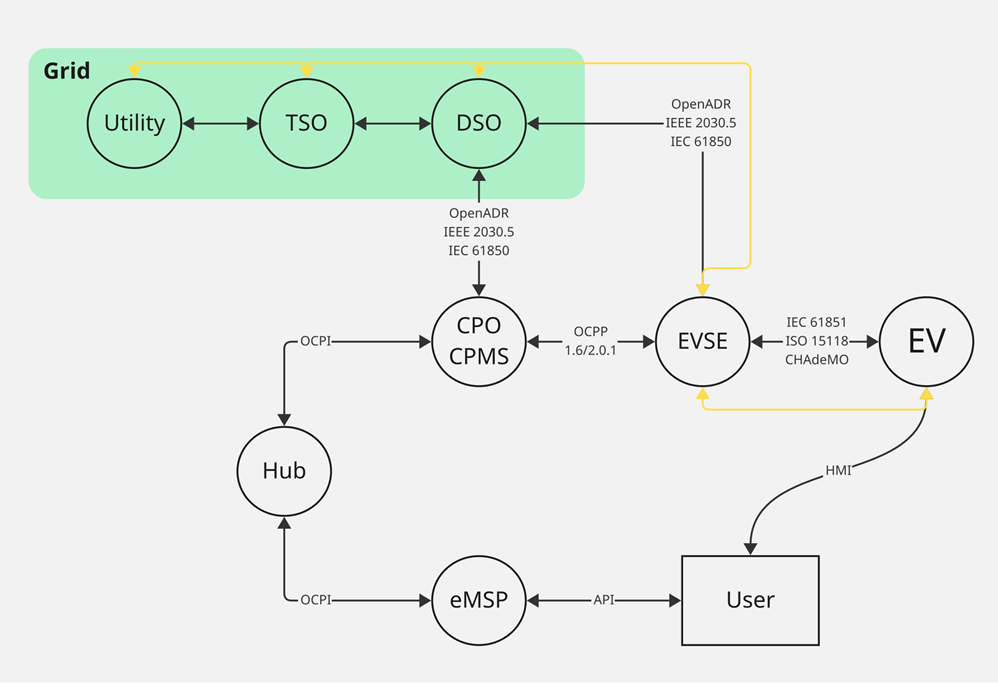
According to the European Union’s CORDIS project record, PREVENT covers electric vehicles, EVSE, backend platforms, roaming services and grid interfaces. Its scope includes secure-by-design guidance, EVSE hardware and firmware hardening, public key infrastructure, OTA risk mitigation, threat detection, cybersecurity testing, incident response and recovery.
The project will validate its work in real operating environments, including public charging, car-sharing services, logistics fleets and bus depots.
PREVENT has also stated that CharIN will contribute to threat analysis, risk assessment, cybersecurity specifications, interoperability work and controlled simulated-attack scenarios.
Sources: PREVENT project record on CORDIS and PREVENT announcement about CharIN
Cybersecurity Risks Often Appear Between Connected Systems
A vehicle, charger, CPO platform, roaming provider and software update service may each perform correctly when tested separately. Problems can still appear when the systems exchange identities, instructions and transaction information.
A certificate may expire. A privileged management account may be misused. A third-party platform may become unavailable. An incorrect configuration or abnormal software distribution may reach more devices than intended.
Controlled cybersecurity testing allows the industry to observe whether the complete system can detect an abnormal event, limit its reach and recover service before the same situation occurs in a live charging network.
Why Charger Fleet Size Changes the Risk
Remote charger management gives CPOs an important operational advantage. Teams can inspect reported errors, adjust parameters, restart equipment and distribute software without travelling to every charging site.
This efficiency becomes essential when a network expands from dozens of chargers to hundreds or thousands.
Scale also increases the possible effect of a compromised account, incorrect configuration or abnormal OTA distribution.
Imagine a CPO managing 500 chargers across several cities. Twenty units suddenly begin reporting similar abnormal behavior. A general red warning on the dashboard will not be enough.
The operations team needs to know which chargers are affected, where they are installed, what each unit is reporting and which remote actions are available. Without device-level visibility, a manageable incident can quickly turn into repeated site visits, longer downtime and more customer complaints.
EV Charging Cybersecurity Includes Recovery
No charging equipment manufacturer can credibly promise that a connected system will never encounter a vulnerability, account problem, configuration error or third-party service failure.
Prevention remains important, but the operator must also retain visibility and control when abnormal behavior occurs.
For a CPO, useful operational capabilities include:
- Identifying and locating each charger individually
- Reviewing device-level errors and relevant operating information
- Applying approved remote actions to the intended equipment
- Distributing software updates to selected chargers
- Confirming which devices responded to an instruction
- Escalating efficiently when an on-site response is required
These capabilities do not replace secure architecture, protected communications or access controls. They help the CPO investigate an incident, limit its scope and restore charging service more efficiently.
How Injet Supports Device-Level Charging Network Management
Every Injet charger has an individual serial number. Injet’s self-developed charging station management system uses this identifier to locate the corresponding device.
The CMS supports viewing error information, OTA distribution, remote restart, parameter settings and basic remote service operations.
A serial number is an asset identifier. It is not a cryptographic identity and cannot prevent a cyberattack by itself. Its value is operational precision.
When an abnormal event affects part of a charging network, the team must first determine exactly which chargers are involved. It can then review the reported information, select an appropriate remote action or arrange an on-site response.
OTA capability is similarly important throughout the charger lifecycle. It can reduce the time required to deliver software fixes across a distributed fleet. At the same time, the update channel must be managed carefully, which is why OTA mitigation is included in the PREVENT cybersecurity scope.
OCPP Support and OCPP Certification Are Not the Same Claim
OCPP provides the communication layer between a charging station and a charging station management system. It is a central part of interoperability and remote charger operations.
Buyers frequently see the phrase “OCPP supported,” but the implemented functions and level of independent testing can vary between products and software versions.
Injet is a participant in the Open Charge Alliance. OCA’s public records show that Injet’s iNSCDA charging-station implementation, software version 1.0.0, received an OCPP 1.6 Full Certificate and a separate OCPP 1.6 Security Certificate on February 23, 2024.
The certifications can be verified on the Open Charge Alliance website.
OCPP certification does not mean that a charger is immune to every cyberattack. The certificates apply to the product designation and software version stated in the records. They provide third-party evidence that the implementation completed the protocol conformance and security testing covered by those certificates.
For CPOs integrating chargers with their own platform or a third-party CMS, this provides more useful information than an OCPP compatibility claim with no verifiable scope.
Cybersecurity Questions to Ask Before Deploying EV Chargers
Power, efficiency, connector options and price remain essential charging equipment selection criteria. Before a large deployment, CPOs should also ask:
- Can every charger be identified and located individually in the management platform?
- Which errors and operating information can the team review remotely?
- Which recovery actions can be performed remotely?
- How is the scope of a remote command controlled?
- How are OTA updates assigned and distributed to the intended chargers?
- Has the OCPP implementation been independently certified?
- Does the certification cover the product and software version being purchased?
- What happens when remote recovery is not sufficient?
These details may not appear among the most prominent charger specifications. When a network experiences an abnormal event, however, they influence how quickly the operator can identify the problem, contain the affected devices and restore service.
EV Charger Security Continues After Installation
Commissioning is the beginning of a connected charger’s operational life, not the end of the manufacturer’s responsibilities.
Software updates, platform integrations, certificate changes, remote maintenance and incident response continue throughout the life of the equipment. As charging networks grow, these capabilities directly affect CPO uptime and the cost of operating distributed infrastructure.
PREVENT’s end-to-end testing reflects this reality. EV charging cybersecurity has to be considered during design, validation, deployment, updating and daily operation.
For buyers, the final question is not whether a charger carries a security label. It is whether the complete charging system gives the operator enough evidence, visibility and control to manage connected assets throughout their working life.
Frequently Asked Questions
Why would hackers target EV charging stations?
Attackers may seek unauthorized charging, user or transaction data, access to management systems, ransom payments or service disruption. The operational impact can include charger downtime, lost revenue and delayed fleet departures.
What is EVSE cybersecurity?
EVSE cybersecurity covers the protection of charging equipment, communications, software, user authentication, remote management and connected services from unauthorized access, manipulation and disruption.
Does OCPP certification guarantee that a charger is secure?
No. Certification provides evidence that a specified product and software version passed defined protocol or security tests. It does not guarantee protection against every vulnerability or future attack.
Why is a charging station management system important during an incident?
A charging station management system can help the CPO identify affected chargers, review error information, perform approved remote actions and distribute updates. These capabilities support investigation and service recovery.
- Previous:
- Next: 600 kW, Still Waiting? Rethinking EV Charging Power Allocation