


Industry Reality: Built Stations, Delayed Profits
As the initial wave of large-scale EV charger deployment begins to slow, a growing number of charging station operators are facing a sobering reality:
the stations are built, the chargers are installed—but the expected profits are slow to materialize.
High electricity costs, continuous maintenance requirements, and persistently low charger utilization rates have become structural challenges across the industry. In many regions, charging service fees are increasingly transparent, leaving operators with limited room to compete on pricing alone.
As a result, a widely shared pain point has emerged: EV charging stations are relatively easy to build, but far more difficult to operate profitably.
In this context, the real question is no longer how fast chargers can be deployed, but rather:
What truly determines long-term charging station profitability?
1. High Energy Efficiency: Every Kilowatt-Hour Counts
Electricity costs represent the largest—and most rigid—component of charging station operating expenses.
The energy conversion efficiency of an EV charger directly determines how much electricity is lost between what is drawn from the grid and what is ultimately delivered to the vehicle.
Most mainstream DC fast chargers on the market operate at an efficiency level of around 94%–96%. This means that for every 100 kWh delivered to an EV, operators must pay for 104–106 kWh of electricity—a hidden loss that directly erodes profit margins.
Let’s break this down with a simple calculation:
- 1)Charger power: 120 kW
- 2)Average daily charging volume: 600 kWh
- 3)Electricity price: $0.13/kWh(* Based on the average commercial electricity price in the United States for 2025, sourced from the Electric Power Monthly report published by the EIA. Actual electricity prices vary by region and tariff structure.)
At 96% efficiency:
Daily energy loss ≈ 25 kWh
Annual loss ≈ $1,186 per charger
At 98% efficiency:
Daily energy loss ≈ 12.24 kWh
Annual loss ≈ $580 per charger
Annual savings per charger: nearly $606.
For a mid-sized charging station equipped with 20 chargers, this translates to nearly $12,120 in electricity cost savings per year—money that goes straight to net profit.
From an ROI and total cost of ownership (TCO) perspective, high-efficiency EV chargers are not a “nice-to-have”, but a core profitability driver.
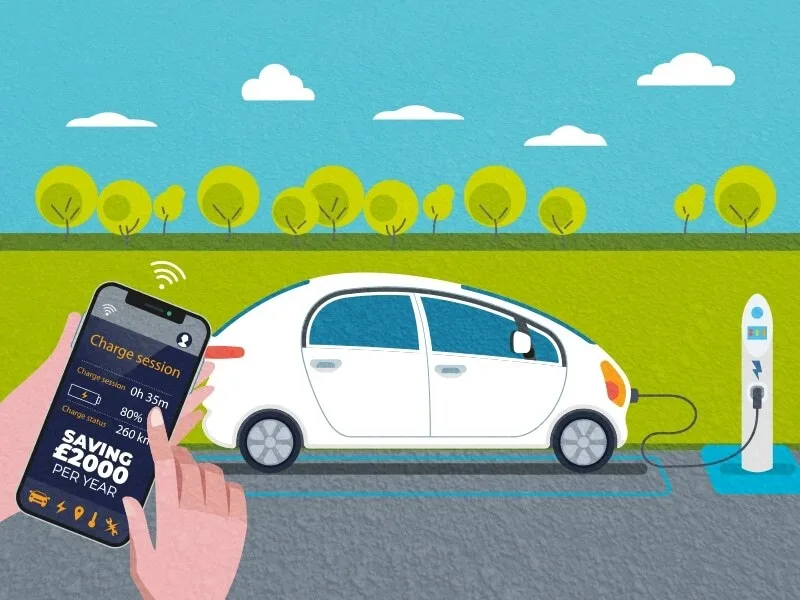
(Image Source: Westside Auto Wholesale)
2. Low Failure Rates: Reliability Is the Best Reputation
If high efficiency helps operators reduce costs, then low failure rates are the most effective way to protect revenue.
When a charger goes offline, the losses are multidimensional:
1)Direct revenue loss – no charging service fees during downtime
2)Opportunity cost – customers who cannot charge are unlikely to return
3)Higher maintenance costs – labor, transportation, spare parts
4)Brand and platform impact – lower ratings and visibility on charging apps
In highly competitive markets, frequent downtime can quickly push a charging station into a negative feedback loop.
By contrast, a charger designed for long-term, low-failure operation functions like a silent but reliable employee—consistently available, requiring minimal attention, and continuously generating value throughout its lifecycle.
This level of reliability directly improves:
- 1)Charger utilization rate
- 2)User satisfaction and loyalty
- 3)Long-term station profitability
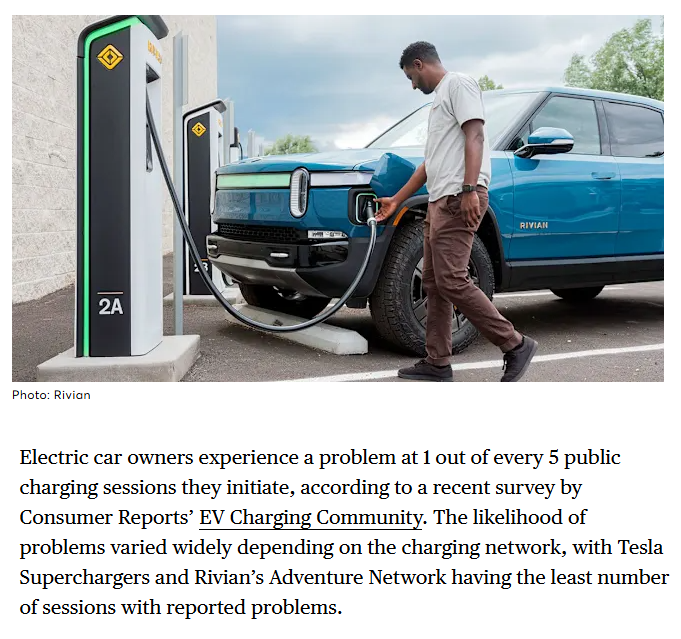
(Source: Consumer Reports: The Most Common EV Charging Problems—and How to Avoid Them)
3. Charging Speed: Throughput Defines the Revenue Ceiling
In the restaurant industry, table turnover rate is a core profitability metric.
For EV charging stations, the equivalent metric is vehicle throughput—and charging speed is the decisive factor.
In time-sensitive scenarios such as highway service areas, logistics hubs, and fleet depots, users prioritize one thing above all else: how fast they can get back on the road.
With high-power liquid-cooled fast charging solutions—ranging from 600 kW to 2,500 kW—it becomes possible to deliver “5–10 minutes of charging for hundreds of kilometers of range.”
Faster charging enables:
- 1)More vehicles served per charger per day
- 2)Higher cash flow within the same footprint
- 3)Shorter payback periods
- 4)Maximized land-use efficiency
This effect is particularly pronounced in heavy-duty truck charging, where single-session energy demand is extremely high and throughput directly determines station economics.
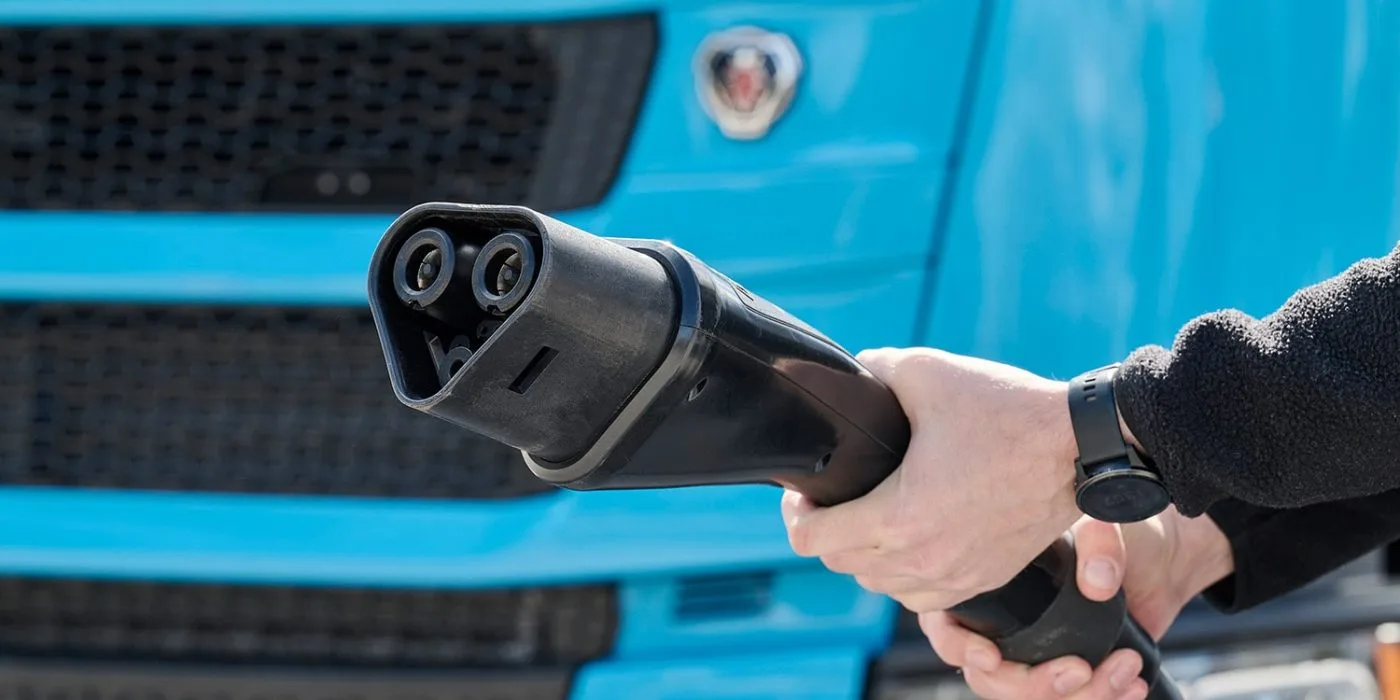
(Image Source: electrive)
INJET New Energy: Turning Hidden Keys into Visible Profits
1.At its core, achieving high efficiency is about unlocking profit through technology.
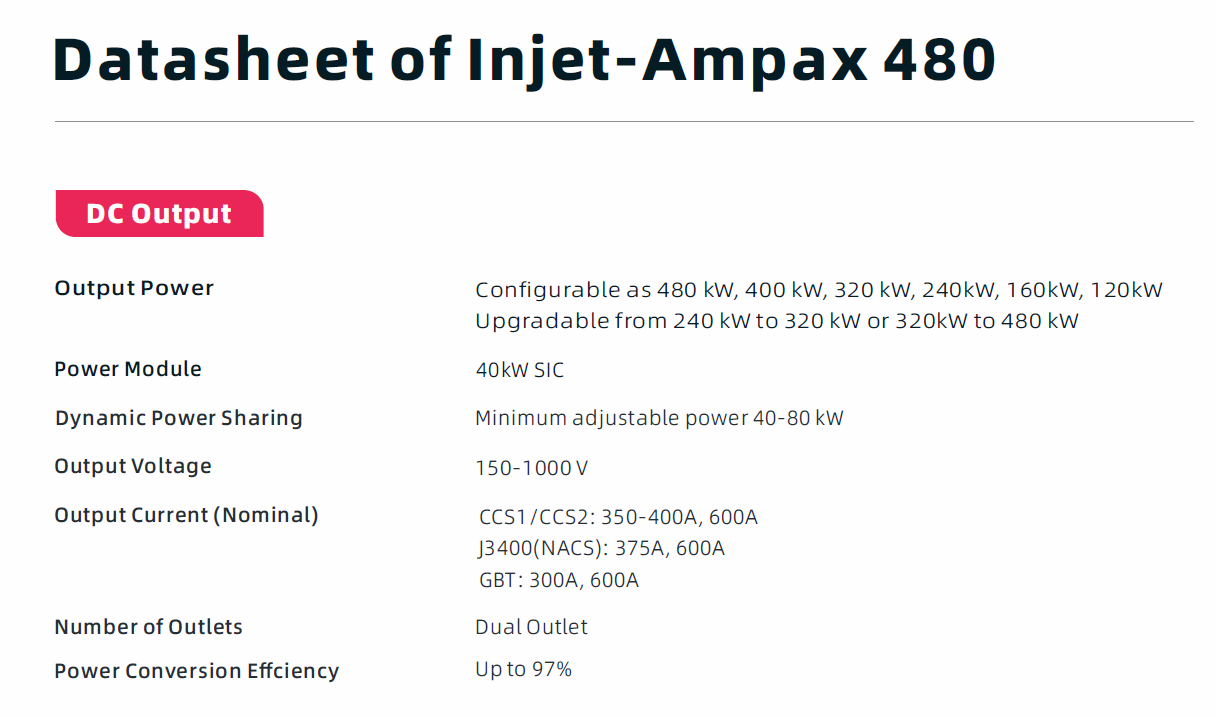
INJET New Energy’s Ampax 480 DC fast charger adopts advanced 40 kW silicon carbide (SiC) power modules, achieving a conversion efficiency of up to 97%—approximately 3–5 percentage points higher than traditional silicon-based (IGBT) solutions, while reducing power loss by nearly 50%.
For a commercial charging station equipped with 10 Ampax 480 units:
- 1)Average daily charging per charger: 600 kWh
- 2)Electricity price: $0.13/kWh
Compared with chargers operating at 95% efficiency, Ampax 480 can save over $5,900 in electricity costs per year, with savings approaching $8,900 annually at higher utilization rates.
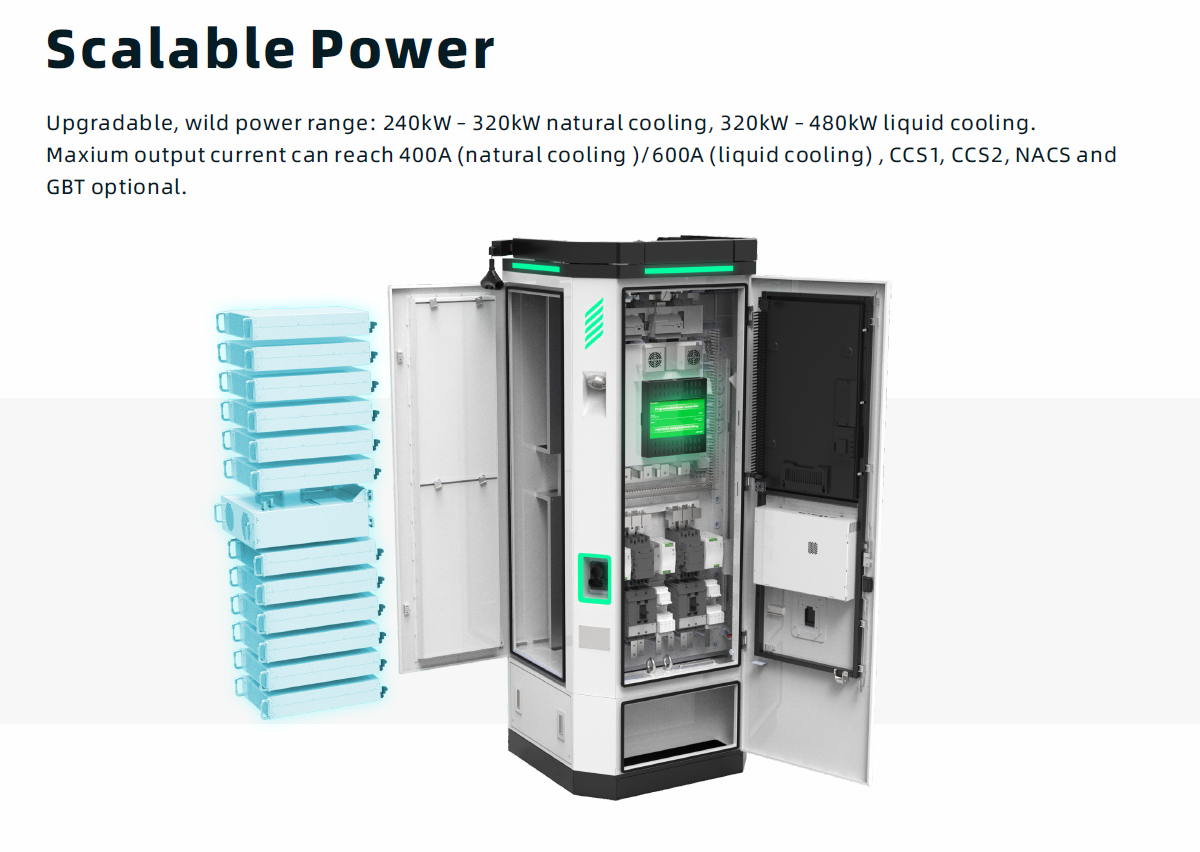
More importantly, its modular architecture allows operators to expand capacity by adding modules—without replacing existing equipment or redoing civil works—future-proofing investments and optimizing long-term operating costs.
2. Reliability and Maintenance Efficiency
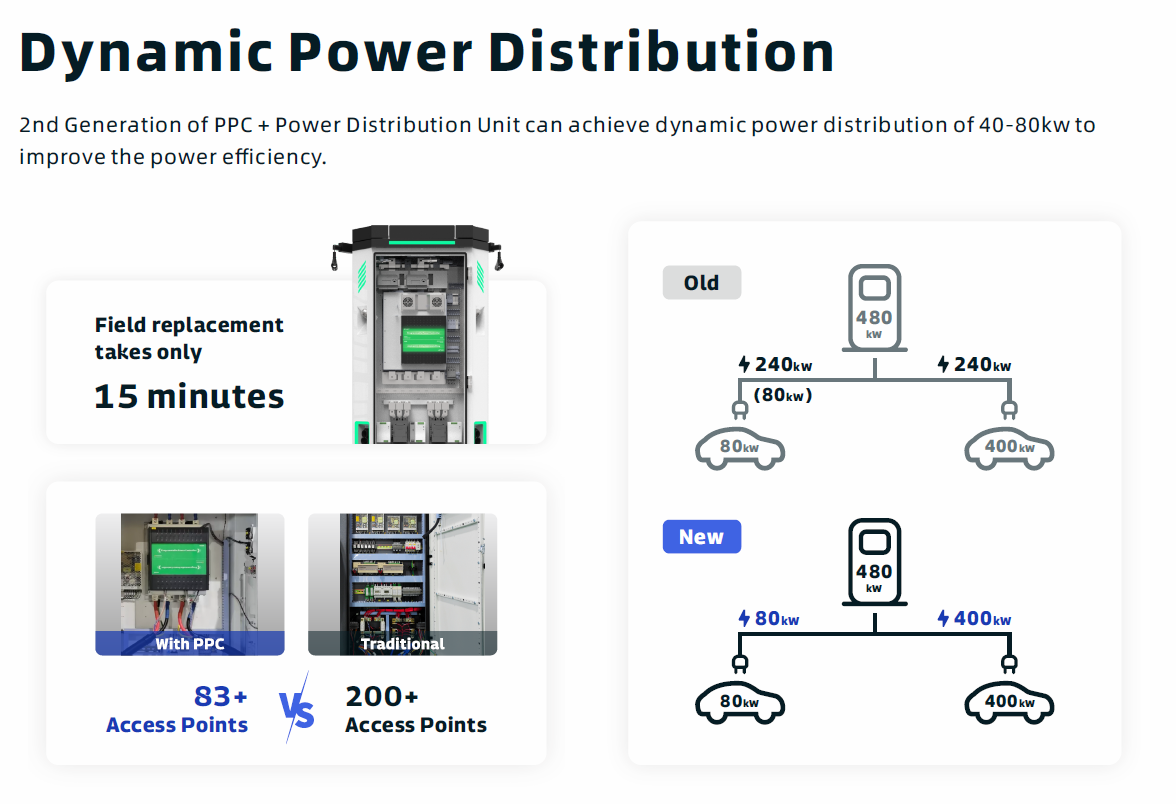
Through its self-developed Programmable Power Controller (PPC), INJET reduces internal wiring from over 200 cables to just 80, significantly lowering failure points at the source.
When maintenance is required:
- 1)Remote diagnostics quickly identify issues
- 2)On-site replacement of the PPC module takes just 15 minutes
- 3)No specialized technicians are required
Maintenance cycles shrink from days to hours, improving repair efficiency by over 90% and dramatically reducing downtime.
In 2025, charging stations of 2 customers using Ampax chargers with integrated PPC surpassed 1 million kWh of cumulative charging volume, providing real-world validation of high reliability and operational stability.
3. Fast Charging Meets Intelligent Power Allocation
Beyond speed, charging stations must serve vehicles with diverse power demands.
INJET’s modular power stack supports flexible expansion from 480 kW to 1,920 kW, with liquid-cooled connectors delivering up to 500 kW per gun.
Looking ahead, INJET is fully prepared for Megawatt Charging System (MCS) standards, with interfaces designed for up to 1,500 kW output.
By dynamically allocating 40–80 kW adjustable power modules, total station power flows like “living water,” ensuring each vehicle receives exactly what it needs—maximizing throughput while minimizing average dwell time. 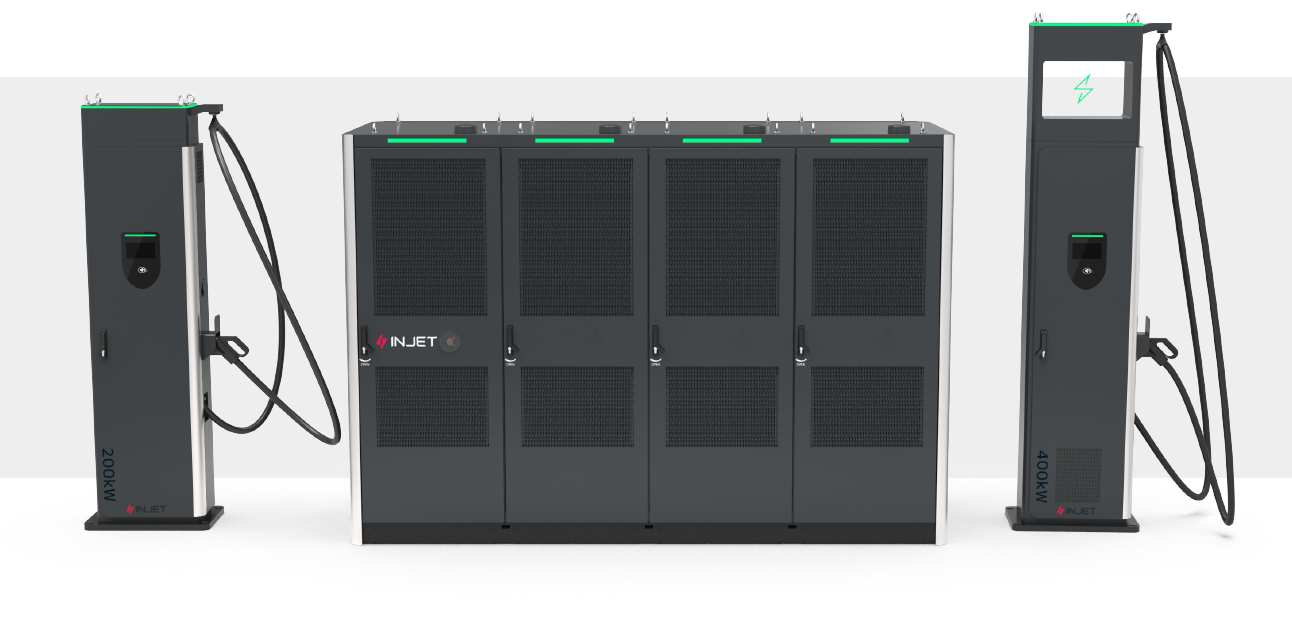
Conclusion: Profitability Is a Long Game of Efficiency and Reliability
Ultimately, operating an EV charging station is a long-term race defined by efficiency and reliability.
Electricity costs, maintenance expenses, and asset utilization all converge on one outcome: real, sustainable profitability.
High energy efficiency reduces losses, low failure rates protect revenue, and high throughput unlocks the upper limits of cash flow.
As the industry shifts from rapid deployment to refined operations, true competitiveness lies in:
- 1)Every kilowatt-hour converted efficiently
- 2)Every charger running reliably
- 3)Every vehicle moving through the station faster
INJET New Energy is committed to supporting charging operators with targeted product portfolios and integrated solutions—helping turn hidden operational keys into consistently visible returns.
We welcome further dialogue with industry partners to explore the future of profitable EV charging together.