


Introduction: The Connector War Is Nearing Its End
Over the past decade, the North American EV charging industry has operated in a fragmented, multi-standard environment.
CCS1, CHAdeMO, and Tesla’s proprietary connector evolved in parallel, creating a divided infrastructure landscape.
However, since 2023, this dynamic has shifted rapidly.
NACS (North American Charging Standard) is transitioning from a “Tesla connector” into an industry-wide consensus.
More automakers are adopting NACS.
More charging equipment—including Injet EV chargers—now offer NACS connector options.
A clear trend is emerging:
charging standards are converging, and the ecosystem is unifying.
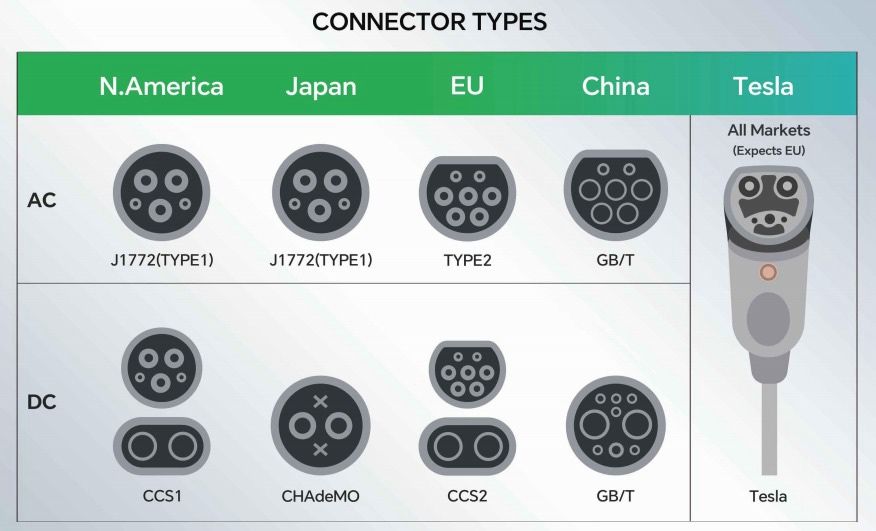
(Image source: Temmy Ren)
What Is NACS? More Than a Connector—A System-Level Design
Originally introduced by Tesla in 2012 alongside the Model S, NACS was not designed for compatibility first—but for user experience, efficiency, and reliability.
After more than a decade of real-world operation and millions of charging sessions, the system has proven its performance at scale.
In November 2022, Tesla opened the NACS design to the industry.
In December 2023, SAE International officially standardized it as SAE J3400, marking its transition into an open, unified industry standard.
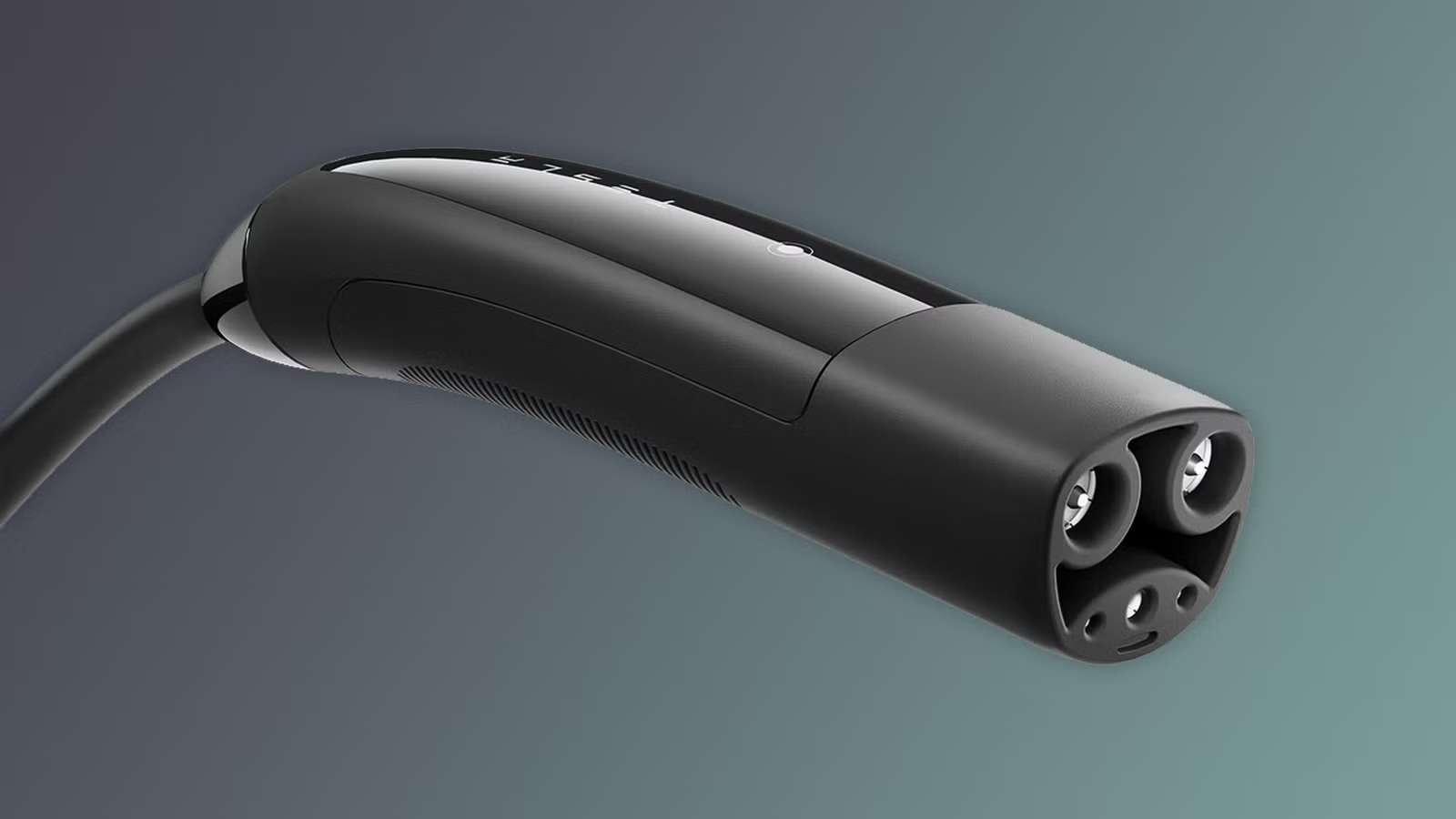
(Image source: How-to Geek)
Key Technical Features
Unified AC/DC Interface
Unlike CCS1, which adds separate DC pins, NACS integrates AC and DC charging into a single interface.
This simplifies vehicle design and creates a more compact connector.
Compact and User-Friendly Design
The NACS connector is over 50% smaller and significantly lighter than CCS1.
This improves usability—especially in cold climates where heavy CCS1 cables can become stiff and difficult to handle.
High Voltage & High Current Capability
Designed for the future, NACS supports up to ~1000V and sustained high current delivery.
It aligns perfectly with the growing adoption of 800V platforms and future megawatt charging.
Smart Communication Compatibility
NACS supports PLC (Power Line Communication) and is fully compatible with ISO 15118, enabling advanced features such as:
- 1)Plug and Charge
- 2)Vehicle-to-Grid (V2G)
NACS is not just a connector—it is a future-ready, system-level charging solution.
NACS vs CCS1: Engineering Logic Meets User Experience
CCS1 represents a compatibility-first engineering approach, while NACS embodies a philosophy of integration and user-centric design.
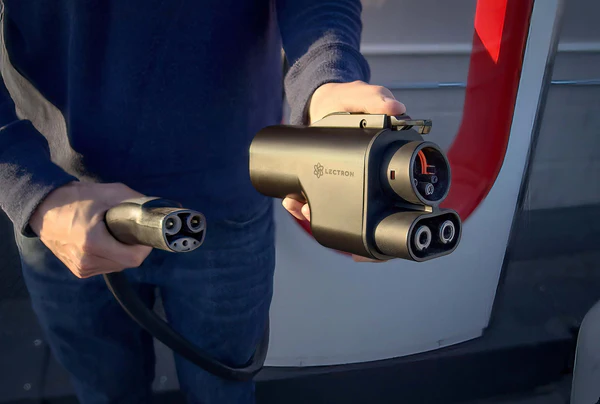
(Image source:LECTRON)
Engineering Perspective
CCS1: Complex, Split Architecture
- 1)AC and DC are separated
- 2)Larger connector size
- 3)Higher system complexity
NACS: Integrated and Simplified
- 1)Single interface for both AC and DC
- 2)Reduced vehicle-side complexity
- 3)Fewer potential failure points
Operations & Maintenance
CCS1: Higher O&M Complexity
Operators must support multiple connector types, increasing inventory, cost, and maintenance burden.
NACS: Standardized & Efficient
A unified interface simplifies:
- 1)Spare parts management
- 2)Maintenance processes
- 3)Total cost of ownership
User Experience
CCS1: Heavier and Less Convenient
Bulkier connectors create usability challenges, especially for frequent fast charging.
NACS: Lightweight, Plug-and-Play Experience
NACS offers a more ergonomic, intuitive experience—similar to fueling a gasoline vehicle.
With Plug & Charge, users simply plug in and charging starts automatically.
Why Is NACS Becoming the Default Choice?
The rise of NACS is driven by a combination of technology, ecosystem, and market forces.
1. The Supercharger Network Effect
Behind NACS lies Tesla’s highly mature Supercharger network, with over 20,000 chargers across North America.
For automakers, adopting NACS means:
- 1)Access to a proven, high-reliability charging network
- 2)Seamless user experience
- 3)Reduced infrastructure investment pressure
This is essentially an ecosystem shift, not just a technical decision.
2. SAE Standardization Breaks Barriers
The release of SAE J3400 delivers:
- 1)Open access for all manufacturers
- 2)A unified supply chain ecosystem
- 3)Standardized testing and certification
NACS is no longer a proprietary solution—it is becoming public infrastructure for the industry.
3. Automaker Alignment Accelerates Adoption
Since 2023, major OEMs—including Ford, GM, Rivian, Volvo, Mercedes-Benz, BMW, Honda, and Nissan—have committed to NACS.
This creates a powerful flywheel:
- 1)Vehicles standardize on NACS
- 2)Charging networks deploy NACS
- 3)Users adopt NACS as default
Once this loop is established, the standard becomes difficult to reverse.
Deeper Impact: Three Layers of Industry Transformation
1. User Experience Transformation
Charging becomes simpler—no need to check compatibility, carry adapters, or switch between apps.
2. Infrastructure Transformation
New stations prioritize NACS or NACS + CCS1 configurations, with more compact, higher power designs.
3. Technology Path Transformation
- 1)Rapid adoption of 800V systems
- 2)Expansion of 350kW+ ultra-fast charging
- 3)Acceleration toward megawatt charging systems (MCS)
NACS is becoming a gateway to the high-power charging era.
Transition Reality: NACS and CCS1 Will Coexist
Despite rapid growth, the market will remain dual-standard for the next 3–5 years:
- 1)Large installed base of CCS1 vehicles
- 2)Time required for infrastructure upgrades
- 3)User habit inertia
The real question is not “either-or,” but how to balance compatibility and future readiness.
Dual-connector solutions will dominate during this transition.
Injet Perspective: Future-Ready with Full Compatibility
As a global leader in EV charging solutions, Injet New Energy is proactively adapting to the rise of NACS and integrating it across its product portfolio.
✔ Injet HanHui Commercial DC Fast Charger
A high-performance Injet EV charger designed for commercial applications, now fully supporting SAE J3400 (NACS).
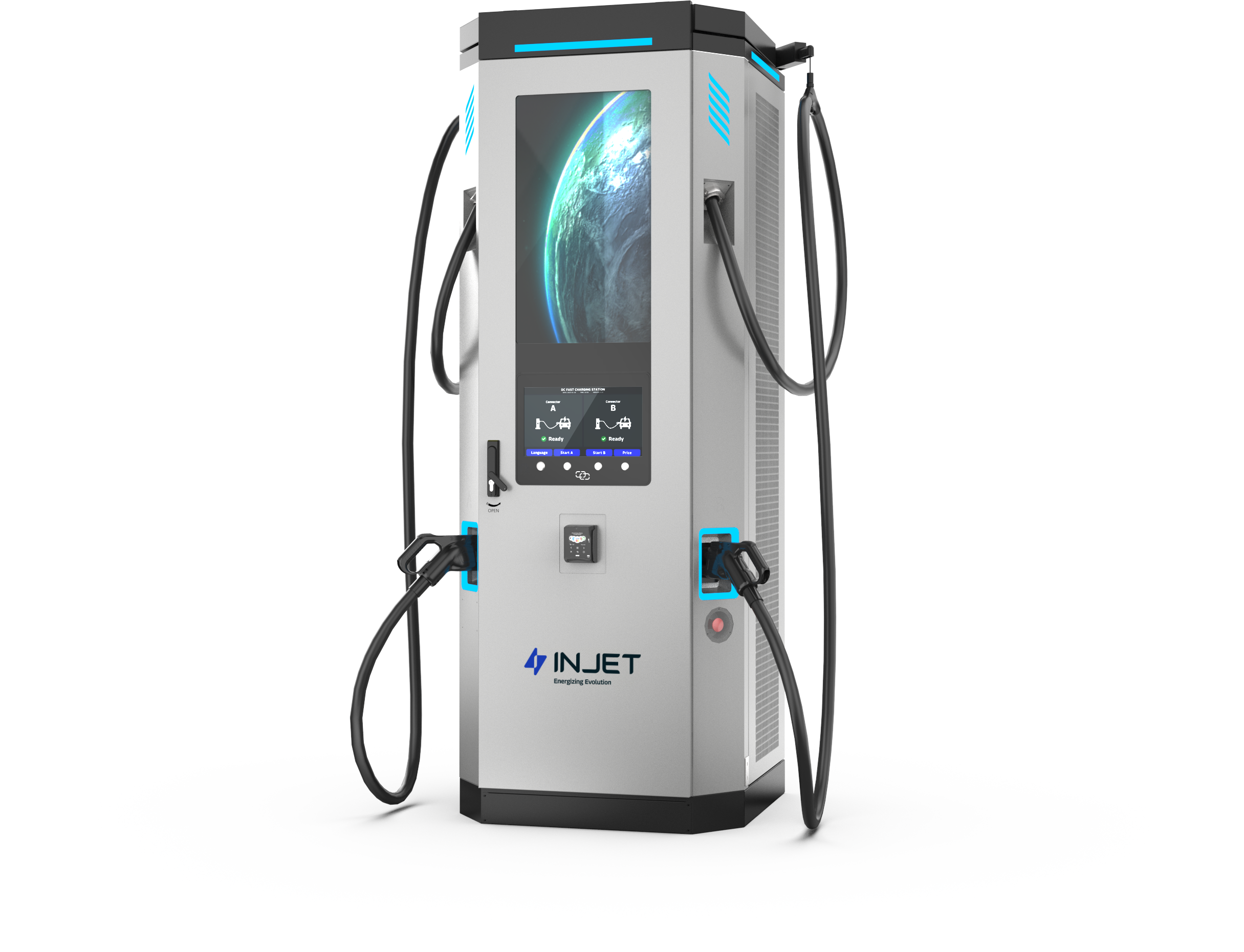
- 1)Connector Options: J3400 (NACS) available
- 2)Cooling Options: Air-cooling / Liquid-cooling
- 3)Liquid Cooling Advantage:
Enables thinner cables, better heat dissipation, and stable ultra-high-power charging—aligned with future megawatt evolution - 4)Applications: Public charging stations, commercial parking, highway corridors
Enables operators to deploy future-proof NACS-compatible infrastructure from day one.
✔ Injet HanYuan DC Flexible Ultra Mega Charger
A flagship solution built for next-generation high-power charging scenarios.
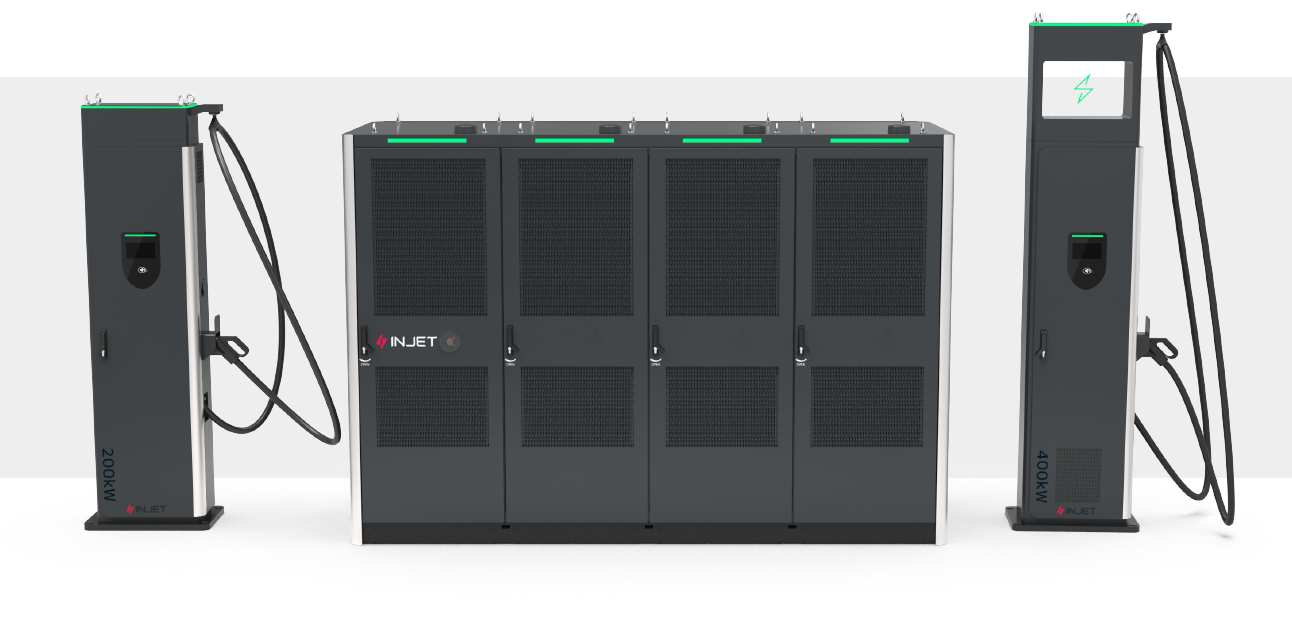
- 1)Dual Connector Configuration: 1×CCS1 + 1×NACS
- 2)Natural Cooling Satellite Units: Reduced O&M complexity, enhanced reliability
- 3)Flexible Power Distribution: Intelligent load balancing for maximum utilization
- 4)Applications: Transition-phase charging stations, mixed vehicle fleets, future-ready deployments
A smart balance between today’s compatibility and tomorrow’s standards.
Conclusion: Converging Standards, Redefined Competition
The rise of NACS marks a new phase for the EV charging industry:
- 1)Standards are converging
- 2)Technology direction is clear
- 3)User experience is improving dramatically
The real competition is no longer about which standard to support, but:
who can stay ahead as standards evolve.
Injet New Energy will continue to drive innovation and deliver smarter, more reliable, and future-ready EV charging solutions.
Choosing Injet means choosing to stay aligned with the future of EV charging.