


As global EV adoption accelerates, charging infrastructure is entering a new phase of development.
In the early stages of the industry, the priority was simple: deploy more chargers as quickly as possible. Today, however, charger reliability, network uptime, and operational efficiency have become critical success factors for charging network operators.
Industry studies show that despite improvements in hardware reliability, around 14% of public charging attempts still fail. For charge point operators (CPOs), these failures translate not only into higher maintenance costs, but also into reputational risks and lost customer trust.
As a result, the industry is shifting away from reactive maintenance toward more proactive and intelligent operational strategies.

(Image Source: GREENLANCER)
The Hidden Cost of Reactive Maintenance
Traditionally, most EV charging networks rely on reactive maintenance.
When a charger fails, the operator receives an alert, dispatches technicians to the site, and begins troubleshooting.
While straightforward in theory, this approach creates multiple operational challenges.
1)Extended downtime
Diagnosing and repairing hardware issues can take days.
2)Lost revenue
When chargers are unavailable, operators lose charging income and utilization opportunities.
3)Customer dissatisfaction
Repeated charging failures quickly damage user confidence in a charging network.
4)Rising operational costs
Emergency repairs, technician travel, and on-site diagnostics all add to operational expenses.
As charging networks scale, this reactive approach becomes increasingly difficult to sustain.
Industry Shift: From Reactive to Proactive Maintenance
Leading operators are now adopting more advanced maintenance strategies, including:
-
1)Remote charger monitoring
-
2)Data-driven diagnostics
-
3)Predictive maintenance
-
4)Automated service workflows
These systems continuously monitor charger performance, allowing operators to identify issues before they result in service interruptions.
However, software alone cannot fully solve reliability challenges.
The underlying hardware architecture of charging equipment plays an equally important role.
Reliability Starts with System Design
Inside traditional DC fast chargers, complex control systems often rely on hundreds of signal wires and connections.
Each connection introduces a potential failure point. When issues occur, technicians may need to conduct time-consuming on-site diagnostics to locate the root cause.
This is why forward-looking equipment manufacturers are rethinking charger architecture—simplifying system design to reduce complexity and improve reliability.
Injet’s Programmable Power Controller (PPC): Designed for Reliability and Easy Maintenance
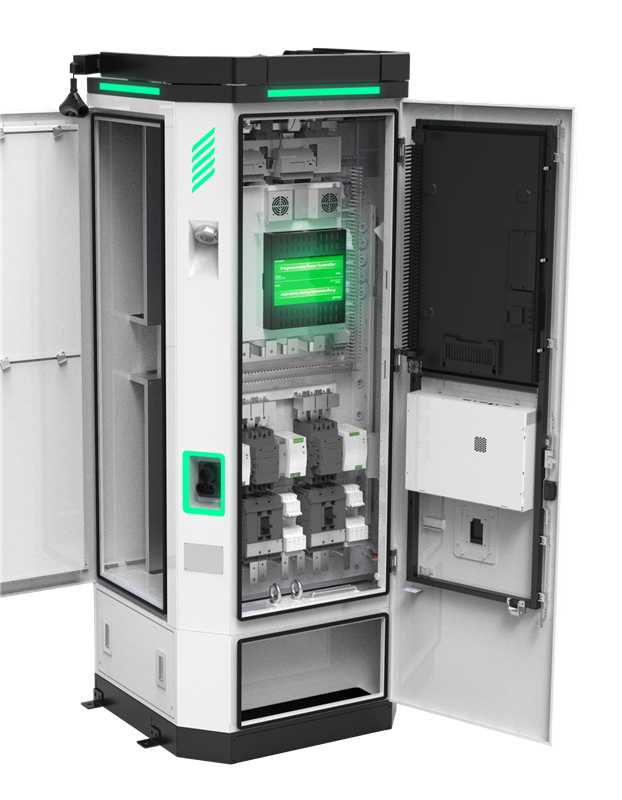
To address these challenges, Injet New Energy developed the Programmable Power Controller (PPC)—a highly integrated control architecture for DC fast chargers.
The PPC significantly simplifies internal system design.
Compared with conventional architectures:
-
1)Internal wiring is reduced from over 200+ wires to just 80+
-
2)Potential failure points are dramatically minimized
-
3)Overall system reliability is significantly improved
Just as importantly, the modular PPC design transforms the maintenance process.
Modular Maintenance: From Days of Downtime to Just Hours
In conventional DC chargers, a controller failure often requires:
-
)Dispatching technicians to the site
-
)Performing detailed diagnostics
-
)Disassembling components
-
)Repairing or replacing faulty parts
This process can take 1 to 10 days.
With the PPC architecture, maintenance becomes dramatically simpler.
When a hardware issue occurs:
-
1)Remove 13 bolts
-
2)Disconnect the control signal cable
-
3)Replace the PPC module
The on-site replacement takes about 15 minutes.
Combined with 24/7 remote fault diagnostics, the total time from fault detection to charger recovery is typically 2–4 hours.
This significantly reduces downtime while eliminating the need for expensive on-site troubleshooting.
Meanwhile, the faulty PPC unit can be returned to the service center for repair while the charger resumes normal operation.

Proven in Real Operations
High reliability directly translates into better charging network performance.
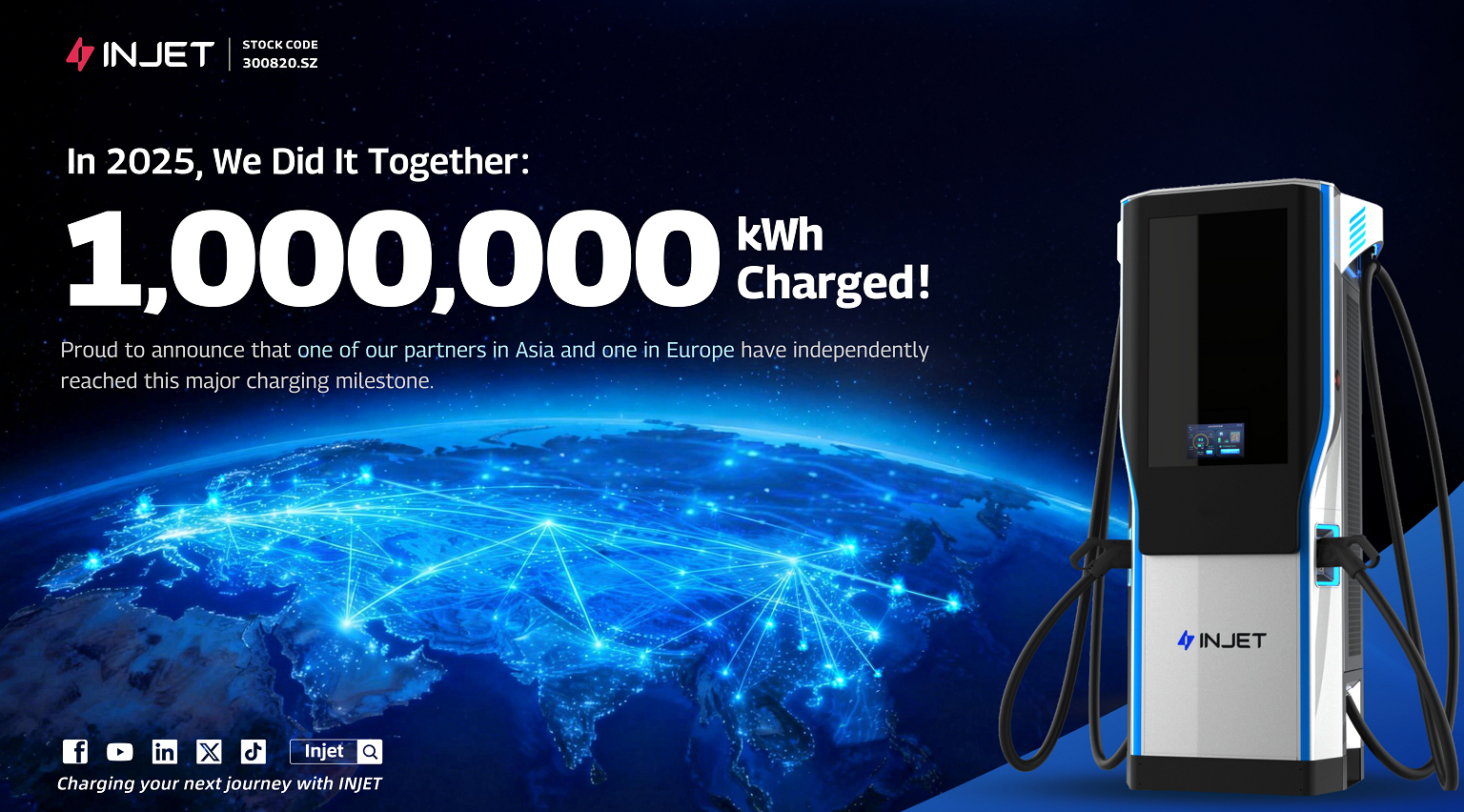
In 2025, two customers operating Injet Ampax DC fast chargers each surpassed 1 GWh of cumulative charging energy delivered.
Stable and efficient charger performance played a critical role in achieving this milestone.
For charging network operators, reliable equipment means:
-
1)Higher charging success rates
-
2)Improved customer experience
-
3)More predictable long-term revenue
Building the Next Generation of Charging Networks
As EV adoption continues to accelerate worldwide, the focus of charging infrastructure development is shifting.
Future networks will require not only higher power and wider deployment, but also higher reliability and smarter operations.
By combining advanced hardware architecture with intelligent maintenance systems, charging operators can significantly reduce failures and maximize charger uptime.
For operators looking to stay competitive in the rapidly evolving EV charging market, reliability by design is becoming a strategic advantage.
Explore how Injet New Energy’s charging solutions are designed for reliability and easy maintenance. Contact our team to learn more.