


Ingress Protection (IP) ratings are critical for evaluating the durability and safety of electric vehicle (EV) chargers, especially those intended for outdoor use. The IP rating system classifies the degree of protection provided by enclosures against the intrusion of solid objects and moisture.
Understanding IP Ratings Standard
Structure of IP Ratings: An IP rating typically consists of two digits. The first stands for the level to against solid objects and the next digit stands for protection against liquids, they combined as the IP Rating level.
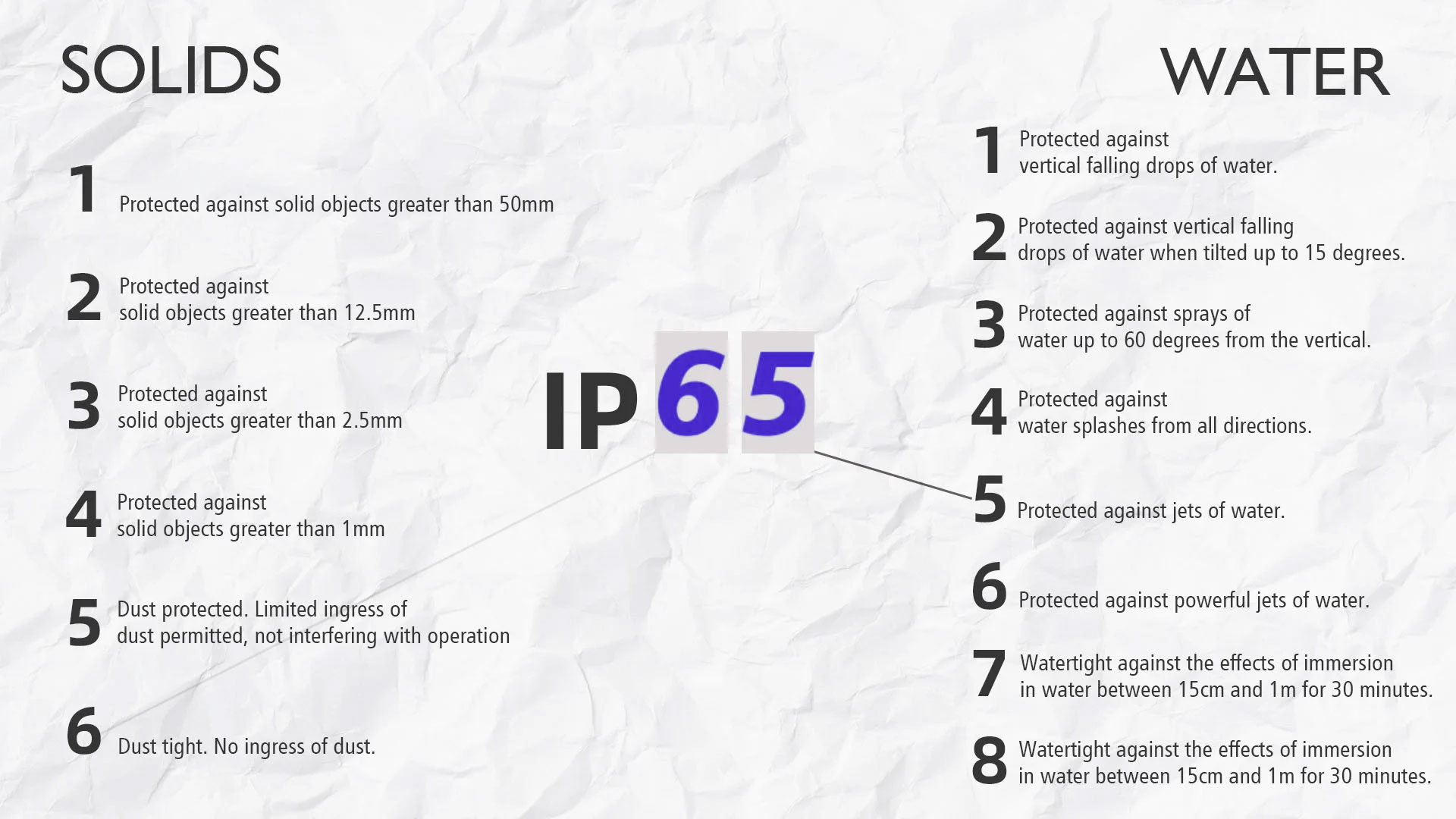
Indicates protection against solid objects
(ranging: from 0 to 6)
1: Protected against solid objects greater than 50mm, such as one hand.
2: Protected against solid objects greater than 12.5mm, such as a finger.
3: Protected against solid objects greater than 2.5mm, such as a screwdriver.
4: Protected against solid objects greater than 1mm, such as a wire.
5: Dust protected. Limited ingress of dust permitted, not interfering with operation.
6: Dust tight. No ingress of dust.
Indicates protection against liquids
(ranging: from 0 to 9).
For example, an IP67 rating means the device is dust-tight and can withstand immersion in water up to 1 meter for a limited time.
1: Protected against vertical falling drops of water.
2: Protected against vertical falling drops of water when tilted up to 15 degrees.
3: Protected against sprays of water up to 60 degrees from the vertical.
4: Protected against water splashes from all directions.
5: Protected against jets of water.
6: Protected against powerful jets of water.
7: Watertight against the effects of immersion in water between 15cm and 1m for 30 minutes.
8: Watertight against the effects of immersion in water under pressure for long periods.
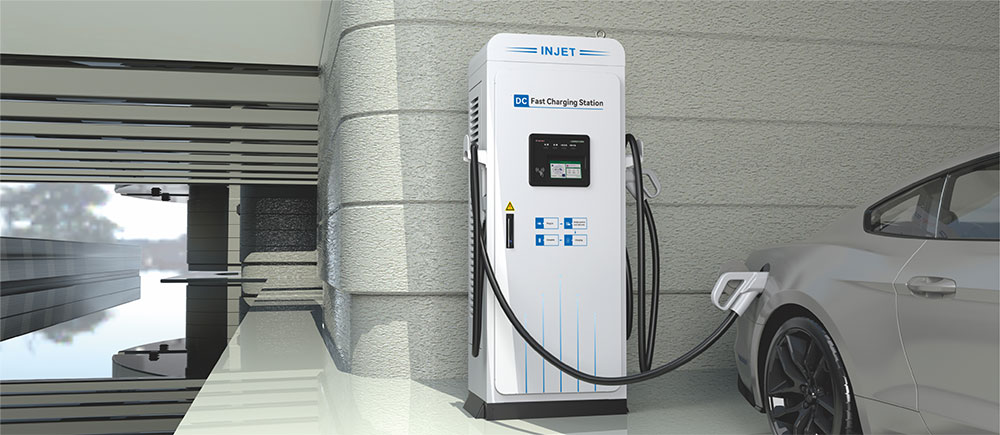
Injet Ampax Pro DC Charging Station
Common IP Ratings Explained
EV chargers IP ratings like IP54, IP65, and IP67.
IP54: Protected against limited dust ingress and water splashes.
IP65: Dust-tight and protected against water jets.
IP67: Dust-tight and can withstand immersion in water up to 1 meter for 30 minutes.
Importance of IP Ratings for EV Chargers:
Given that EV chargers are often installed outdoors, they must be able to resist environmental factors such as rain, snow, dust, and extreme temperatures.
A higher IP rating ensures that the charger can operate safely and effectively under various weather conditions, thus prolonging its lifespan and reducing maintenance costs.
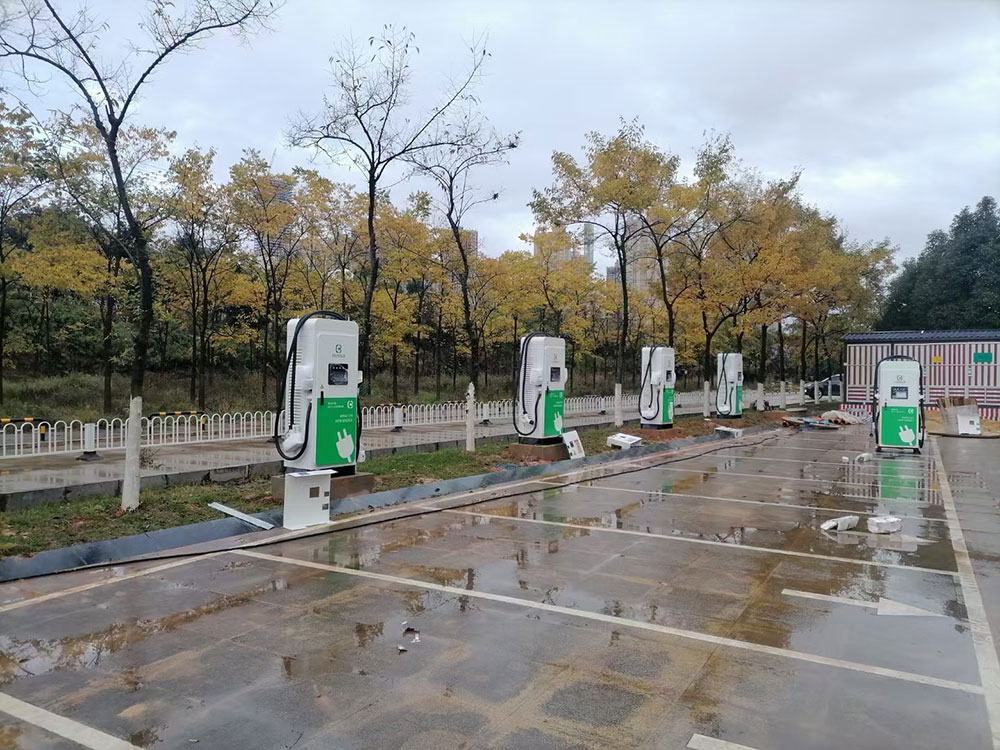
Injet Swift 2.0 IP65 ev charger
How to Choose the Right IP Rating for Your EV Charger Business
Selecting the appropriate IP rating depends on the installation environment and usage conditions.
For indoor charging stations, a lower IP rating like IP44 might suffice.
However, for outdoor DC fast charging stations, a higher rating such as IP65 is advisable.
IP65 is specifically engineered for high-pressure rain and dust protection—the exact conditions an outdoor charger faces daily. Choosing Injet’s IP65-rated chargers ensures maximum longevity without the unnecessary cost of extreme-depth waterproofing, providing the most cost-effective and reliable solution for your infrastructure.
This ensures the chargers remain functional and safe in harsh conditions, supporting a reliable business model.
Common IP Ratings for EV Chargers:
IP54: Provides limited protection against dust and water splashes from any direction.
IP65: Dust-tight and protected against water jets from any direction.
IP66: Dust-tight and protected against powerful water jets.
IP67: Dust-tight and can withstand immersion in water up to 1 meter.
IP68: Dust-tight and can withstand continuous immersion in water beyond 1 meter.
Factors Influencing IP Ratings
Installation Environment: Chargers installed in areas prone to heavy rainfall or dust storms should have higher IP ratings (e.g., IP67 or IP68) to ensure reliability.
Material Quality: The materials used in the construction of the charger affect its ability to achieve a high IP rating. High-quality seals and robust enclosures are essential for maintaining protection levels over time.
Usage Patterns: Chargers that are frequently used in public spaces may require higher ratings due to increased exposure to environmental elements compared to those used in controlled environments like home garages.
Enhancing EV Charger Durability with High IP Ratings
Investing in EV chargers with high IP ratings enhances durability and reliability. These chargers can withstand harsh weather conditions, reducing maintenance costs and downtime. Business owners can benefit from offering robust charging infrastructure, attracting more customers, and ensuring seamless operation of public charging stations.
IP Ratings and Compliance with International Standards
High IP-rated EV chargers comply with international standards, ensuring quality and safety. Compliance with these standards is essential for charging stations installed in regions with stringent regulations. EV owners trust and prefer charging facilities that adhere to recognized standards, enhancing the reputation and reliability of their charging networks.
Impact of IP Ratings on Maintenance and Longevity
IP ratings significantly impact the maintenance and longevity of EV chargers. Chargers with higher ratings require less frequent maintenance, saving costs and ensuring continuous operation. This is particularly beneficial for commercial EV chargers, where reliability is paramount to support the growing number of electric vehicles.
FAQs on IP Ratings for EV Chargers
What does an IP67 rating mean?
IP67 indicates full dust protection and the ability to withstand water immersion up to 1 meter for 30 minutes.
Are higher IP ratings always better?
Higher IP ratings offer more protection but might be unnecessary for all environments. Choose based on specific needs.
Do IP ratings affect charger performance?
Yes, higher IP ratings typically ensure better performance and durability in harsh conditions.
Can IP ratings prevent all types of damage?
No, IP ratings protect against dust and water but not other factors like impacts or extreme temperatures.
How do I determine the right IP rating for my charger?
Consider the installation environment and weather conditions to choose an appropriate IP rating.
In summary, selecting an EV charger with an appropriate IP rating is crucial for ensuring its durability and functionality in various environmental conditions. As the market for electric vehicles continues to grow, understanding these ratings will help consumers make informed decisions about their charging infrastructure
FAQ
IP65 means your charger is "dust-tight" and protected against water projected from a nozzle from any direction. It is the professional standard for outdoor charging, ensuring the internal electronics remain safe during heavy rain or wind-blown dust.
Yes. Our IP65-rated enclosures are specifically designed for unsheltered installation. They are built to withstand harsh weather conditions, including torrential rain, snow, and extreme temperature fluctuations without requiring additional roofing.
By completely sealing out moisture and fine dust particles, IP65 protection prevents internal corrosion and short circuits. This high level of ingress protection significantly extends the operational life of the charger compared to lower-rated alternatives.
Yes. In addition to the IP65 water resistance, Injet chargers are equipped with multiple electrical protections, including surge protection and leakage protection, making them safe for use in various weather conditions.
While IP54 is only splash-proof, IP65 offers a much higher level of security against powerful water jets. For long-term outdoor reliability, IP65 is the superior choice to ensure your investment is protected from the elements.