


If you’ve come across the term “CHAdeMO” while researching EV charging — maybe on a spec sheet, a charging map filter, or a forum thread about an older Nissan Leaf — it’s a connector standard with a genuinely interesting history, and understanding it also helps explain how the entire EV charging connector landscape got to where it is today. Here’s a clear, no-jargon breakdown of what CHAdeMO actually is, how it compares to the standards that have largely replaced it, and where it still matters.
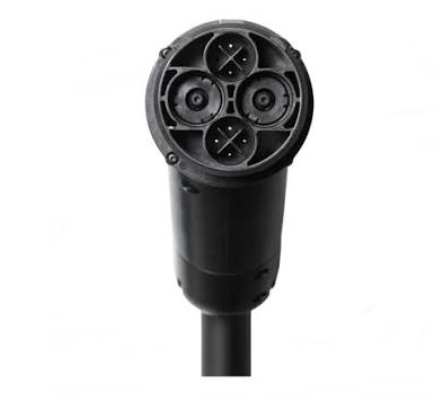
What Is CHAdeMO?
CHAdeMO is a DC fast-charging connector standard developed in Japan, created through a collaboration between the Tokyo Electric Power Company and a group of major Japanese automakers including Nissan, Toyota, Mitsubishi, and Fuji Heavy Industries (Subaru). It launched in 2010 as the world’s first widely deployed DC fast-charging standard — genuinely ahead of its time.
The name itself is a small piece of trivia worth knowing: “CHAdeMO” is short for “CHArge de MOve,” a play on the Japanese phrase “o cha demo ikaga desuka” — roughly, “how about a cup of tea?” — a nod to the idea that a fast charge should take about as long as a tea break.
Technically, CHAdeMO is a DC-only connector. Unlike newer standards, it doesn’t handle AC charging through the same port — a CHAdeMO-equipped vehicle needs a completely separate port for regular Level 2 AC home charging, and the CHAdeMO connector exclusively for DC fast charging. One genuinely forward-looking feature CHAdeMO had early on was bidirectional power flow (vehicle-to-grid, or V2G) capability — years before most competing standards began seriously addressing it.
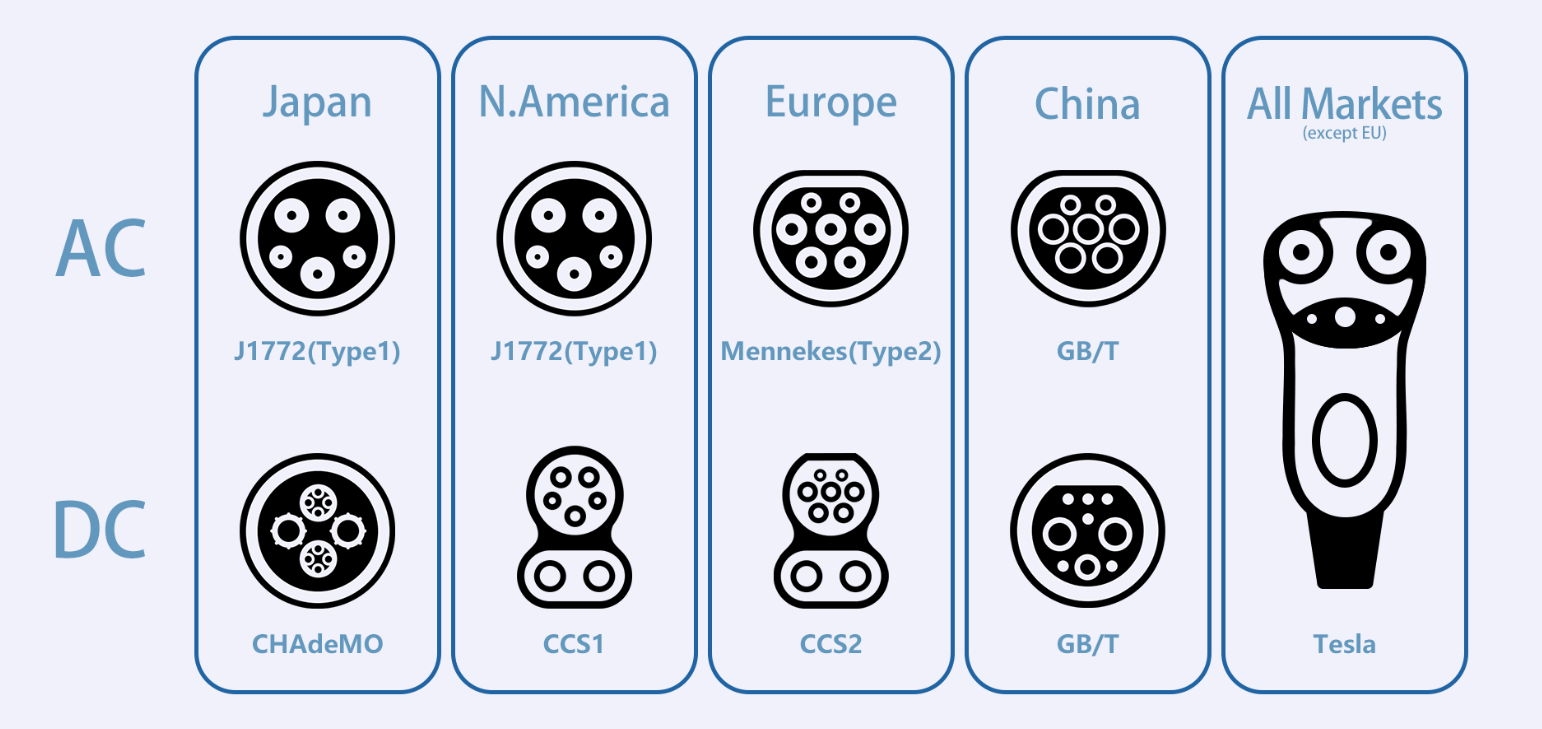
How CHAdeMO Compares to CCS and NACS
Here’s a simple side-by-side of the three connector types most relevant to North American and global EV charging discussions:
| CHAdeMO | CCS (Combined Charging System) | NACS (SAE J3400) | |
|---|---|---|---|
| Charging type | DC fast charging only (separate AC port required) | Combined AC + DC through one port | Combined AC + DC through one port |
| Origin | Japan (2010) | CharIN consortium, adopted broadly 2011–2014 | Tesla (2012), standardized as SAE J3400 in 2023 |
| Current status | Declining outside Japan; being phased out even there from 2026–2027 | Still widely used, gradually being replaced by NACS on new North American vehicles | Rapidly becoming the dominant North American standard |
| Typical vehicles | Older Nissan Leaf, some Mitsubishi Outlander PHEV | Most non-Tesla EVs sold 2014–2024 | Tesla; Ford, GM, Rivian, Hyundai, Kia, and others from 2025 onward |
The structural reason CHAdeMO lost ground to CCS and NACS comes down to something fairly simple: needing two separate ports on the vehicle (one for AC, one for DC) is less convenient and more expensive to manufacture than a single combined connector that handles both.
Why CHAdeMO Declined
CHAdeMO actually dominated the DC fast-charging landscape globally from roughly 2010 to 2018. What changed wasn’t a technical failure — it was an adoption problem. Non-Japanese automakers largely didn’t build CHAdeMO into their vehicles, meaning the standard never reached the critical mass that CCS achieved across Europe and North America. By the early 2020s, the shift was well underway: Electrify America, one of the largest DC fast-charging networks in the US, stopped installing new CHAdeMO connectors in January 2022. The Nissan Leaf — the last mass-market CHAdeMO vehicle sold in North America — went out of production in 2025, and most major charging networks in the US and Europe are no longer adding new CHAdeMO stalls to their stations.
Where CHAdeMO Still Matters in 2026
CHAdeMO isn’t entirely gone — it’s just become a regional and legacy technology rather than a global standard. Japan remains its last real stronghold, with roughly 12,600 CHAdeMO chargers still in service, largely because Japanese automakers continued supporting it domestically longer than elsewhere. But even that stronghold has a clear end date: Toyota, Honda, and Nissan have all announced plans to adopt NACS for the Japanese market starting in 2026–2027, meaning CHAdeMO’s last significant market is now on a transition timeline of its own.
For drivers of older CHAdeMO-equipped vehicles — mainly older Nissan Leafs and some early Mitsubishi Outlander PHEVs — the connector remains usable at the shrinking number of stations that still support it, and CHAdeMO-to-CCS adapters exist, though they tend to be expensive, capped at lower charging speeds, and less reliable than native charging.
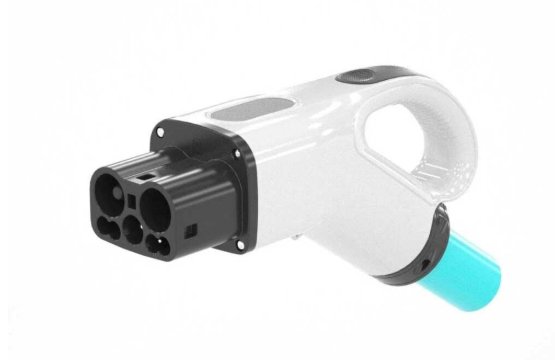
What Comes Next: ChaoJi
CHAdeMO’s story doesn’t end with simple decline — it has a successor. ChaoJi (also referred to as CHAdeMO 3.0) is a next-generation high-power DC charging standard developed jointly by the CHAdeMO Association and China’s Electricity Council, designed to be backward-compatible with both CHAdeMO and China’s GB/T charging standard, and engineered to support charging up to roughly 900 kW using dedicated adapter interfaces. Whether ChaoJi gains meaningful traction in high-power charging corridors — particularly in Asian markets — remains to be seen, but it represents the technical lineage of CHAdeMO continuing even as the original connector itself fades from everyday use.
What This Means for Charging Infrastructure Buyers
For anyone specifying or purchasing EV charging equipment today — whether for a public network, a fleet depot, or a commercial site — the practical takeaway is straightforward: CHAdeMO is a legacy connector that generally isn’t worth designing new infrastructure around outside of Japan-specific deployments. NACS (SAE J3400) and CCS remain the connectors that matter for new installations in North America and most global markets, with NACS increasingly becoming the default choice as automaker adoption accelerates. Understanding CHAdeMO’s history is still useful context, though — it explains why the industry converged on combined AC/DC connectors in the first place, and it’s a good reminder that connector standards, like most infrastructure decisions, are ultimately shaped by adoption and convenience as much as by underlying technology.
FAQ: CHAdeMO Charging
Q: What does CHAdeMO stand for?
A: CHAdeMO stands for “CHArge de MOve,” a name that also plays on the Japanese phrase for “how about a cup of tea,” referencing the idea that a fast charge should take about as long as a tea break.
Q: What vehicles use CHAdeMO?
A: Primarily older Nissan Leaf models and some early Mitsubishi Outlander PHEVs. No major non-Japanese automaker built CHAdeMO into their vehicles, which limited its long-term adoption outside Japan.
Q: Is CHAdeMO still supported at public charging stations?
A: In shrinking numbers. Major US networks like Electrify America stopped installing new CHAdeMO connectors in 2022, and most networks in the US and Europe are not adding new CHAdeMO stalls. Japan remains the largest active market, though even there, automakers are transitioning to NACS starting in 2026–2027.
Q: What’s the difference between CHAdeMO and CCS?
A: CHAdeMO is a DC-only connector requiring a separate AC port on the vehicle. CCS combines AC and DC charging into a single connector, which proved more convenient and cost-effective to manufacture — a key reason CCS overtook CHAdeMO in most markets.
Q: What replaced CHAdeMO?
A: In most markets, CCS and increasingly NACS (SAE J3400) have replaced CHAdeMO for new vehicles and charging infrastructure. CHAdeMO’s technical successor, ChaoJi, is a next-generation high-power standard designed for backward compatibility with CHAdeMO and China’s GB/T standard.
Conclusion
CHAdeMO’s story is a useful case study in how charging standards actually rise and fall — not purely on technical merit, but on how broadly automakers and charging networks adopt them. It was genuinely first to market and ahead of its time on bidirectional charging, but the convenience of a single combined AC/DC connector ultimately won out. Understanding that history is useful context for anyone following where EV charging infrastructure is headed next.