


Introduction: From Static Hardware to “Living” Energy Nodes
In the rapidly evolving era of global electric mobility, the definition of an EV charger is undergoing a fundamental transformation. In the past, purchasing a charger was seen as a “one-and-done” physical investment: install it, wire it, and use it until retirement, with its functions remaining unchanged throughout its lifespan.
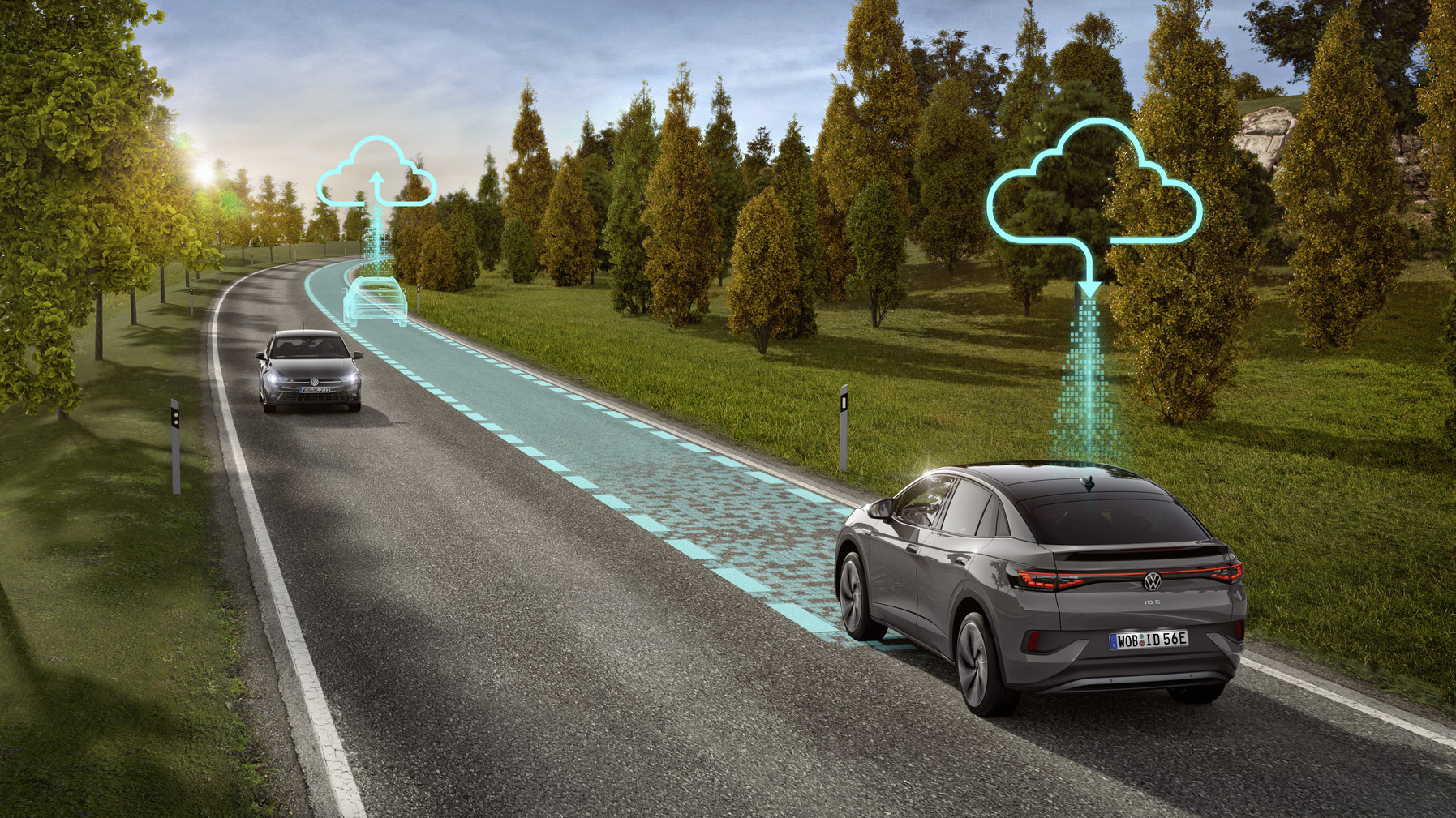
However, as the global market moves towards a smarter, more networked 2026, hardware is no longer the full extent of the asset. Much like a smartphone optimizes performance via system updates, an EV charger must “evolve” throughout its lifecycle. The hero behind this capability is OTA (Over-The-Air) firmware updates.
At Injet New Energy, we believe your infrastructure investment should appreciate over time. Especially regarding this year’s hottest trend in overseas markets—Enterprise Fleet Electrification—OTA is not just a feature; it is a strategic tool for reducing OPEX and ensuring commercial compliance.
(Image Source: EV central)
I. Deep Dive: How Does OTA Work?
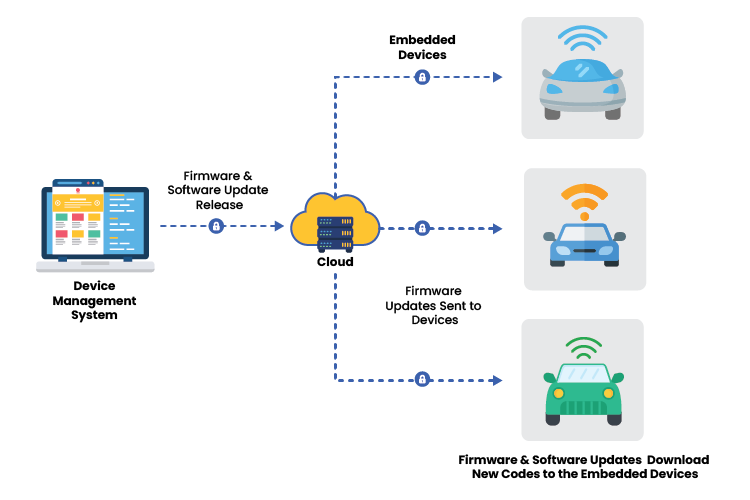
Before exploring its business value, we must understand the mechanism behind OTA. Simply put, OTA is a sophisticated remote data transmission and verification system involving four key stages:
1)Distribution & Scheduling: When Injet’s technical team develops optimization algorithms or security patches, the update package is encrypted and uploaded to our global cloud management platform.
2)Secure Transmission: The charger establishes a bidirectional encrypted channel with the cloud via built-in communication modules (Wi-Fi, 4G/5G, or Ethernet) to automatically retrieve and download updates.
3)Flashing & Verification: The update is executed during off-peak hours. The system utilizes a “dual-partition” backup mechanism—meaning if a power outage occurs during the update, the device automatically rolls back to the previous version, ensuring the hardware never becomes “bricked.”
4)Feedback & Activation: Once complete, the device sends a success report to the backend, and the new features or patches take effect immediately.
This silent and efficient process allows a charging network thousands of miles away to evolve in minutes.
(Image Source: ACL Digital)
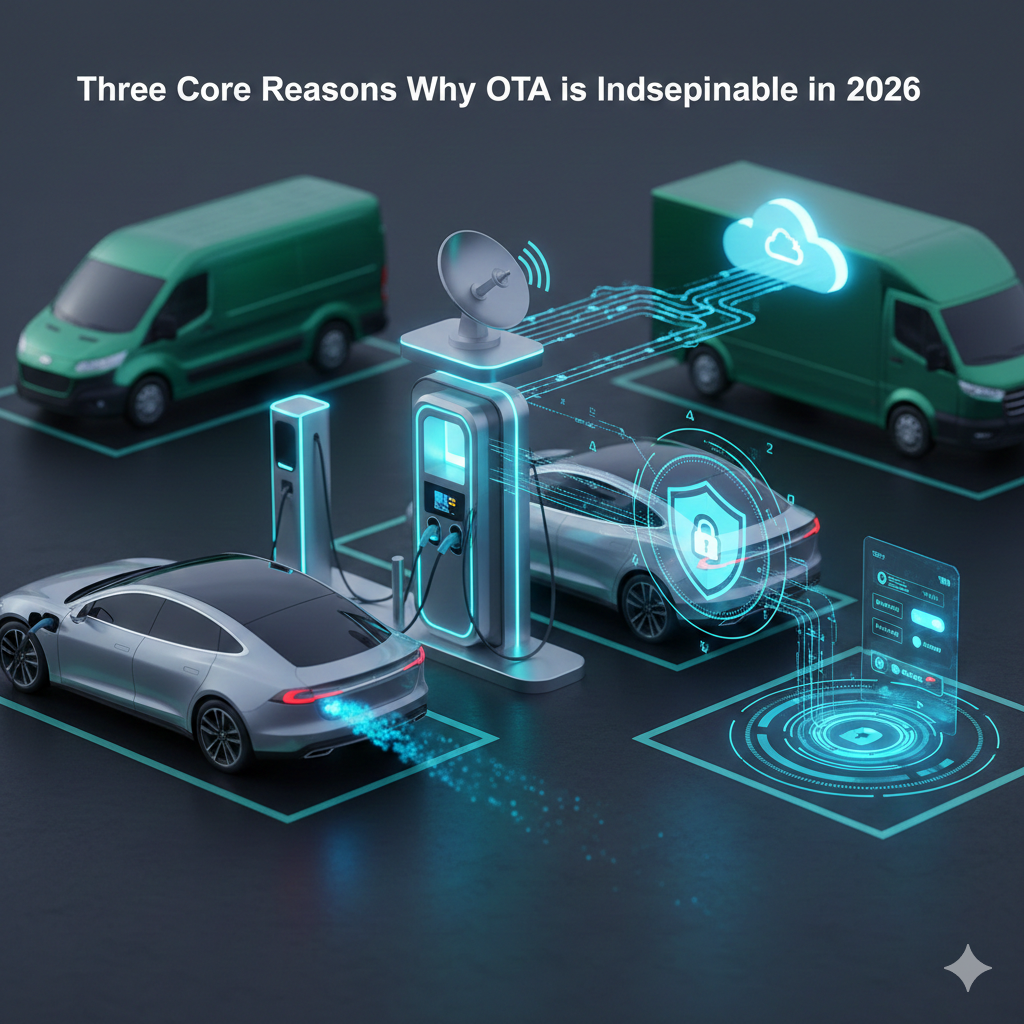
Ⅱ. Three Reasons Why OTA is Indispensable in 2026
1. Future-Proofing for New EV Models
The EV market iterates rapidly, with new models often bringing updated communication protocols like ISO 15118. OTA ensures your chargers can “talk” to any future EV without needing hardware replacements, protecting your assets from obsolescence.
2. Evolving Cybersecurity
As cyber threats become more sophisticated, static chargers can become entry points for hackers into corporate networks. We use OTA to continuously deploy the latest encryption protocols, building a dynamic “firewall” for your enterprise data.
3. Unlocking Business Models on Demand
What is an employee benefit today might need to become a public-facing revenue stream tomorrow. Via OTA, you can remotely add new payment gateways, tariff structures, or smart reservation features, responding flexibly to market shifts.
Ⅲ. Fleet Management: The Efficiency Code for Large-Scale Operations
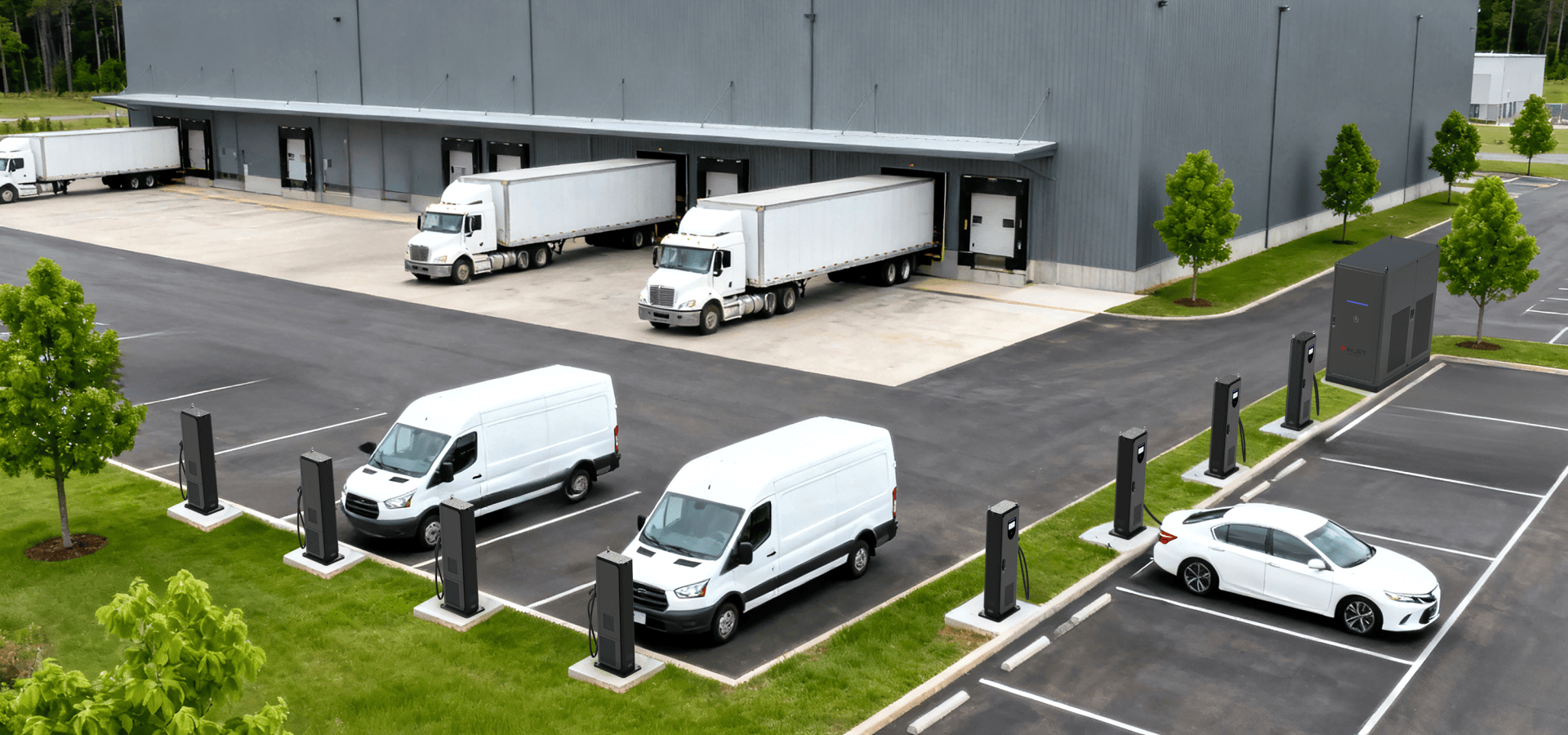
For fleet managers—such as private transport owners or logistics providers—managing hundreds or thousands of charging nodes is a monumental challenge. With fleet electrification being a top priority this year, OTA serves as the “killer app” for simplifying large-scale management.
1. Eliminating Costly On-Site Downtime
Traditional maintenance requires technicians to drive to various sites and manually connect laptops for debugging. For fleet managers, downtime equals lost revenue. OTA enables remote diagnostics and troubleshooting, reducing what could be a multi-day repair to a two-minute backend operation.
2. Centralized Mass Deployment
Consistency is the core of fleet management. Through enterprise-grade OTA infrastructure, managers can deploy updates from a central location with a single click, ensuring every charger in a city-wide or nationwide fleet runs on the exact same software version. This consistency is vital for optimizing total power consumption, unifying billing logic, and maintaining brand reputation.
3. Rapid Compliance & Risk Mitigation
International regulations (such as OCPP updates or local cybersecurity laws) change frequently. When new security vulnerabilities or compliance requirements emerge, OTA allows fleet operators to fortify their entire network within hours, reducing legal risks and staying ahead of the regulatory curve.
Ⅳ. OTA Performance Across Injet’s Portfolio
1.Injet Ampax 480 Commercial DC Charger: Targeted at high-traffic fast-charging hubs, using OTA to maintain long uptime by resolving issues with self-healing firmware before users perceive them.
2.Injet Swift 2.0 AC Charger: As the premier AC charger for enterprise fleets, the Swift 2.0 maximizes the flexibility of OTA technology. It supports the unified global distribution of new features and security patches, ensuring every device on the network evolves in sync. When regional regulations or billing policies change, operators can achieve full-network compliance instantly via “one-click upgrades” from the backend.
3.Injet Hub DC Charger: Designed for multi-functional scenarios, utilizing regular OTA updates for a smooth experience.
Conclusion
In the EV industry, “Software-Defined Hardware” is the new reality. By choosing Injet New Energy, you are not just buying high-quality charging equipment; you are investing in an intelligent ecosystem that evolves, adapts, and improves every day.
Ready to inject the power of evolution into your fleet? Contact our Consultants to start your efficient, smart charging future today.