


In the perception of many companies, electrification initially appears to mean higher upfront investment: electric vehicles are more expensive, charging infrastructure is complex to deploy, and organizations must adapt to new usage patterns.
Yet in real-world implementation, an increasing number of companies are discovering that, when approached correctly, electrification does not necessarily lead to higher costs. Instead, it represents a fundamental reshaping of the cost structure.
The real question is not whether to electrify, but how:
which dimensions should be addressed in order to genuinely reduce total cost of ownership (TCO).

(Image Source: Leasys)
1. From Purchase Price to Total Lifecycle Cost
In many corporate decision-making processes, electric vehicles are first compared to internal combustion vehicles purely on price.
This is often where misjudgment begins.
For companies, vehicles are not one-off purchases, but operational assets that require continuous use and investment over many years. What truly differentiates cost performance is not the purchase price on day one, but the total expenditure generated throughout the vehicle’s lifecycle: energy consumption, maintenance, downtime, and replacement timing.
In this respect, electric vehicles and combustion vehicles do not follow symmetrical logic.
When vehicles are used frequently, follow relatively fixed routes, and operate in predictable scenarios, the advantages of electric vehicles gradually emerge—not because they are “more advanced,” but because their cost structure is inherently more stable. Electricity prices fluctuate far less than fuel prices, and simplified mechanical systems translate into fewer maintenance interventions and lower exposure to unexpected repair costs.
This is why, in corporate fleets, electrification rarely begins with a full replacement strategy. Instead, it starts with the most suitable use cases.
When vehicle purposes are clearly defined, mileage is controlled, and daily dispatching is stable, electric vehicles cease to be an expensive alternative and become assets that are easier to manage and forecast.
From this perspective, the first step in corporate electrification is not a technical decision, but a shift in mindset:
no longer asking “How much does one vehicle cost to buy?” but rather “How much will it cost to operate over five years?”

(Image Source: Fleet2Track)
2. Optimizing Charging Strategy, Rather Than Pursuing the Fastest Charging
In corporate electrification projects, charging is often treated as a technical issue: power capacity, equipment sophistication, or charging speed. In practice, however, charging-related costs are driven far more by how charging is used than by technical specifications.
For most corporate fleets, vehicles do not need to start every day fully charged, nor do they need to rely frequently on high-power DC fast charging. What truly drives up costs is unplanned, reactive charging—resorting to public fast chargers to cope with uncertain journeys, or charging during high-tariff periods.
When charging is integrated into daily operational rhythms, the cost structure changes significantly.
In scenarios where vehicles are parked for extended periods—overnight, between work shifts, or at fixed depots—low to medium power AC charging already covers the vast majority of actual needs. Charging no longer “consumes time”; it simply takes place during natural vehicle downtime.
Many companies only realize later that reducing charging costs is not about faster equipment, but about more stable charging habits. When vehicles are charged at the right time and in the right place, peak electricity demand is smoothed, reliance on public charging decreases, and overall energy costs become more predictable.
By contrast, charging solutions that are disconnected from real driving patterns, parking conditions, and dispatch logic tend to result in higher operational costs over time.
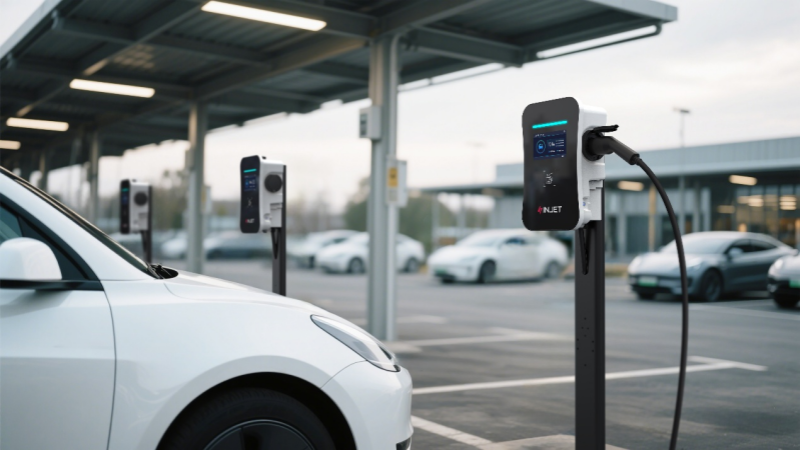
3. Using Data to Reduce Invisible Waste, Not to Increase Management Burden
In the early stages of electrification, many companies instinctively keep their distance from “data.” On one hand, it seems complex; on the other, it risks being perceived as employee surveillance.
In reality, the most valuable data does not serve performance assessment, but early identification of inefficiencies.
Compared with traditional combustion vehicles, one major change introduced by electric vehicles and charging infrastructure is that usage behavior becomes measurable.
Whether vehicles are fully utilized, whether charging stations are correctly located, and whether energy consumption aligns with expectations no longer rely on intuition alone—they can be verified through data.
In corporate fleet projects, the most immediate value of data typically appears in very concrete situations:
1)Vehicles that remain underutilized while still consuming budget and resources
2)Charging points that are rarely used, often due to poor placement or unclear usage rules rather than technical failure
3)Vehicles that consistently wait until very low battery levels to charge, leading to emergency charging and additional expense
4)Energy consumption that deviates significantly from expectations without being detected early
These are not management failures, but information delays.
Without data support, such inefficiencies often surface only much later, in the form of cost overruns. When data is used to observe overall trends rather than track individual behavior, it can actually reduce management complexity.
It enables companies to correct course while issues are still manageable, rather than absorbing the consequences after investments have already been locked in.

(Image Source: Claight)
4. Avoiding Repeated Investment in Charging Infrastructure
In many electrification projects, charging infrastructure is treated as a construction task: select equipment, carry out installation, connect to the grid—and the project appears complete.
In practice, many companies gradually realize that charging-related costs do not stop once installation is finished, but continue to surface in different forms.
The reason is simple. Fleet needs are not static. Fleet size evolves, vehicle usage changes, and employee habits develop over time. If charging infrastructure is designed only to meet current needs, every subsequent change may trigger additional investment.
These costs are often subtle, yet they accumulate steadily over several years.
A charging deployment that lacks an overall planning perspective may appear economical in the short term, but in the medium to long term, it often results in greater complexity and repeated incremental spending. Only when deployment pace, scalability, and future evolution are considered from the outset can companies truly control this category of cost—rather than constantly reacting to new requirements.
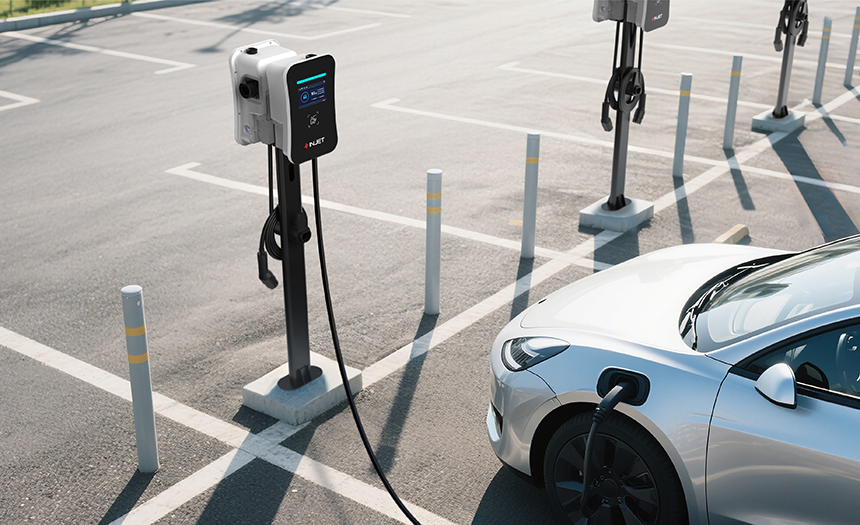
5. Reducing Transition Friction Through Organization and Usage Rules
In many corporate electrification projects, additional costs do not necessarily stem from equipment or energy, but from recurring operational friction during the transition.
Examples include vehicles charging more frequently than necessary, occupying charging spots long after reaching full charge, or relying excessively on public charging due to misunderstandings about range.
These behaviors are not the result of employee resistance, but of insufficient organizational preparation.
When usage rules are unclear, responsibilities are blurred, and support channels are missing, transition costs tend to manifest as operational disorder.
In practice, companies often reduce this friction through simple yet effective measures:
1)Defining clear principles for vehicle and charging use at project launch, rather than leaving employees to experiment
2)Appointing clear internal points of contact to centralize common questions
3)Allowing an adaptation period during early deployment, adjusting rules based on feedback instead of fixing them permanently from day one
While these measures may appear basic, they share a common objective: reducing uncertainty.
When employees know how to use vehicles, whom to contact in case of issues, and which behaviors are encouraged, usage patterns naturally stabilize.
From a cost perspective, organizational investment often delivers the highest return. It requires no additional hardware budget, yet reduces misuse, lowers external dependency, and improves overall utilization of vehicles and charging infrastructure. As rules, support, and feedback mechanisms mature, the “friction costs” associated with transition gradually decline.

(Image Source: SHRM)
Conclusion
The analysis above shows that final cost outcomes are determined by the coherence of the overall approach—from vehicle usage scenarios and charging strategy design, to long-term infrastructure planning and organizational alignment. Corporate electrification reduces costs not through isolated decisions, but through a consistent and integrated strategy.
In practice, many additional expenses arise not because electric vehicles are inherently “more expensive,” but because of insufficient planning, fragmented deployment, or repeated corrective investments. When electrification is approached as a system rather than a series of isolated choices, costs tend to become increasingly controllable over time.
INJET builds its corporate charging solutions around this very logic. Our offering extends beyond charging equipment to include early-stage planning support, equipment supply, local installation services, local maintenance, and after-sales support—helping companies continuously optimize charging infrastructure efficiency and long-term cost performance at every stage.