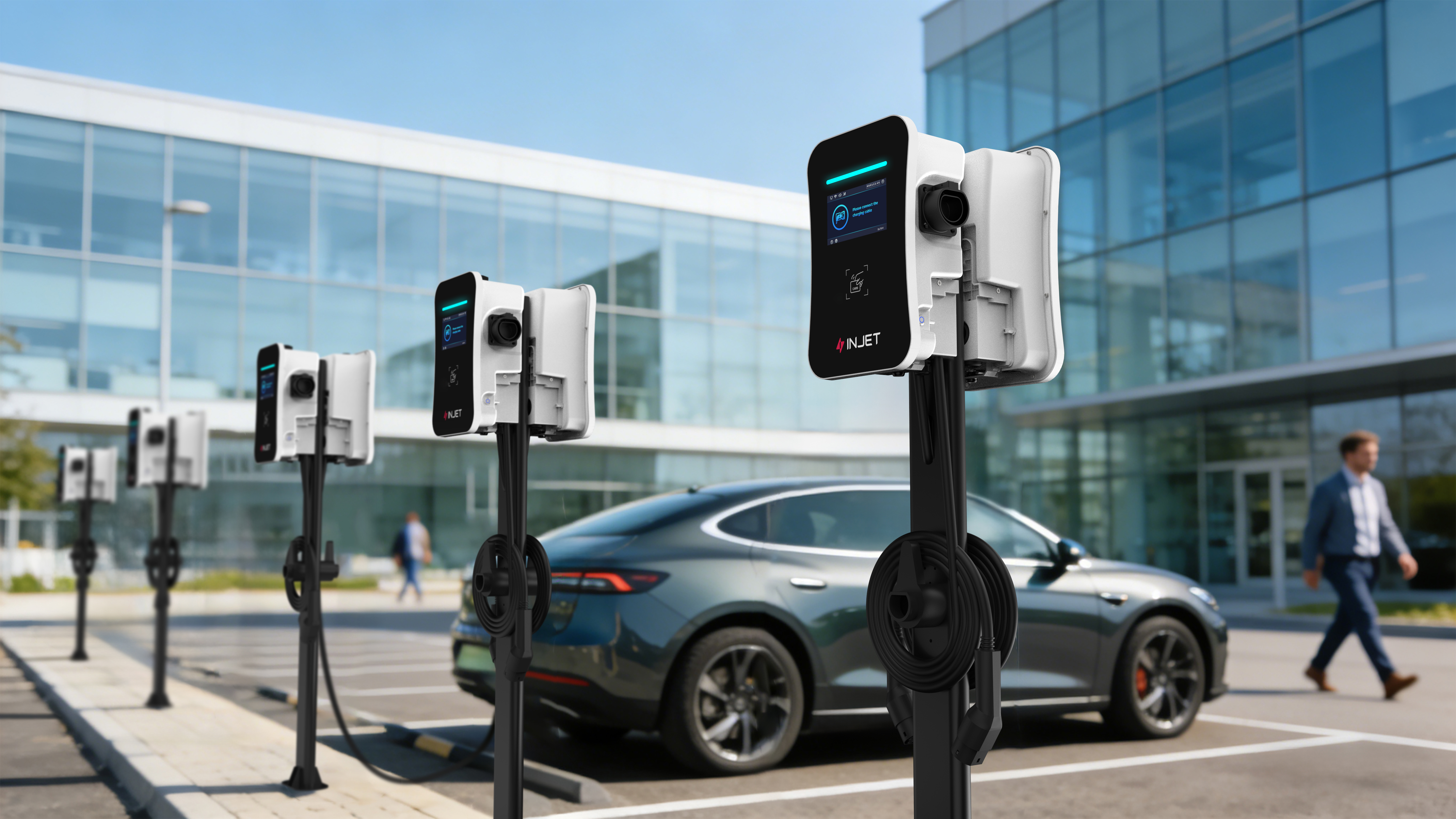


As corporate fleets accelerate their transition to electrification, one seemingly simple yet critical question repeatedly causes frustration: Which EV charger should we use?
The market appears diverse at first glance, but nearly every product falls into one of two buckets: residential chargers designed for home users, and commercial chargers built for public charging sites. This dichotomy places fleet managers in a constant trade-off: force-fit a residential charger into an enterprise environment, or deploy a commercial charger overloaded with irrelevant functions.
Neither compromise works. The real issue is structural. Fleet charging is not about convenience or public transactions; it is fundamentally an operational challenge involving efficiency, cost control, and centralized management. That becomes especially clear in two core scenarios.

(Image Source: Servotech)
Scenario 1: Employees’ Homes — The Overlooked “Frontline” of Operations
Home charging may look like an individual action, but for fleets, it is an extension of their energy network. Here, the limitations of residential chargers become immediately visible:
• Opaque costs: How do you accurately measure, allocate, and reimburse electricity expenses?
• Asset mobility: How do you retrieve or relocate devices efficiently when personnel change?
• Safety exposure: How do you remotely ensure electrical safety across diverse household grids?
• Data fragmentation: How do you monitor device status and energy consumption in real time?
This is not personal charging. It is distributed asset management—something traditional home chargers were never designed to support.

(Image Source: octopus electric vehicles)
Scenario 2: Corporate Parking Lots — An Engine Hampered by Mismatch
A company’s internal charging area has one mission: keep the fleet running with maximum uptime. Yet commercial chargers, built for anonymous user transactions, are poorly aligned with internal operational requirements:
• Power constraints: How do you intelligently allocate limited site capacity to maximize usable power?
• Rigid scheduling: Can charging sequences be optimized according to task urgency or dispatch plans?
• Cost governance: How do you implement granular cost allocation across departments and projects?
• Maintenance burden: With business continuity at stake, can the system provide instant alerts and remote diagnostics?
Enterprises do not need isolated payment terminals. They need intelligent nodes embedded within their operational workflow.
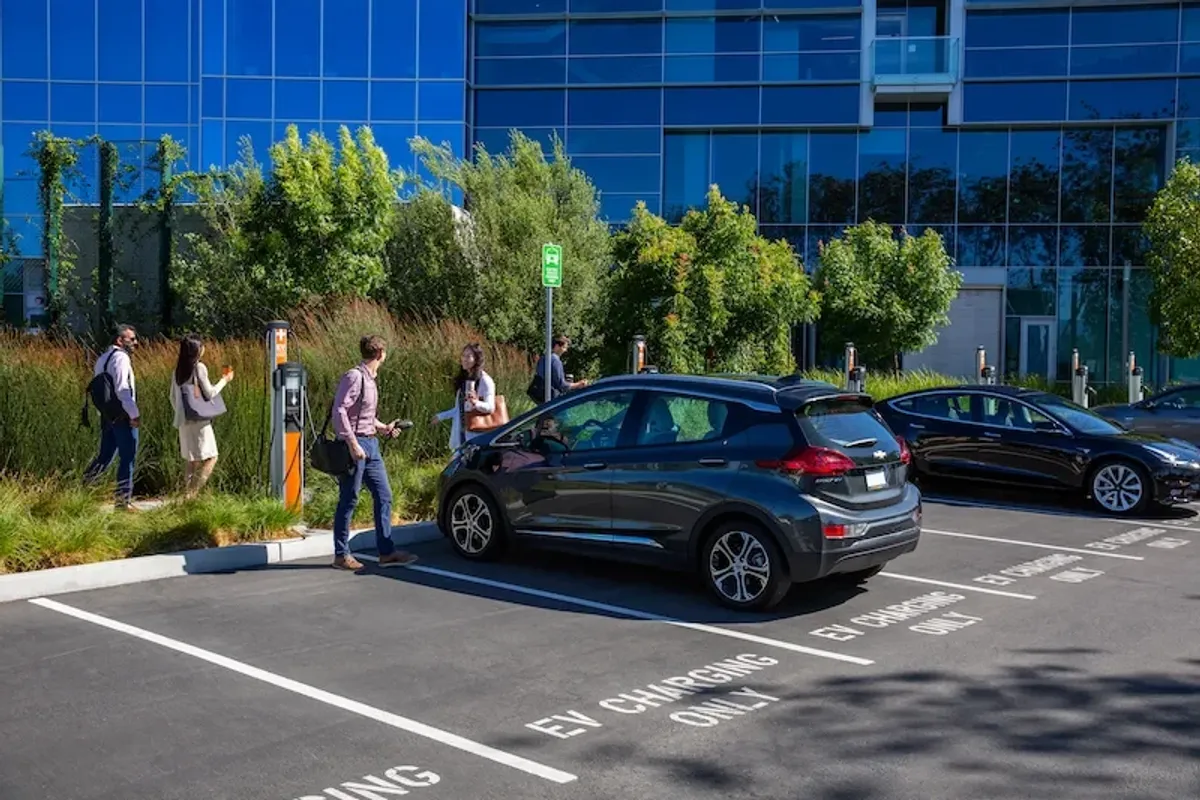
(Image Source: DCVELOCITY)
The Case for a “Third Path”: Integrated Fleet Charging as the Only Viable Answer
The coexistence of home and workplace charging creates a structural dilemma: residential chargers lack control, while commercial chargers lack adaptability and cost efficiency.
What fleets truly need is a unified management architecture capable of centralizing monitoring, dispatching, and cost analytics across all charging assets and behaviors.
This is why the market urgently needs a “third type” of EV charging solution—one explicitly engineered for integrated fleet operations. Such a solution must combine the installation flexibility of residential chargers with the robustness of commercial units, but above all, must embed enterprise-grade management intelligence that works seamlessly across scenarios.
INJET New Energy’s Solution
Drawing on deep insights into fleet operations, INJET New Energy is preparing to launch the next-generation charging solution built for this exact purpose: Injet Swift 2.0.
It is our answer to the question: What makes the “third way” possible?
Stay tuned for our next article, where we will unveil how Swift 2.0 translates this vision into a practical, high-performance solution—finally delivering the “perfect score” charger corporate fleets have long been waiting for.