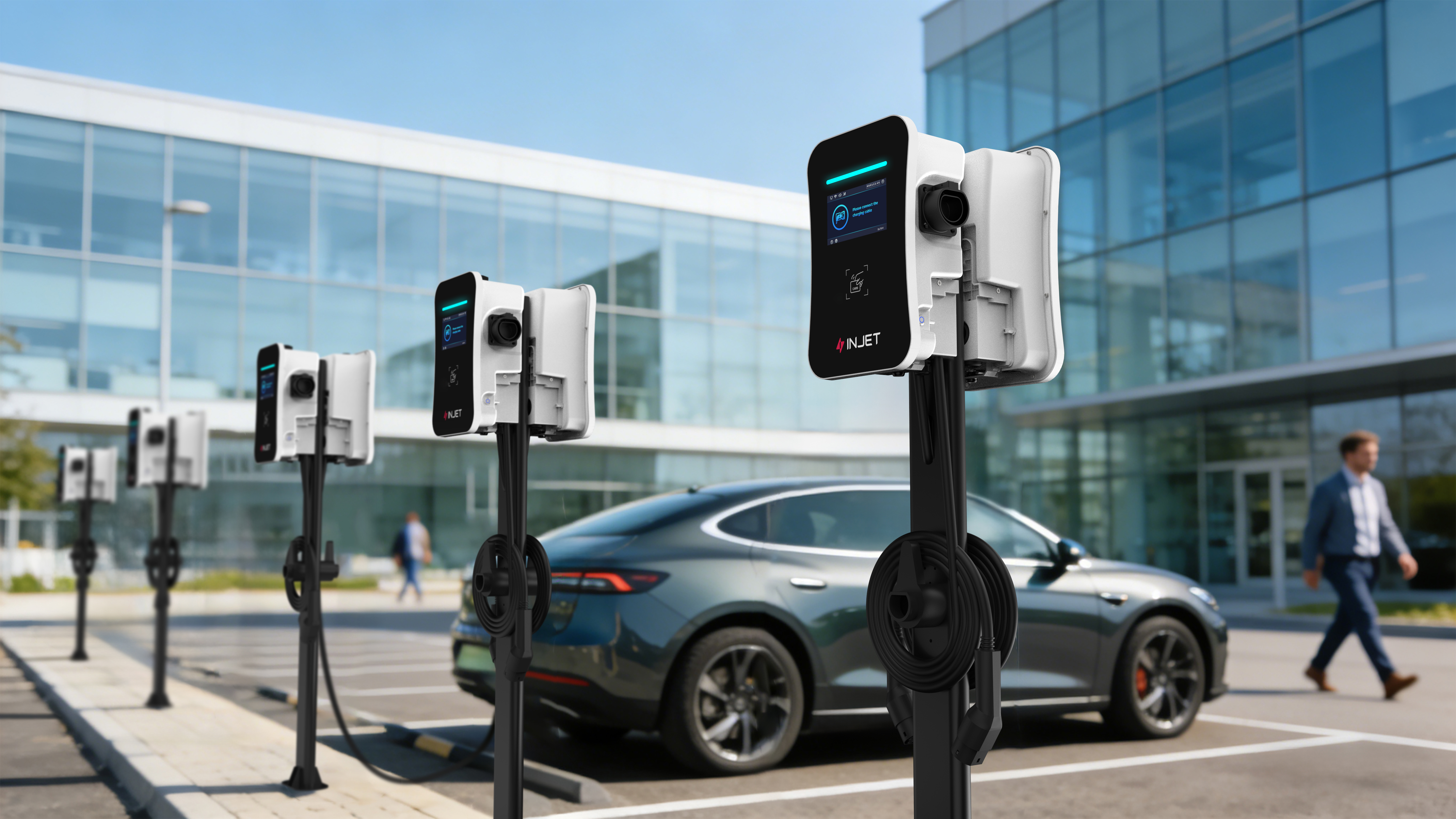


In our previous article, “Why Can’t Your Fleet Ever Find the ‘Perfect’ EV Charger?”, we made a central point clear: the real challenge of fleet charging is not simply installing chargers, but building a unified, controllable, and operational charging management system. The complexity of that system becomes most apparent when vehicles leave the corporate depot and begin charging at employees’ homes.
Many fleet managers initially view home charging as a simple employee benefit or reimbursement issue. Yet as a fleet grows from a handful of vehicles to dozens or even hundreds, it quickly becomes clear that this is far more than extending a purchase list for residential chargers. At its core, home charging for employees is not a “personal charging behavior,” but a corporate operational node that happens to take place in a residential environment. That distinction changes everything.
Individual EV owners focus on convenience and electricity cost. Fleet managers, by contrast, must confront hidden cost structures, asset leakage, risk exposure, and fragmented data—spread across countless private garages.

(Image Source: epower)
Five Management Pain Points When Home Charging Becomes an Operational Gap
Deploying charging equipment to employees’ homes effectively extends a company’s operational boundary. Issues that are manageable in centralized depots become complex and decentralized:
1. Cost Accounting Complexity
Residential electricity prices and tariff structures vary widely by region and household. Without standardized measurement and transparent data, accurately calculating, allocating, and reimbursing charging costs can quickly turn into a manual and error-prone process.
2. Loss of Asset Control
When chargers—owned by the company—are installed in private residences, employee turnover or relocation creates high recovery, relocation, and reinstallation costs. In practice, many chargers become stranded assets that are difficult to reuse, turning into sunk costs.
3. Safety and Compliance Risks
Home electrical infrastructure differs dramatically from one residence to another. Aging wiring or insufficient capacity can lead to tripping, overloads, or even safety incidents. When issues arise, responsibility and liability often fall back on the employer.
4. Data Fragmentation and Management Blind Spots
If home charging data cannot be integrated into a centralized fleet or energy management platform, operators lose visibility into total energy consumption, charging behavior, and cost structure—making optimization and informed decision-making nearly impossible.
5. Inefficient Operations and Maintenance
With chargers distributed across multiple locations, traditional on-site service models become slow and expensive. Delayed response times directly impact employee experience and fleet availability.

(Image Source: GREENFLEET)
The Limits of Traditional Solutions: A Mismatch by Design
To address these challenges, companies typically choose between two existing product categories—yet both fall short because they were designed for fundamentally different use cases.
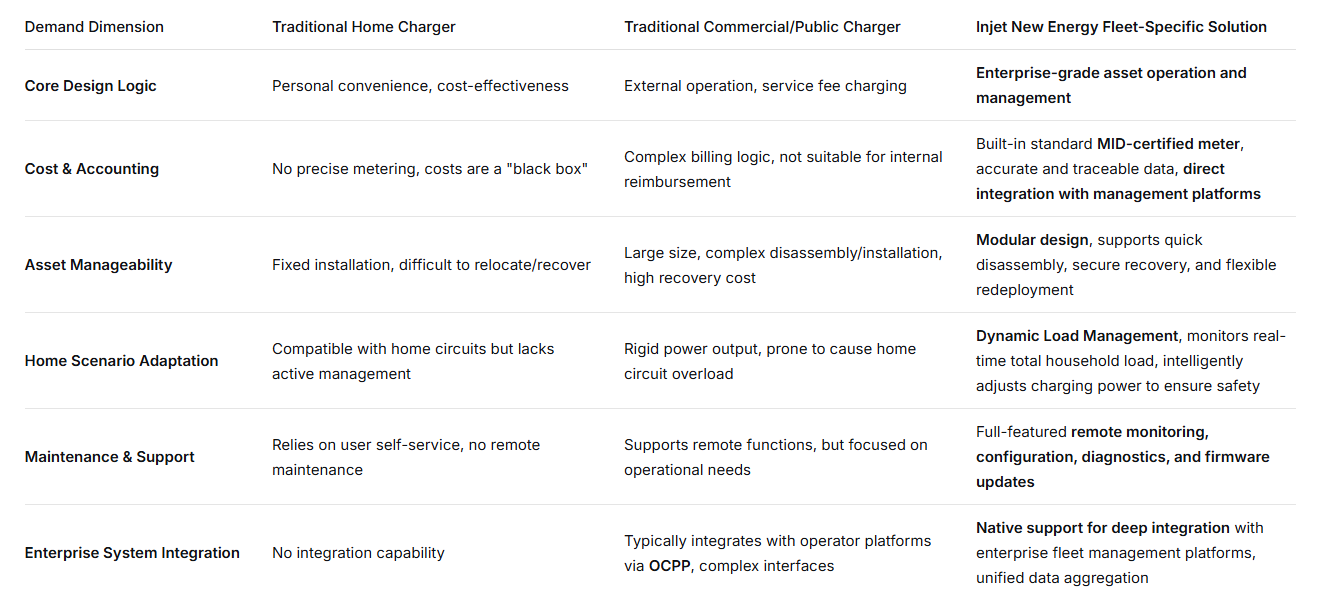
Conventional residential chargers lack the enterprise-grade management capabilities required for fleet operations. Meanwhile, commercial chargers, while powerful, are designed for public or revenue-generating environments. Deploying them in homes is akin to “using a surgical instrument to cut bread”—overengineered, bulky, and costly, with features that add complexity rather than value.
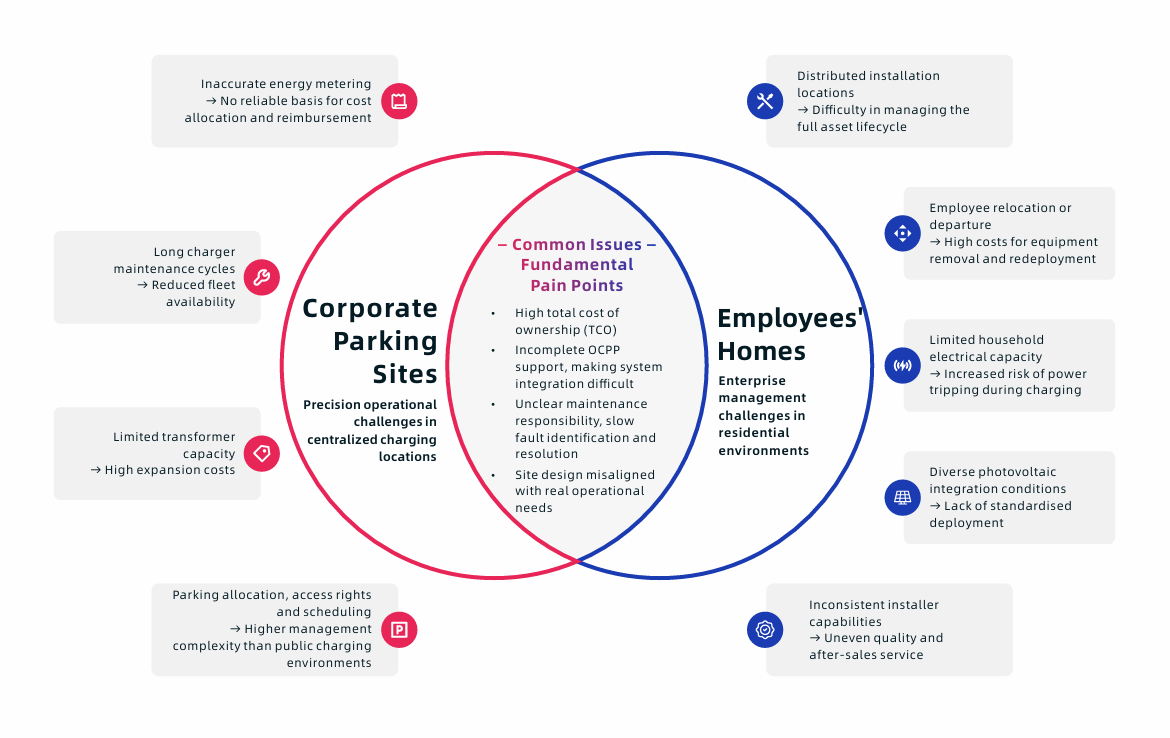
(Source: Injet swift 2.0 AC charging solution for Corporate Fleets)
Conclusion: Defining the “Third” Type of Charging Solution
Employee home charging demands neither an upgraded residential charger nor a simplified commercial charger. What the market truly needs is a third category of AC charging solution, purpose-built from the ground up for enterprise fleet operations.
The mission of this solution is clear:
to fully respect residential safety and privacy requirements, while giving fleet operators the visibility, control, and manageability they need over distributed charging assets. It must combine residential-friendly characteristics—compact size, easy installation, intuitive operation—with enterprise-grade capabilities such as centralized data management, asset tracking, and remote operations.
This philosophy lies at the heart of how INJET New Energy approaches next-generation fleet charging solutions. Our goal is not merely to supply hardware, but to deliver end-to-end operational capability that integrates seamlessly into enterprise energy and fleet management systems.
If you would like to explore the design logic and real-world implementation of such a solution, we invite you to review our complete AC Charging Solution for Enterprise Fleets via the link below.
https://www.injetenergy.com/uploads/Injet-Swift-2.0-AC-Charging-Solution-for-Corporate-Fleets.pdf
Series Preview
This article focused on the distributed scenario of employee home charging and the enterprise-level management logic behind it. Yet fleet charging challenges are not only about decentralization—they also exist in centralized environments. In our next article, we will turn our attention back to the corporate parking lot, a scenario often misunderstood through the lens of public charging. We will explore why an efficient enterprise charging depot is fundamentally different from a traditional public charging station. Stay tuned.