


2026 Industry Update: The Rise of NACS and Universal Compatibility
As we move into 2026, the EV charging landscape has seen a significant shift, particularly with the widespread adoption of the NACS (North American Charging Standard). While Type 1 and Type 2 remain the standard for many regions, most major automakers have now transitioned to NACS to provide seamless access to broader charging networks.
For businesses and EV owners, ensuring your charging infrastructure is future-proof is more critical than ever. Whether you are utilizing CCS, Type 2, or the latest NACS connectors, understanding these standards is key to optimizing charging efficiency and vehicle compatibility in today’s rapidly evolving market.
What is an EV Charger Connector?
An EV charger connector is the physical interface that connects an electric vehicle to a charging station. It ensures the safe and efficient flow of electricity by reducing the risks of loose connections, sparks, or electrical shorts. Charger connectors come in different shapes, sizes, and capacities, tailored to meet the demands of specific vehicle models and regional standards.Depending on the type of connector and the associated power delivery method, charging can either be slow and steady (AC) or rapid and direct (DC).
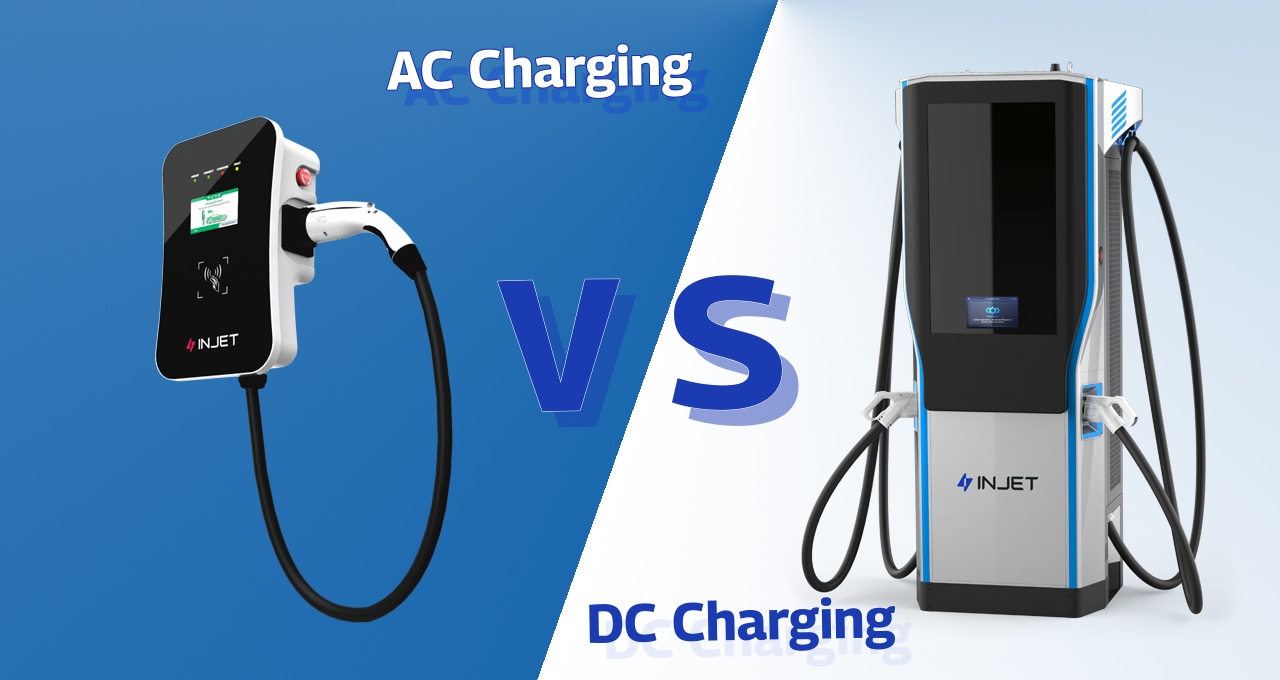
AC vs. DC Charging: What’s the Difference?
Understanding the distinction between AC and DC charging is fundamental to grasping how electric vehicle (EV) charging systems work.
AC Charging: Alternating Current (AC) chargers rely on the vehicle’s onboard AC-DC converter to transform AC electricity into Direct Current (DC) that the battery can store. Since this conversion happens within the vehicle, the charging speed is limited by the capacity of the onboard converter. As a result, AC charging is typically used for Level 1 and Level 2 chargers, which are slower but suitable for overnight or workplace charging.
DC Charging: Direct Current (DC) fast chargers perform the AC-DC conversion within the charging station itself, bypassing the vehicle’s onboard converter. By delivering DC electricity directly to the battery, these chargers provide significantly faster charging speeds, making them ideal for quick stops at public charging stations or during long trips. DC charging is often associated with Level 3 chargers, capable of providing high power outputs to recharge vehicles in minutes rather than hours.
Overview of Electric Vehicle Connector Types
Understanding the various EV charging connectors is essential for vehicle owners, charging station providers, and policymakers. This guide will highlight the key differences between EV connector types, their regional use, charging speeds, and more.The figure below shows a visual summary of EV connectors currently in use on the market.
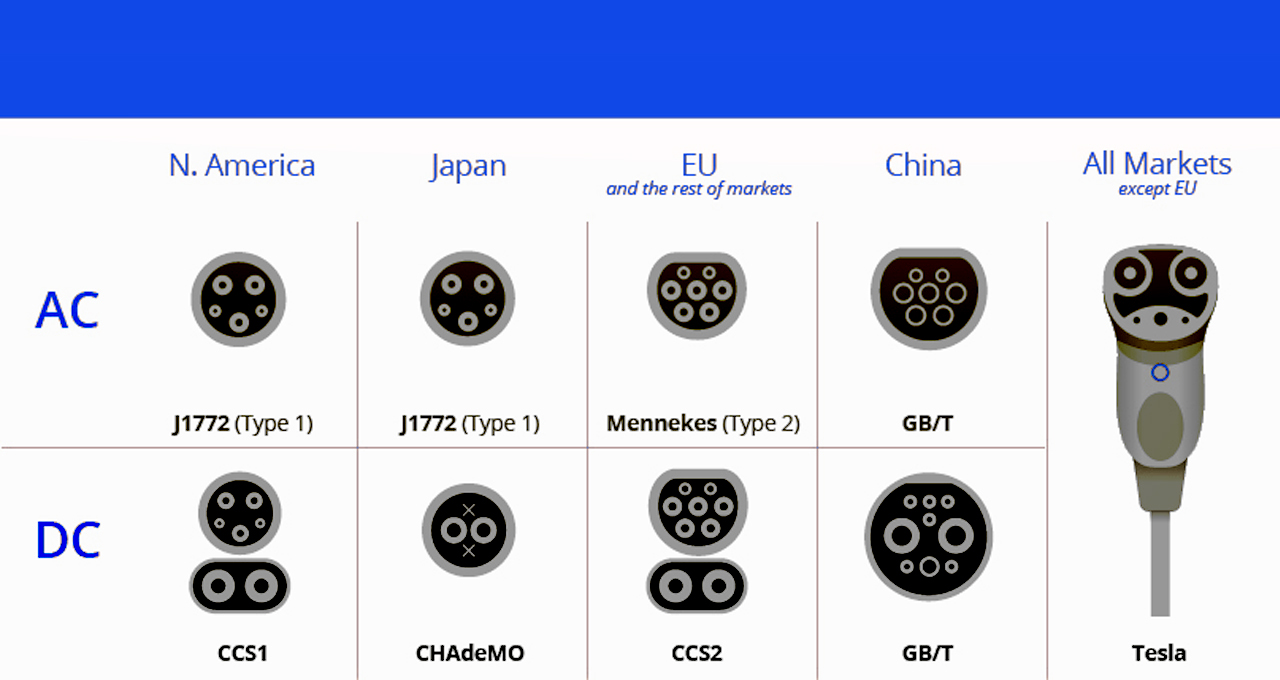
(Overview of EV Charger Connector Types)
Types of AC EV Chargers Connectors
Type 1 connector - J1772
The Type 1 connector, also known as J1772, is the standard AC charging plug used primarily in North America and Japan.This five-pin connector is designed for single-phase power and supports both Level 1 and Level 2 charging. lt can charge up to 80 amps utilizing 240 volts input, providing a maximum power output of an EV charger of 19.2 kW.
Unlike the Type 2 connector commonly used in Europe, the Type 1 connector lacks an automatic locking mechanism, which poses a safety risk as the cable could be unplugged without authorization during charging.
In North America, Tesla uses proprietary NACS chargers, but all Tesla vehicles can be equipped with an adapter that connects to a Type 1 J1772 plug, ensuring that Tesla electric vehicles can also use chargers equipped with a Type 1 connector.
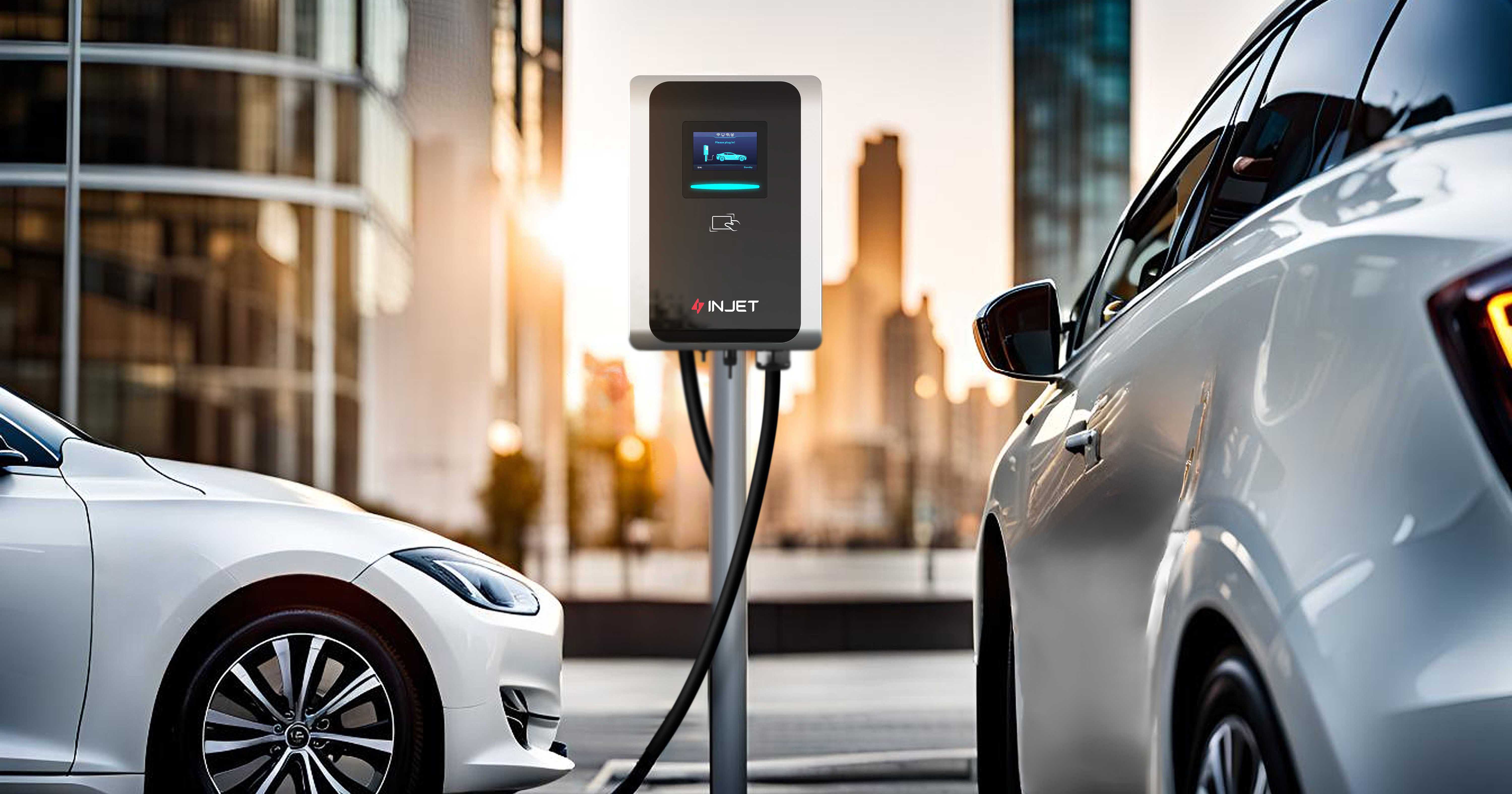
(Injet Vision Type 1 AC Charger)
Type 2 connector - Mennekes
The Type 2 connector, widely used across Europe, the United Kingdom, the Middle East, Africa, and Australia, has become the standard for EV charging in these regions. With its seven-pin design, the Type 2 connector supports both single-phase and three-phase power, providing flexibility for different charging scenarios. Capable of handling up to 32 amps with a 400-volt input, it delivers a robust maximum charging power of 22 kW, making it suitable for both home and public Level 2 charging stations.
One of the standout features of the Type 2 connector is its integrated locking mechanism. This ensures that the charging cable remains securely attached to the vehicle throughout the charging session, preventing any unauthorized disconnections or tampering. The automatic lock not only enhances security but also gives peace of mind to EV owners, knowing their vehicle is safely charging without the risk of accidental interruptions.
GB/T AC Connector
The GB/T AC connector is the official standard for AC charging in China, developed under the Guobiao (GB) standards system. China GB standards can be identified as Mandatory or Recommended by their prefix code, Prefix code GB are Mandatory standards, GB/T are Recommended standards (Quasi-Mandatory standards ).
This seven-pin connector is primarily used for Level 2 charging, offering a power output of up to 7 kW for typical use cases, with a maximum potential output of 21 kW under specific conditions.Typically utilize 220 volts AC with an output current of 16 or 32 amps for, respectively.
Unlike many international standards, GB/T AC connectors are not compatible with DC charging ports, necessitating separate charging ports for AC and DC on Chinese EVs. This separation ensures that charging systems are optimized for their respective applications. GB/T connectors are designed to cater specifically to the unique needs of the rapidly growing Chinese EV market, supported by a vast network of compatible charging stations.
Types of DC EV Chargers Connectors
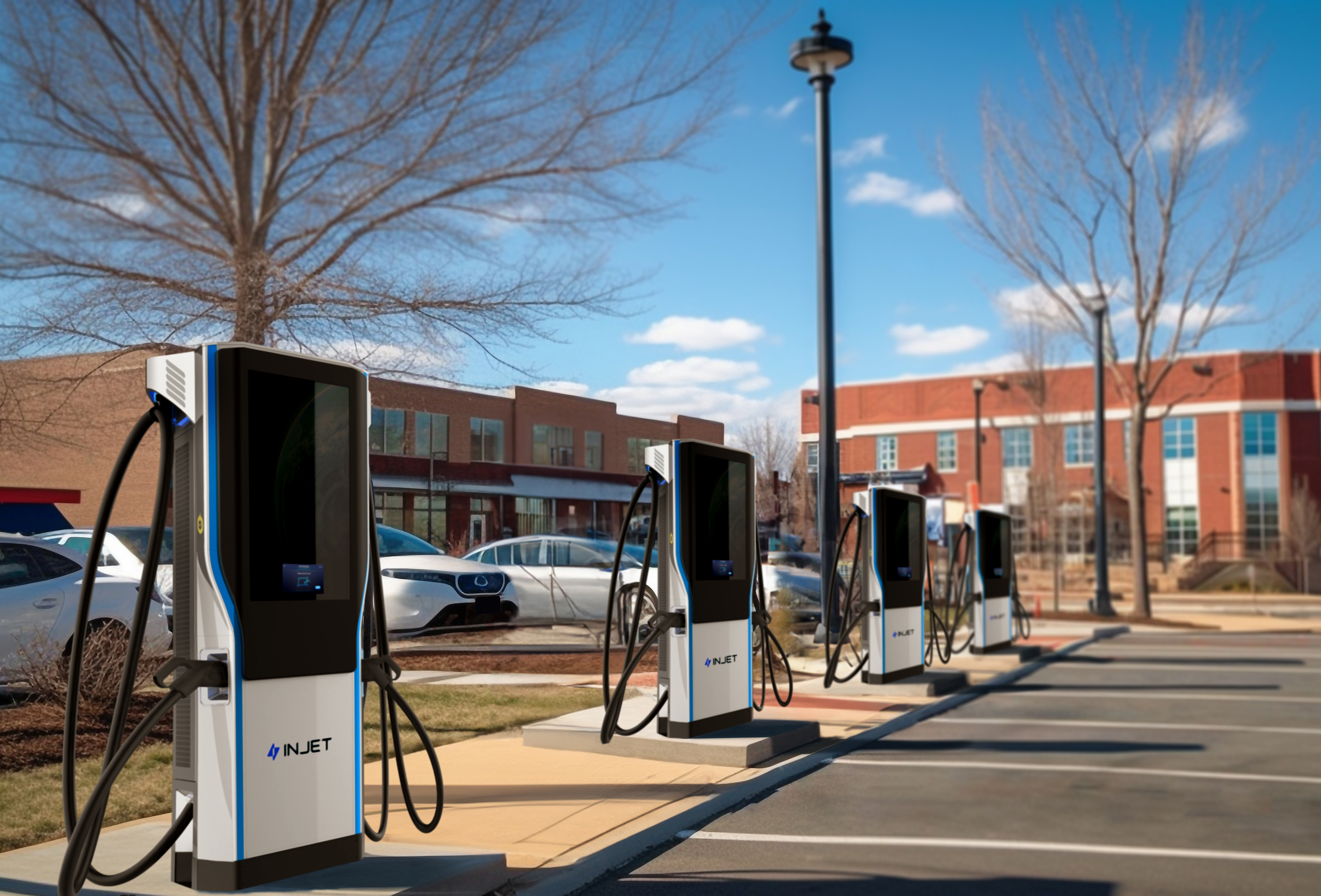
(Injet Ampax CCS1 DC Charging Station For North America)
CCS1 Connector - Combined Charging System 1
The CCS1 connector, also known as CCS Combo 1, is a key component of the Combined Charging System (CCS), a standard proposed in 2011 by SAE International (Society of Automotive Engineers) and the European Automobile Manufacturing Association (ACEA). This system was designed to create a universal solution for both AC and DC charging, streamlining the charging process and infrastructure. The CCS standard includes two versions: CCS1, commonly used in North America and South Korea, and CCS2, prevalent in Europe and other regions.
CCS1 builds upon the J1772 AC connector by integrating two high-speed DC pins, enabling it to support both AC and DC charging through a single port. This eliminates the need for separate AC and DC charging ports, simplifying vehicle design and improving convenience for users. The CCS1 EV connector supports Level 3 EV chargers, delivering up to 360 kW of power with a maximum voltage of 1000V and current of 500A.
In addition to its dual-functionality, CCS1 uses the same communication protocol as the J1772 standard, ensuring seamless integration with existing infrastructure and making it easier for manufacturers to adopt. Like the SAE J1772 Type 1 plug, Tesla has its proprietary charging standard for North America, but CCS1 is widely adopted across other manufacturers and is a cornerstone of fast-charging infrastructure in the region.
CCS 2 Connector - Combined Charging System 2
The CCS 2 connector (Combined Charging System 2) is a powerful and versatile charging solution, widely used across Europe, the UK, the Middle East, Africa, Australia, and other regions. It builds upon the Type 2 connector, adding two additional high-speed DC pins for rapid charging capabilities. This combination allows CCS 2 to deliver impressive DC power of up to 500 amps and 1000 volts, with a maximum output of 360 kW, enabling much faster charging compared to standard AC connectors.
Designed to support Level 3 fast charging, the CCS 2 connector significantly reduces charging time, making it ideal for long-distance travel and high-demand applications. Unlike in North America, where Tesla uses its own proprietary charging standard, Tesla Model 3 and Model Y owners in Europe can directly use CCS 2 charging stations without the need for an adapter. However, Model S and Model X owners can still connect to CCS 2 stations using a compatible adapter, ensuring broader compatibility across the region.
CHAdeMO Connector
CHAdeMO is a type of electric vehicle (EV) charging connector that was developed in 2010 by a consortium of Japanese automakers, including Mitsubishi, Nissan, and Toyota. It was one of the earliest rapid-charging standards, capable of delivering power at speeds ranging from 50 to 100 kW, which made it a key player in the early days of EV adoption.
Unlike CCS connectors, which require only one electronic charging port that accepts both AC and DC charging, cHAdeMo connectors require a separate charging port distinct from the AC charging port.This means that your EVs requires two separate charging ports.
While CHAdeMO is becoming less prevalent globally, it is still most commonly used in Japan and in some countries, where many vehicles from Japanese manufacturers like Nissan, Mitsubishi, and Toyota support the standard; however, even in these regions, the trend is shifting towards CCS as newer models are released.
Looking to the future, CHAdeMO and China Electricity Council (CEC) are co-developing the next generation ultra-fast EV charging standard, to which the international experts from the Americas, Asia, Europe and Oceania have joined. This industry initiative is expected to lead the way towards a harmonised future standard.
GB/T DC Connector
The GB/T DC connector is the primary standard for DC fast charging in China. It features a nine-pin design and supports charging outputs ranging from 50 kW to 350 kW, making it versatile for various use cases, from urban charging stations to highway service areas. The most common GB/T DC chargers operate at 250A, suitable for Level 3 fast charging.
Designed specifically for the Chinese market, GB/T DC connectors reflect the country’s emphasis on energy efficiency and scalability. They are not compatible with GB/T AC connectors, which necessitates dual-port designs for Chinese EVs. Nonetheless, the GB/T system remains highly effective within its domestic market.
Tesla NACS Connector
The North American Charging Standard (NACS) is Tesla’s proprietary EV charging connector, which has become the dominant charging standard across North America. Widely adopted by major automakers, the NACS connector is expected to be the universal standard for the region, with all manufacturers and charge point operators transitioning to NACS by 2025.
Designed for high-speed charging, the NACS connector can deliver up to 250 kW of power, making it suitable for both residential and public charging stations. The connector features five pins, and the AC version supports a current range of 15A to 48A, while the DC version can handle up to 400A of current, providing a maximum output of 250 kW.
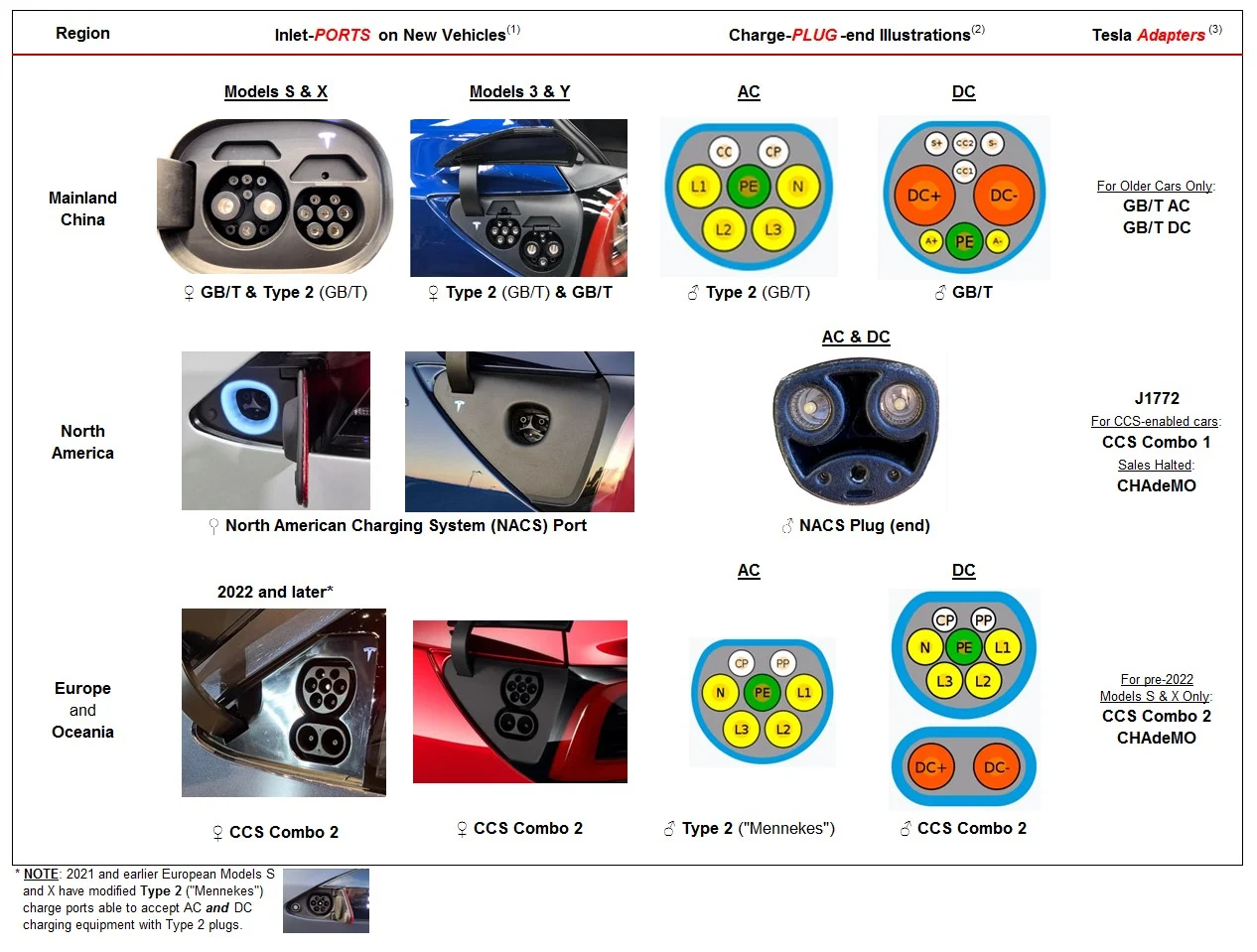
Tesla's charging network operates in three key regions: North America (including Japan and South Korea), Europe (with Oceania and East Asia), and mainland China. In each of these markets, Tesla uses different charging standards. In China, Tesla uses the GB/T standard, while in North America, the NACS connector is the default. In Europe, Tesla vehicles are equipped with either the Type 2 (Mennekes) or CCS Combo 2 connector, ensuring compatibility with local charging infrastructure.
Here are more information regarding the difference and connection between NACS and J1772 connector.

(Injet Swift Type 2 AC Charger)
The Role of Charger Connectors in the EV Ecosystem
The charger connector is more than just a plug; it’s a crucial part of the EV infrastructure. From ensuring safety and efficiency during charging to enabling compatibility across different vehicles and regions, these connectors play a pivotal role in the EV ecosystem. As standards evolve and harmonization efforts gain momentum, understanding these connectors will be essential for all stakeholders in the electric mobility space.
By familiarizing yourself with the various EV charger connector types, you can ensure a seamless and efficient charging experience, whether at home or on the go.
Find A Comprihensive Charging Solution
FAQ
Yes. For example, a Type 2 connector on a three-phase system can charge at up to 22kW (AC), while a Type 1 is usually limited to 7.4kW or 19.2kW. DC connectors like CCS2 can support speeds of 350kW or higher.
NACS (North American Charging Standard) is the connector originally designed by Tesla. As of 2025-2026, most major manufacturers in North America have adopted it, making it the primary standard for that region's future infrastructure.
Yes. Injet Energy designs and manufactures charging stations that support Type 1, Type 2, NACS and CCS standards, ensuring our products meet CE, TUV, ETL and UL certification requirements for global markets.
Yes, but you will need a Type 2 to Type 1 adapter or a specific charging cable. This is a common solution for drivers using older EV models or traveling between regions with different infrastructure standards.
No. Charging network providers are adding NACS cables to existing CCS stations, and ev charger manufacturer like injet can providing ev charging station with both CCS and NACS connector.