


If you've been shopping for EV charging equipment for the US or Canadian market, you've probably run into an alphabet soup of marks: CSA, UL, ETL, FCC, IC, NTEP, CTEP. Some sound interchangeable. Some aren't. And almost none of the product spec sheets explain which ones actually matter for your specific project.
We're writing this guide for a practical reason: the Injet HanHui 480 DC fast charger has just obtained CSA certification, and we think the news is only useful if it's explained in context. So before we talk about our product, let's answer the questions we know overseas buyers are actually asking.
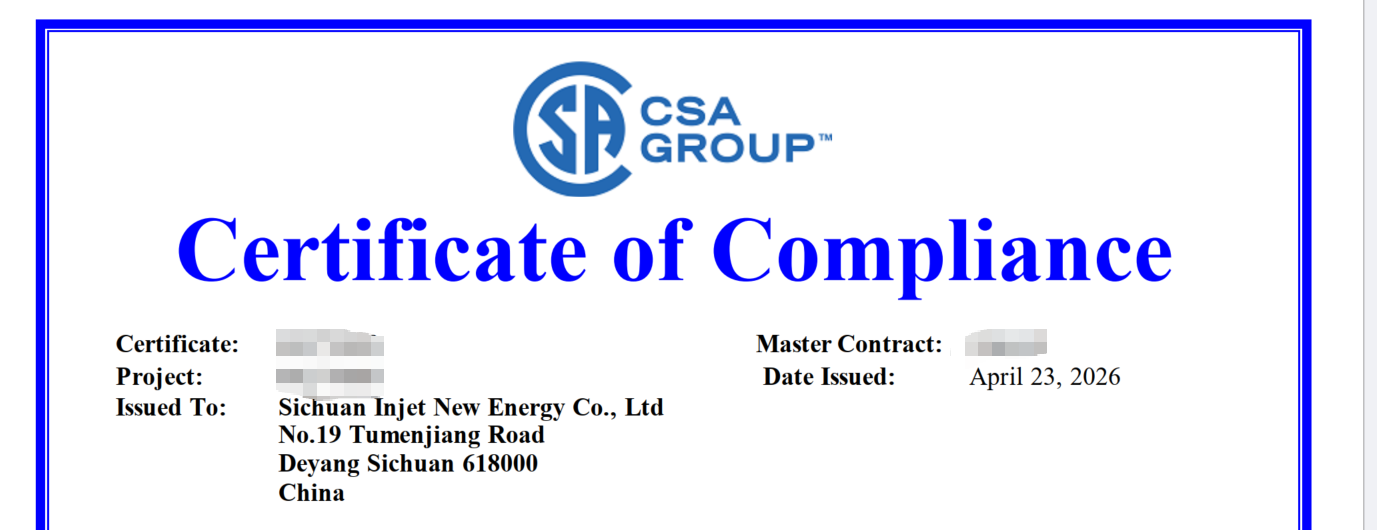
What Is CSA Certification, Exactly?
CSA certification is issued by CSA Group (formerly the Canadian Standards Association), one of the independent testing labs recognized to certify electrical products for the North American market. When an EV charger carries the CSA mark, it means the product has been tested against harmonized North American safety standards — most notably CSA C22.2 No. 280, which is aligned with UL 2594, the core safety standard for EV charging equipment covering fire risk, electric shock, and mechanical safety. For DC fast chargers specifically, testing also references standards like CSA C22.2 No. 340/UL 2202.
CSA Group's own EV testing division describes its role as helping bring EV charging products to market with certifications that are "referenced in the Canadian Electrical Code" and recognized by installers, inspectors, and utilities across North America.
Is CSA Certification Mandatory?
Here's where it gets nuanced — and where most articles get it wrong. Strictly speaking, CSA, UL, and ETL certifications are not written into federal law as mandatory requirements. But in practice, they function as a de facto requirement, because:
- Local electrical inspectors and Authorities Having Jurisdiction (AHJs) generally will not approve a permit for equipment without a recognized NRTL (Nationally Recognized Testing Laboratory) mark.
- Insurers frequently decline to cover damage caused by uncertified electrical equipment.
- Large tenders — from utilities, municipalities, and commercial property owners — typically specify "UL or ETL/CSA" as a hard requirement in the technical scope, explicitly to reduce technical and legal risk.
- Retailers and fleet buyers increasingly require certification documentation before they'll even evaluate a bid.
So while no single federal law says "you must have CSA," in day-to-day North American deployment, not having it effectively locks you out of permits, insurance, and most serious commercial tenders. For Canadian installations in particular, CSA is the certification most directly referenced in the Canadian Electrical Code.
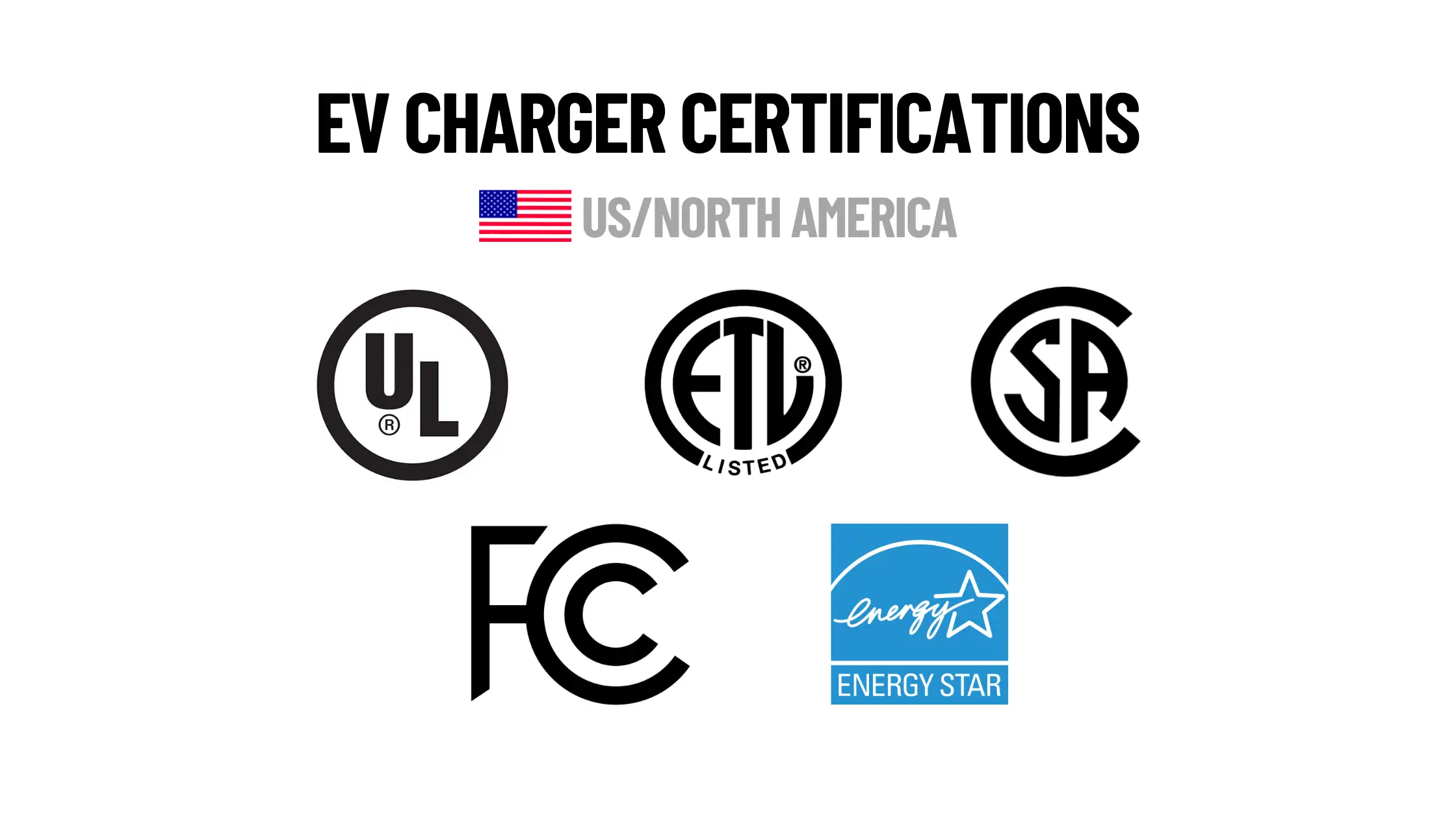
CSA vs. UL vs. ETL: What's the Actual Difference?
This is the most common search we see, so let's be direct: for EV chargers, there is no meaningful difference in the safety standard being tested. CSA, UL, and ETL (Intertek) are all Nationally Recognized Testing Laboratories (NRTLs) recognized by OSHA, and they test EV charging equipment against the same harmonized standards (CSA C22.2 No. 280 / UL 2594 for AC, CSA C22.2 No. 340 / UL 2202 for DC fast charging). A charger with a UL mark and one with a CSA mark have cleared the same bar — the difference is which lab performed the testing, not how rigorous the testing was.
Quick reference:
| Mark | Issued by | What it certifies | Mandatory? |
|---|---|---|---|
| CSA | CSA Group | Electrical/fire safety (harmonized North American standard) | Not by federal law, but required in practice by AHJs, insurers, and most tenders |
| UL | Underwriters Laboratories | Same safety scope as CSA, US-focused | Same as above |
| ETL | Intertek | Same safety scope as CSA/UL | Same as above |
| FCC | Federal Communications Commission | Electromagnetic interference / RF emissions (US) | Yes — federally required for any device with electronic/wireless components sold in the US |
| IC | Innovation, Science and Economic Development Canada | Canada's equivalent of FCC — RF/EMC compliance | Yes — required for Canada |
| NTEP | National Conference on Weights and Measures | Metering accuracy for per-kWh billing (not safety) | Required only if the charger bills per kWh; adopted state-by-state |
| CTEP | California Dept. of Food & Agriculture | California's own metering/billing accuracy program | Mandatory for commercial per-kWh chargers in California specifically |
The key distinction people often miss: CSA/UL/ETL certify that a charger is electrically safe. NTEP/CTEP certify that a charger measures and bills electricity accurately. These are two entirely different regulatory concerns — a charger can be perfectly CSA-certified and still fail NTEP if its metering isn't accurate enough for commercial billing. If you're deploying pay-per-kWh public charging, you need both categories, not one or the other.
Why Does This Matter to You as a Buyer?
For overseas charge point operators and distributors sourcing hardware for North America, certification isn't a checkbox — it's a business risk filter. A CSA mark tells your local electrician, your AHJ inspector, and your insurer that the product has already been independently vetted against the exact standard they're going to check for anyway. That translates into faster permitting, smoother site commissioning, and fewer surprises during inspection — the practical difference between a charger that deploys in weeks and one that stalls in review.
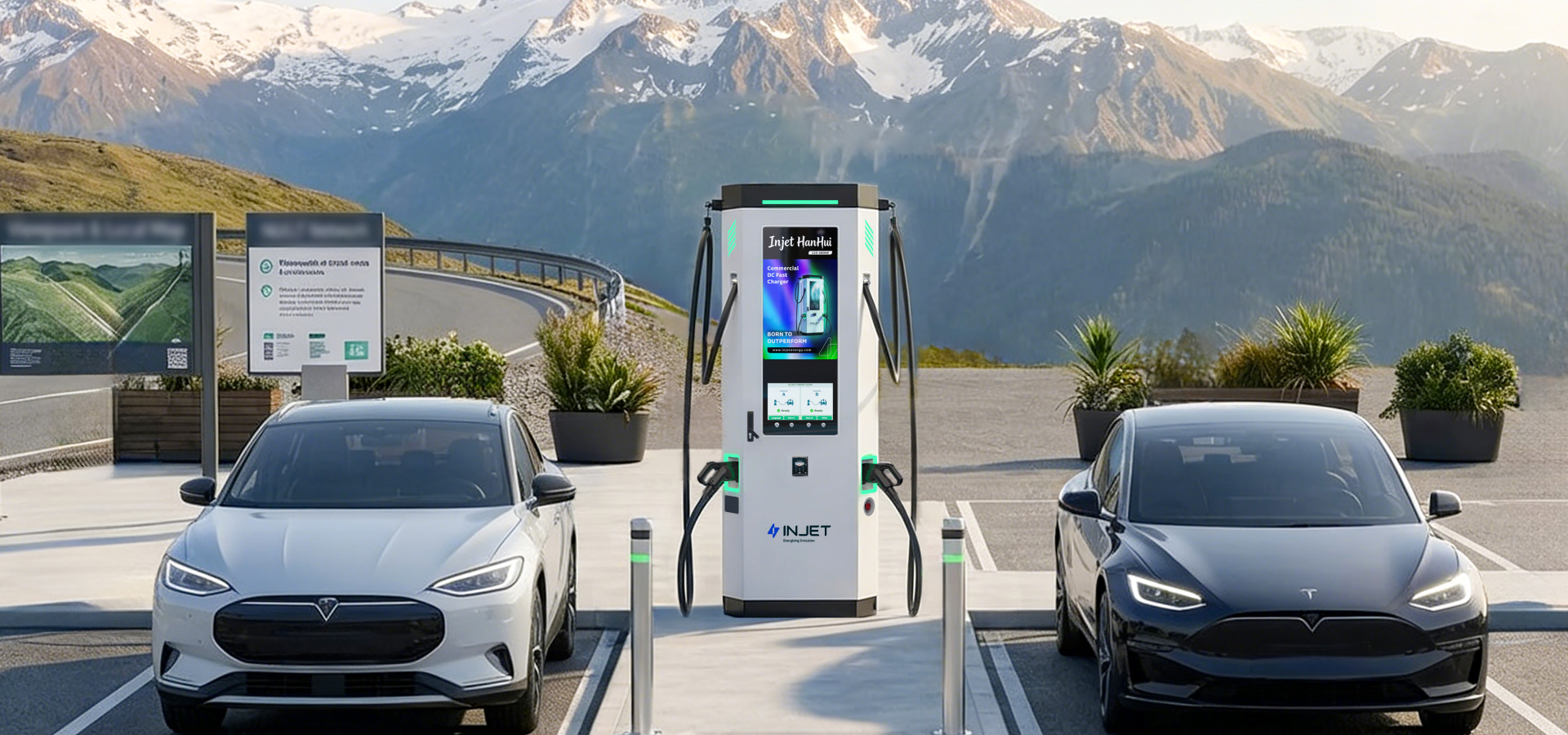
Injet HanHui 480: Now CSA Certified
With this context in mind: the Injet HanHui 480 DC fast charger has obtained CSA certification, confirming it has passed independent third-party testing against the harmonized North American safety standards that installers, AHJs, and insurers rely on. For distributors and CPOs evaluating the HanHui 480 for US and Canadian deployments, this means the unit is backed by the same class of safety validation used to vet the market's established charging brands.
This certification sits alongside the HanHui 480's other engineering features — including its self-retracting cable arm and cable anti-theft alarm system — as part of a broader push to build hardware that meets North American operational and regulatory expectations from day one, not after field issues surface.
Coming soon: the HanHui 480 has also achieved ENERGY STAR certification — we'll be publishing a dedicated deep-dive on what that certification measures and why it matters for procurement decisions, so keep an eye out for that post.
Frequently Asked Questions
CSA certification is an independent safety certification issued by CSA Group.
It confirms that an EV charger has been tested against harmonized North American
electrical safety standards (such as CSA C22.2 No. 280 and No. 340), covering
fire protection, electrical shock, and mechanical safety requirements.
Not by federal statute, but in practice, yes. Local permitting authorities,
insurance providers, and most commercial tenders typically require a recognized
Nationally Recognized Testing Laboratory (NRTL) certification mark such as
CSA, UL, or ETL before approving installation.
Both CSA and UL are recognized NRTL certification marks that evaluate EV chargers
against the same harmonized North American safety standards. There is no meaningful
difference in testing rigor—the only distinction is the certification body that
conducted the testing.
Possibly. CSA certification verifies electrical safety, while NTEP (and California's
CTEP) certifies revenue-grade metering accuracy for per-kWh billing. If your charging
stations will bill customers based on energy consumption, you will likely need both.
FCC certification (United States) and IC certification (Canada) verify
electromagnetic compatibility and wireless communication compliance. These
certifications are federally required for network-connected or wireless-enabled
chargers and are separate from CSA or UL electrical safety certification.
Conclusion & CTA
Certification marks can look like alphabet soup from the outside, but each one answers a different question: Is it safe (CSA/UL/ETL)? Does it interfere with other electronics (FCC/IC)? Does it bill accurately (NTEP/CTEP)? Understanding which ones apply to your project is the fastest way to avoid permitting delays and procurement risk.
Evaluating chargers for a North American deployment? Contact Injet New Energy to get the HanHui 480's full CSA certification documentation and discuss which configuration fits your site's regulatory requirements.