


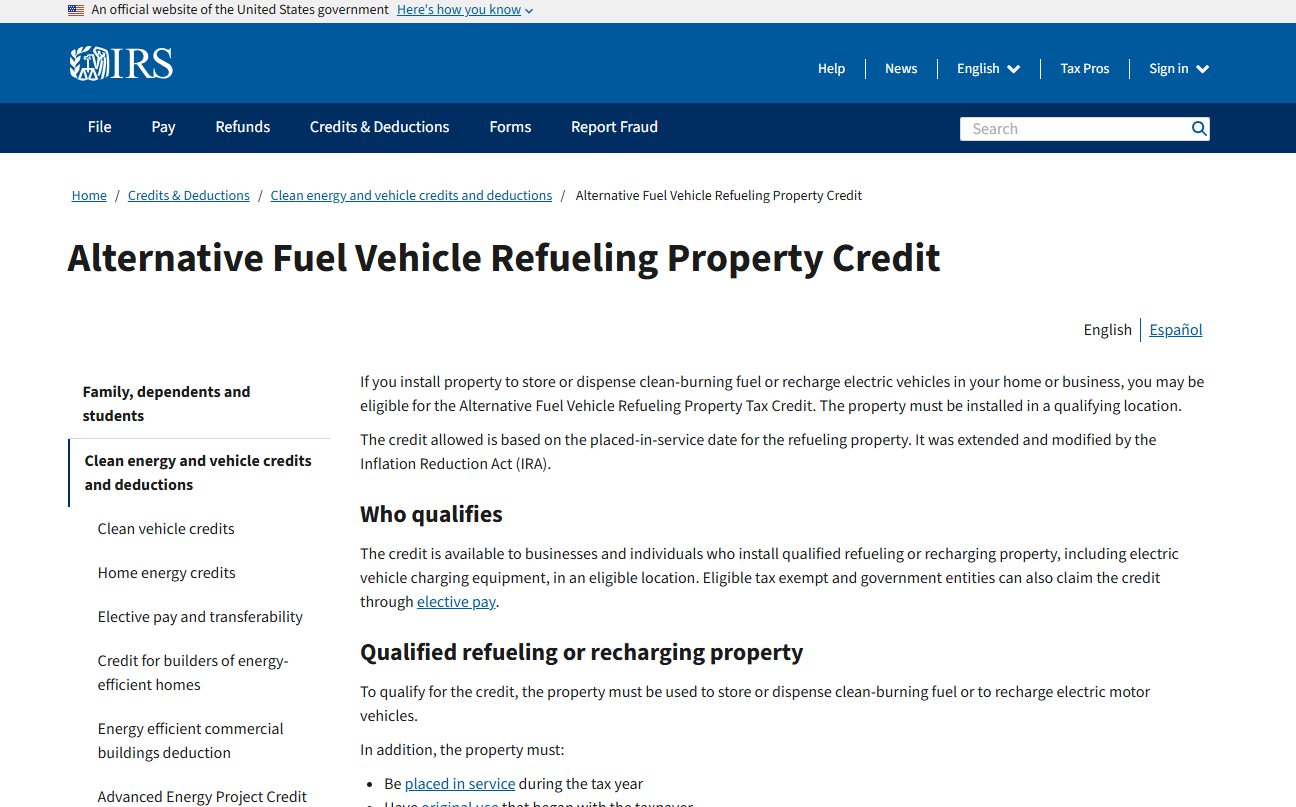
On June 30, 2026, the federal Alternative Fuel Vehicle Refueling Property Credit — the tax credit that gave US buyers up to $1,000 back on a home EV charger, and businesses up to 30% back under Section 30C — expired under the One Big Beautiful Bill Act. For years, that federal credit was the headline incentive people searched for. Now it’s gone.
But here’s what most coverage of the expiration misses: the incentive money didn’t disappear. It moved. State programs, utility rebates, and workplace/fleet incentive programs are still very much alive across the US — and a growing number of them share one gatekeeping requirement in common: the charger has to be ENERGY STAR certified.
A Quick Look at What’s Actually Still on the Table
Once you look past the expired federal credit, the incentive landscape is still active — it’s just shifted to the state and utility level:
- 1)Washington State’s PSE offers up to $600 toward a home charger plus up to $2,000 toward installation — but the charger must be a qualifying ENERGY STAR Smart Level 2 unit.
- 2)Michigan’s DTE Energy home charger rebate requires the charger to be ENERGY STAR certified (or from the same manufacturer as the customer’s EV).
- 3)New Jersey’s PSE&G explicitly ties its charging program eligibility to ENERGY STAR — and, notably, this isn’t just a utility preference. Under New Jersey’s Appliance and Equipment Efficiency Standards law, any Level 1 or Level 2 EVSE manufactured after January 2023 and sold or installed for compensation in the state must meet the ENERGY STAR performance specification.
- 4)California utilities including Alameda Municipal Power and Azusa Light & Water offer rebates ranging from $150 up to $8,000, most requiring ENERGY STAR certified equipment.
- 5)At the federal fleet level, the EPA’s Clean School Bus Program — a $5 billion initiative — requires that every Level 2 charger funded through the program be ENERGY STAR certified.
That last point is worth sitting with: ENERGY STAR isn’t just a voluntary “nice-to-have” logo anymore in some jurisdictions. New Jersey has already written it directly into state law, and the federal government requires it for its own school bus charging infrastructure purchases. That’s a meaningfully different regulatory posture than most other charger certifications, which remain purely voluntary.
So What Does ENERGY STAR Certification Actually Test?
ENERGY STAR, administered by the US EPA, certifies EV chargers against two things most buyers don’t realize are being measured: standby energy waste and active charging efficiency.
The numbers are more significant than they sound. EV chargers spend roughly 85% of their time in standby mode — plugged in, powered, but not actively charging a vehicle. ENERGY STAR certified Level 1 and Level 2 AC chargers use 40% less energy in that standby state compared to non-certified equivalents, with identical charging functionality. For DC fast chargers, ENERGY STAR certified units (up to 65kW) run at least 93% efficient on average during active charging.
Multiplied across a network of hundreds or thousands of chargers sitting idle most of the day, that standby-power gap is a real, ongoing electricity cost — one that shows up on the electric bill of whoever owns the site, not the charger manufacturer. This is also why ENERGY STAR literature aimed at utilities points out there’s typically no cost difference between certified and non-certified chargers, meaning the energy savings are close to free money for the buyer.
Importantly, ENERGY STAR certification also requires the underlying safety certification to already be in place — so an ENERGY STAR mark isn’t a substitute for CSA/UL/ETL safety certification, it sits on top of it as an additional efficiency and performance layer.
Why This Should Matter to Anyone Sourcing Chargers for North America
If you’re a distributor, installer, or charge point operator evaluating hardware for deployment in the US, the practical takeaway is this: with the federal tax credit gone, ENERGY STAR certification has quietly become the single biggest lever left for unlocking rebate eligibility — for residential buyers deciding which charger to purchase, for utilities designing incentive programs, and for fleet operators bidding on federally funded programs like Clean School Bus. A charger without it isn’t unsafe or non-compliant in most states — but it is, in a growing number of programs, simply ineligible for the money on the table.
Injet HanHui 480: Now ENERGY STAR Certified
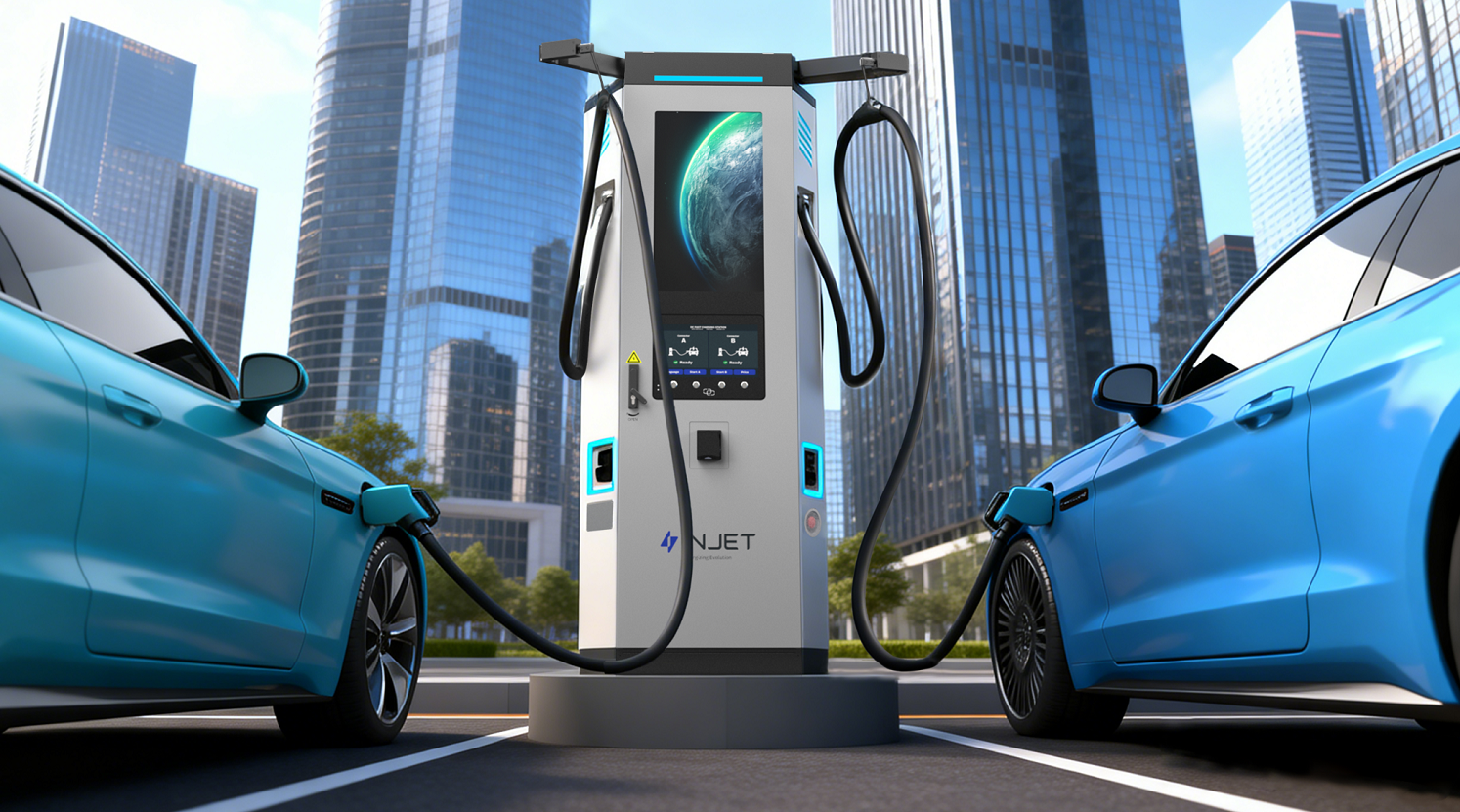
Following on from our earlier update on the HanHui 480′s CSA certification, we’re following up with this piece for a reason: the Injet HanHui 480 DC fast charger has also achieved ENERGY STAR certification. Combined with its existing CSA safety certification, self-retracting cable arm, and cable anti-theft alarm system, the HanHui 480 now carries both the safety validation and the efficiency validation that US utility rebate programs, state regulations like New Jersey’s, and federal procurement programs increasingly require or prefer.
For distributors and CPOs building out North American deployment plans, this means the HanHui 480 is positioned to qualify for a wider range of state and utility incentive programs than a charger carrying safety certification alone — directly supporting site economics for the operators and property owners who ultimately pay the electricity bill.
Conclusion
The federal tax credit is gone, but the incentive landscape hasn’t disappeared — it’s just moved to a level where ENERGY STAR certification is increasingly the deciding factor between a charger that qualifies for a rebate and one that doesn’t. For buyers and operators, checking for this mark is no longer just about saving on the electricity bill; it’s about not leaving program eligibility on the table.