


As the wheels of the global energy transition accelerate, European nations are locked in a race for dominance in charging infrastructure. In April 2026, the French government officially unveiled the National Road Network 2035 Electrification Strategy. This is more than a policy document; it is a “technical call to arms” for global EVSE (Electric Vehicle Supply Equipment) providers.
In this state-led “power arms race” focused on motorways and major corridors, the core keywords are efficiency, scalability, and heavy-duty vehicle (HDV) readiness. Amidst this shift, the Injet HanYuan Distributed Charging System is emerging as a strategic asset for European operators, offering a megawatt-scale flexible architecture designed to conquer the high-power demands of the next decade.

I. France’s 2035 Ambition: From Coverage to Power Leadership
According to the roadmap disclosed by Transport Minister Philippe Tabarot, France plans to quintuple its fast-charging network on national roads within ten years.
1. Strategic Hubs: 2% of Roads, 33% of Traffic
France’s national road network (Réseau routier national) represents only 2% of the country’s total road kilometers but carries one-third of all traffic and the vast majority of long-distance travel. The government aims to install 22,000 fast-charging points for passenger cars across nearly 900 service areas by 2035, ensuring a 20-25 minute turnaround for every traveler.
2. Breaking the Ice for Electric Trucking
The most impactful part of this plan is the dedicated infrastructure for Heavy-Duty Trucks. France intends to deploy 8,000 charging points specifically for trucks, with explicit standards for high-power charging ranging from 400kW to over 800kW. Charging stations are no longer just outlets; they must function as high-density energy hubs.
3. Rigorous Service Standards
Policy requirements go beyond raw power. The “carefree journey” mandate includes mandatory credit card payment, transparent per-kWh pricing, and strict interoperability. For Charging Point Operators (CPOs), selecting hardware that is intelligent, compliant, and future-proof is now a necessity rather than an option.
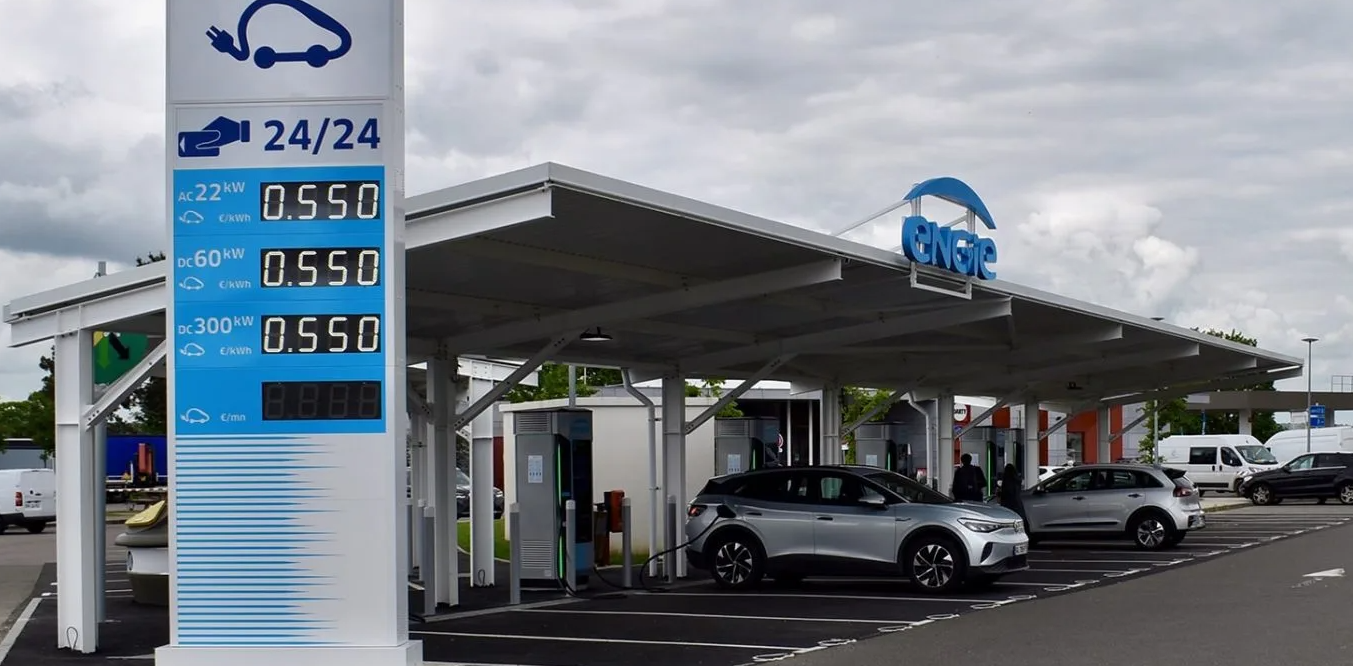
II. Industry Insight: Why Distributed Architecture is the Only Solution for Highway Fast-Charging
In large-scale, high-density national projects like France’s, traditional “all-in-one” DC chargers face critical challenges:
-
Grid Pressure & Distribution Redundancy: Standalone units cannot flexibly allocate power, often leading to uneven transformer loads.
-
Heavy-Duty Complexity: 800kW+ supercharging requires extreme heat dissipation and current-carrying capacity.
-
CAPEX Risk: As EV penetration grows, frequent hardware replacements lead to massive asset depreciation.
The Insight: France’s highway network is entering a “Power Arms Race.” For megawatt-scale demand, the seamless upgradeability of power stacks and the stability of liquid-cooling technology will be the core selection criteria in major European CPO tenders.
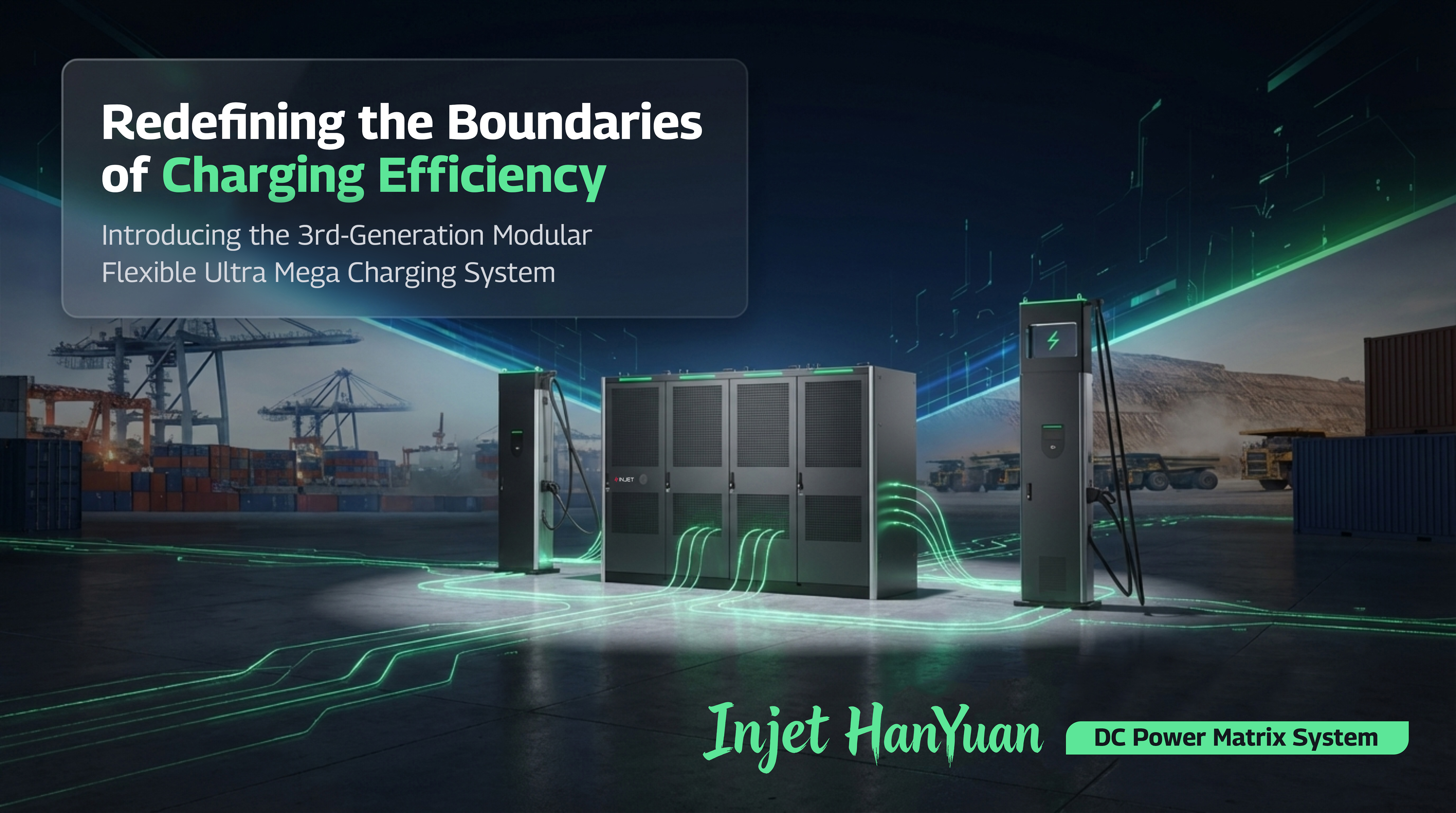
III. Injet HanYuan: A “Energy Heart” Tailored for the European Transition
To address these pain points, the Injet HanYuan Distributed Charging System utilizes a forward-looking design logic that perfectly aligns with the requirements of premium European charging networks.
1. Megawatt-Scale: Infinite Growth on Demand
France targets a cumulative capacity of 2.8GW for passenger cars by 2035. The HanYuan system features a stackable architecture with a power range from 480kW up to a staggering 1920kW.
-
The Advantage: Operators can deploy lower power initially and scale up simply by adding modules as traffic grows. This eliminates the need for further civil engineering or total hardware replacement, significantly lowering the Total Cost of Ownership (TCO).
2. Full-Matrix Dynamic Flow: Every Kilowatt Counts
Powered by 40kW SiC (Silicon Carbide) modules, the HanYuan system employs a millisecond-level scheduling algorithm.
-
Precision Intelligence: It can support up to 32 charging points simultaneously. When an 800V heavy-duty truck and a 400V passenger car enter a hub at once, the system automatically directs power to where it’s needed most, maximizing turnover and increasing system efficiency by 1.9% over industry standards.
3. Peak Performance: Liquid Cooling for Ultra-Fast Charging
To meet the 800kW+ truck charging targets outlined in the French plan, Injet HanYuan provides robust hardware support:
-
Liquid-Cooled Satellites: Delivers up to 600A continuous current, making it possible for heavy trucks to regain long-distance range in just 20 minutes.
-
Industrial Toughness: With IP54, IK10, and NEMA 3R ratings, the system operates stably from -40°C to +55°C, making it resilient from the Alps to the Mediterranean coast.
4. Economic Edge & Compliance
-
CAPEX Savings: The distributed design can reduce cable deployment costs by up to 40%.
-
Global Compatibility: Fully compliant with OCPP 1.6J & 2.0.1 and ISO 15118 (Plug & Charge), meeting all French requirements for interoperability and seamless payment.
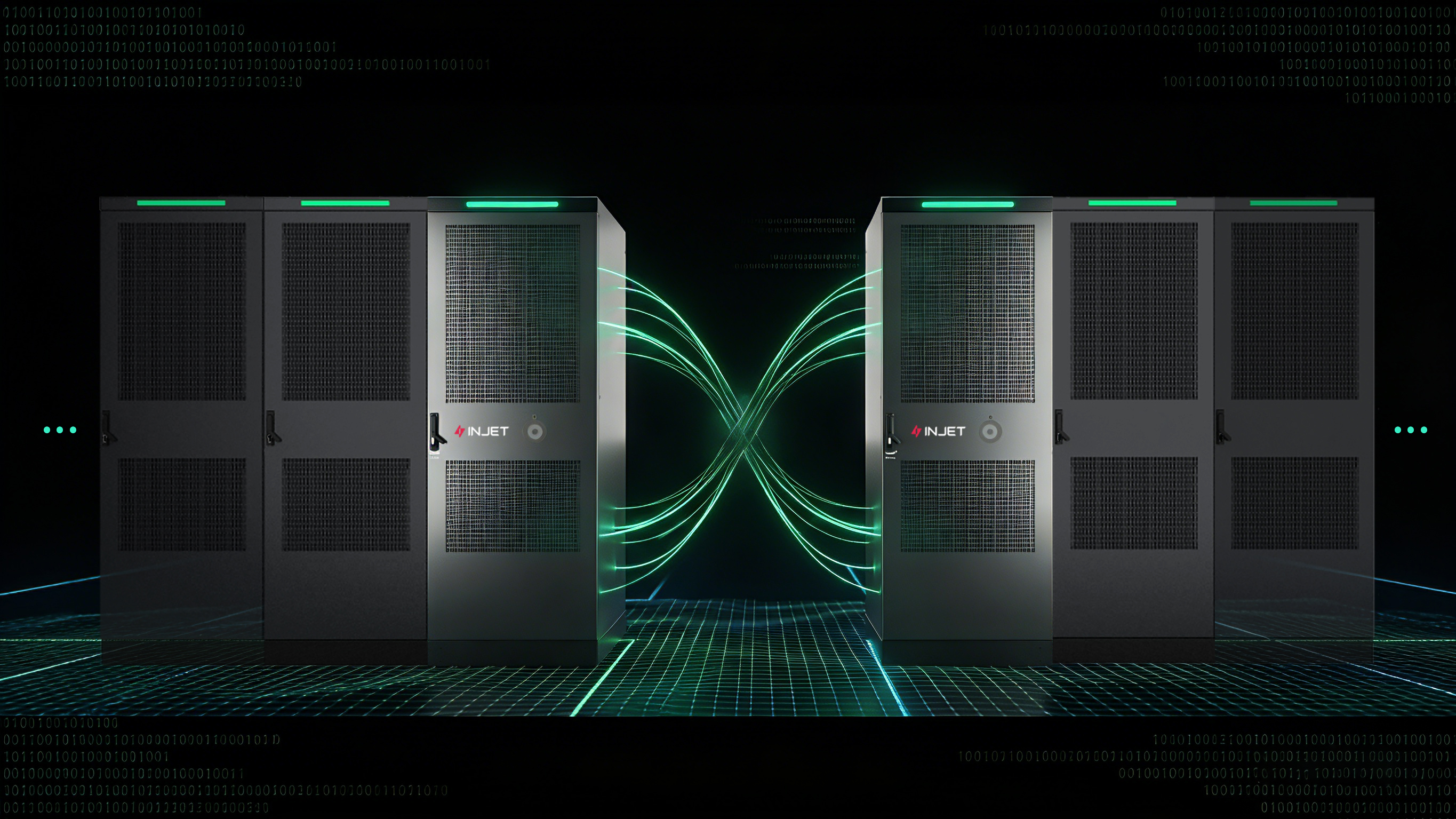
IV. Future-Ready: Micro-Grid and Energy Integration
The French 2035 plan is not just about adding plugs; it is about restructuring the ecosystem of service areas. The Injet HanYuan system is Micro-Grid Native, with built-in support for Solar PV and Energy Storage (ESS) integration.
In the service areas of the future, Injet HanYuan acts as the “Energy Heart”—storing solar energy during the day and discharging it during peak hours to charge heavy-duty fleets without stressing the grid. This native 800V support and energy integration make it a long-term safeguard for infrastructure investment.
Conclusion
As Philippe Tabarot stated, “The breakthrough of electric vehicles depends on a charging network that meets requirements and guarantees carefree journeys.”
As an innovator in the energy sector, Injet New Energy is committed to empowering CPOs worldwide with smarter, more efficient power conversion technology. The Injet HanYuan Distributed Charging System is our definitive answer to the challenges of the next decade. On the road to 2035, we aren’t just building chargers; we are building a green, efficient, and mobile future.
[Discover the technical specifications of the Injet HanYuan Distributed Charging System]