


As Commercial EV Charging Scales, a New Challenge Is Emerging
The conversation around commercial EV charging infrastructure has changed dramatically over the past few years.
Not long ago, operators were primarily concerned with one question: How much charging power can a site deliver?
Today, the discussion has shifted. Across Europe and North America, the rapid growth of electric trucks, electric buses, and commercial fleet electrification is creating a new operational reality. Charging sites are becoming larger, busier, and more complex.
According to the European Automobile Manufacturers’ Association (ACEA), registrations of battery-electric trucks in Europe increased by more than 50% in 2024. At the same time, regulations such as the European Union’s Alternative Fuels Infrastructure Regulation (AFIR) are accelerating the deployment of high-power charging corridors designed to support long-haul freight transport.
As a result, infrastructure developers are racing toward ever-higher charging capacities. Megawatt-class charging systems, MCS readiness, and multi-megawatt charging hubs have become common discussion topics across the industry.
However, beneath the pursuit of larger numbers lies a less visible challenge.
Many charging sites are discovering that having more installed power does not automatically translate into better charging performance.
In fact, some stations equipped with several megawatts of installed capacity still struggle with power utilization, charging throughput, and return on investment.
The reason often has little to do with the grid.
Instead, it comes down to how power is distributed inside the charging site itself.
The Hidden Cost of Power Islands
Most conventional distributed charging architectures are built around independent power cabinets.
A charging station may consist of multiple cabinets and multiple charging terminals, but each cabinet operates largely as a self-contained system. Power can be shared among dispensers connected to the same cabinet, yet rarely beyond that boundary.
At first glance, this design appears reasonable.
In practice, however, it creates what can be described as power islands.
Imagine a logistics depot equipped with four 480 kW charging cabinets.
The site appears to have nearly 2 MW of available charging capacity.
During peak operating hours, several heavy-duty trucks arrive simultaneously and connect to terminals supplied by one cabinet. Meanwhile, neighboring cabinets may be serving only a few vehicles whose charging sessions are already tapering as batteries approach higher states of charge.
Although unused power exists elsewhere in the station, it remains trapped within those individual cabinets.
The overloaded cabinet cannot access it.
The result is a paradox that many operators recognize:
The charging station appears fully utilized in one area while valuable capacity remains stranded elsewhere.
From a business perspective, this creates several challenges:
- Lower overall power utilization
- Longer vehicle dwell times
- Reduced charging throughput
- Underperformance of expensive grid connections
- Lower revenue generation from installed infrastructure
In other words, operators pay for capacity they cannot fully monetize.
Why This Problem Will Become More Significant
As commercial EV adoption continues to accelerate, charging demand patterns are becoming increasingly unpredictable.
A modern charging hub may simultaneously serve:
- Long-haul electric trucks
- Regional delivery fleets
- Electric buses
- Light commercial vehicles
- Public fast-charging customers
Each vehicle arrives with different battery sizes, charging curves, and power requirements.
A heavy-duty truck may demand hundreds of kilowatts immediately upon arrival. Another vehicle connected to the same site may require only a fraction of that power.
This diversity creates significant fluctuations in power demand throughout the day.
Traditional cabinet-based architectures were not originally designed to manage this level of complexity.
As charging sites expand from hundreds of kilowatts to multi-megawatt deployments, the limitations of isolated cabinet architectures become increasingly apparent.
The industry is therefore facing a new question:
How can operators maximize the utilization of existing power resources before investing in additional capacity?
Moving from Cabinet Optimization to Site Optimization
The answer may not be found in adding more charging cabinets.
Instead, it lies in rethinking how power is managed across the entire charging site.
This is the philosophy behind the Injet HanYuan Distributed Charging System.
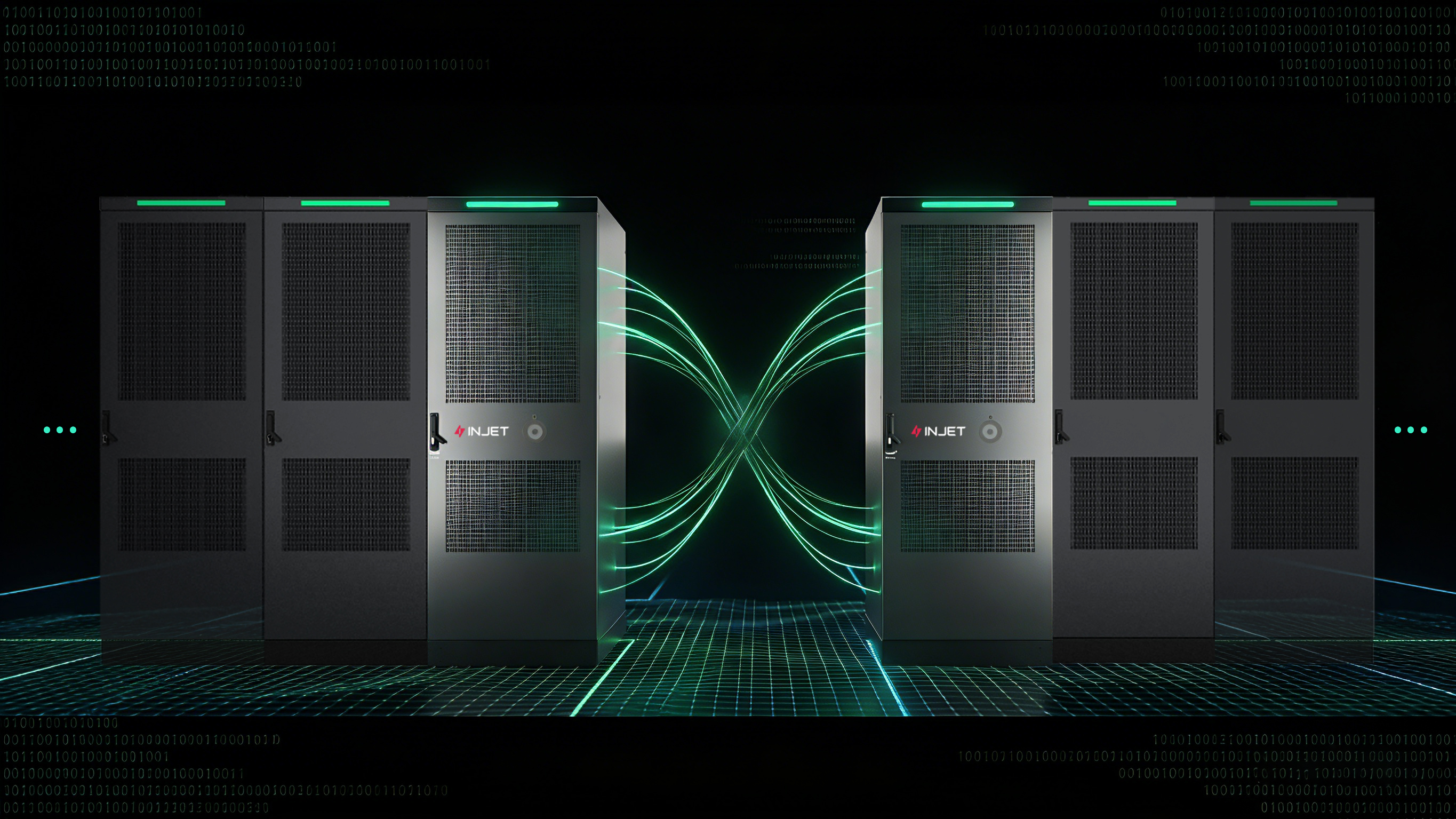
Rather than treating each cabinet as an independent power source, HanYuan connects all power cabinets through a dedicated Power Distribution Unit (PDU) architecture, creating a unified site-wide power pool.
Every charging terminal can dynamically access available power resources from across the station.
Power is no longer constrained by physical cabinet boundaries.
Instead, it flows to where demand exists.
The charging site effectively operates as a single coordinated energy system rather than a collection of separate charging units.
The Value of Inter-Cabinet Dynamic Scheduling
Dynamic power sharing is not a new concept.
Many charging systems already allow power sharing among terminals connected to a single cabinet.
What makes HanYuan different is its ability to extend this capability across multiple cabinets.
Through inter-cabinet dynamic scheduling, all connected power cabinets become part of the same resource network.
When demand increases in one section of the site, additional power can be allocated from underutilized cabinets elsewhere.
During peak periods, more power can be concentrated on a smaller number of vehicles to support ultra-fast charging.
During lower-demand periods, power can be distributed more evenly across multiple vehicles.
This flexibility helps operators adapt to changing charging behavior without requiring oversized infrastructure investments.
Most importantly, it transforms contracted grid capacity into usable operational capacity.
Turning Capacity into Revenue
For charging site operators, utilization is ultimately more important than nameplate power.
A station does not generate revenue based on its advertised megawatt rating.
It generates revenue based on how effectively it converts available electricity into delivered charging sessions.
Improving utilization can have a direct impact on business performance.
Based on internal charging-site simulations, site-wide power pooling and inter-cabinet scheduling can improve overall power utilization by approximately 30% compared with conventional isolated architectures under mixed vehicle charging scenarios.
Higher utilization can contribute to:
- Increased charging throughput
- Improved station profitability
- Better return on grid connection investments
- Reduced need for premature infrastructure expansion
- More efficient use of electrical assets
For operators facing grid constraints and growing demand, these benefits may be more valuable than simply installing additional charging capacity.
Preparing for the Next Generation of Fleet Charging
As the industry moves toward MCS-ready heavy-duty charging and increasingly sophisticated charging ecosystems, infrastructure architecture will become just as important as charging power itself.
The future of commercial charging will not be determined solely by how many megawatts a site can install.
It will be determined by how intelligently those megawatts are utilized.
The most successful charging sites will be those capable of adapting power delivery in real time, maximizing utilization, and supporting a wide variety of vehicle types without sacrificing operational efficiency.
Inter-cabinet power distribution represents an important step toward that future.
Meet Injet HanYuan at Power2Drive Europe
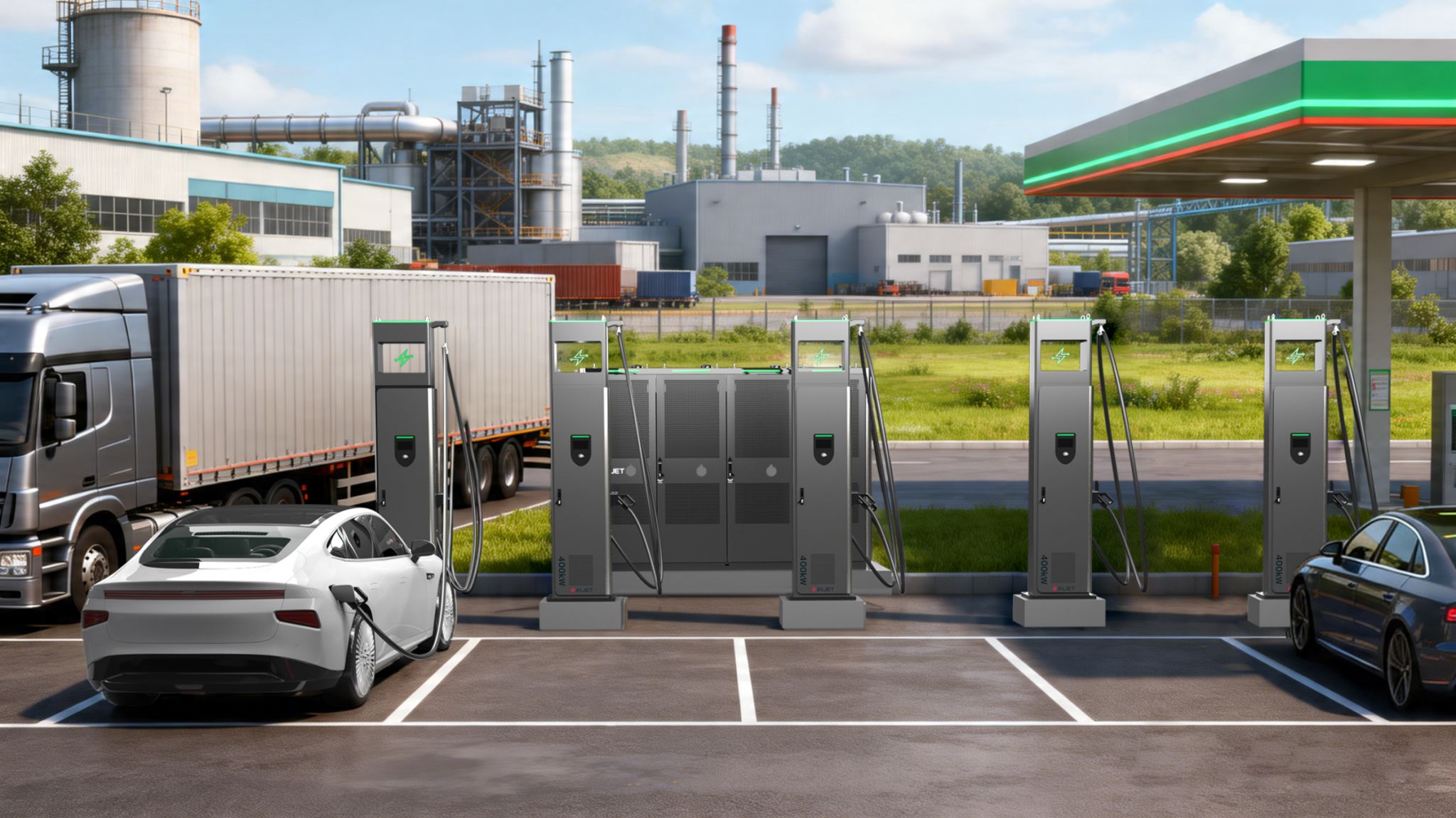
At Power2Drive Europe, Injet New Energy will showcase the HanYuan Distributed Charging System and share how site-wide power pooling and inter-cabinet dynamic scheduling can help operators improve utilization, increase throughput, and unlock greater value from existing infrastructure.
As commercial charging enters the megawatt era, the conversation is shifting.
The question is no longer how much power a station can install.
The question is how much of that power can actually be used.