


If the electrification of passenger vehicles represents the “zero-to-one” transition for mass adoption, then the electrification of logistics and heavy-duty fleets is a “deep-water” challenge focused on energy efficiency.
With the global push toward net-zero logistics, an increasing number of logistics hubs, ports, and large-scale fleets are transitioning to battery-electric platforms. However, for fleet operators, the true test lies not in the vehicles themselves, but in how to recharge these massive “beasts”—which feature battery packs with hundreds of kilowatt-hours (kWh)—within strictly limited operational windows.
In the world of heavy-duty logistics, time is money. As the industry grapples with the contradiction between “high-capacity battery demands” and “high-frequency operational scheduling,” traditional “one-to-one” charging solutions are showing their limitations.
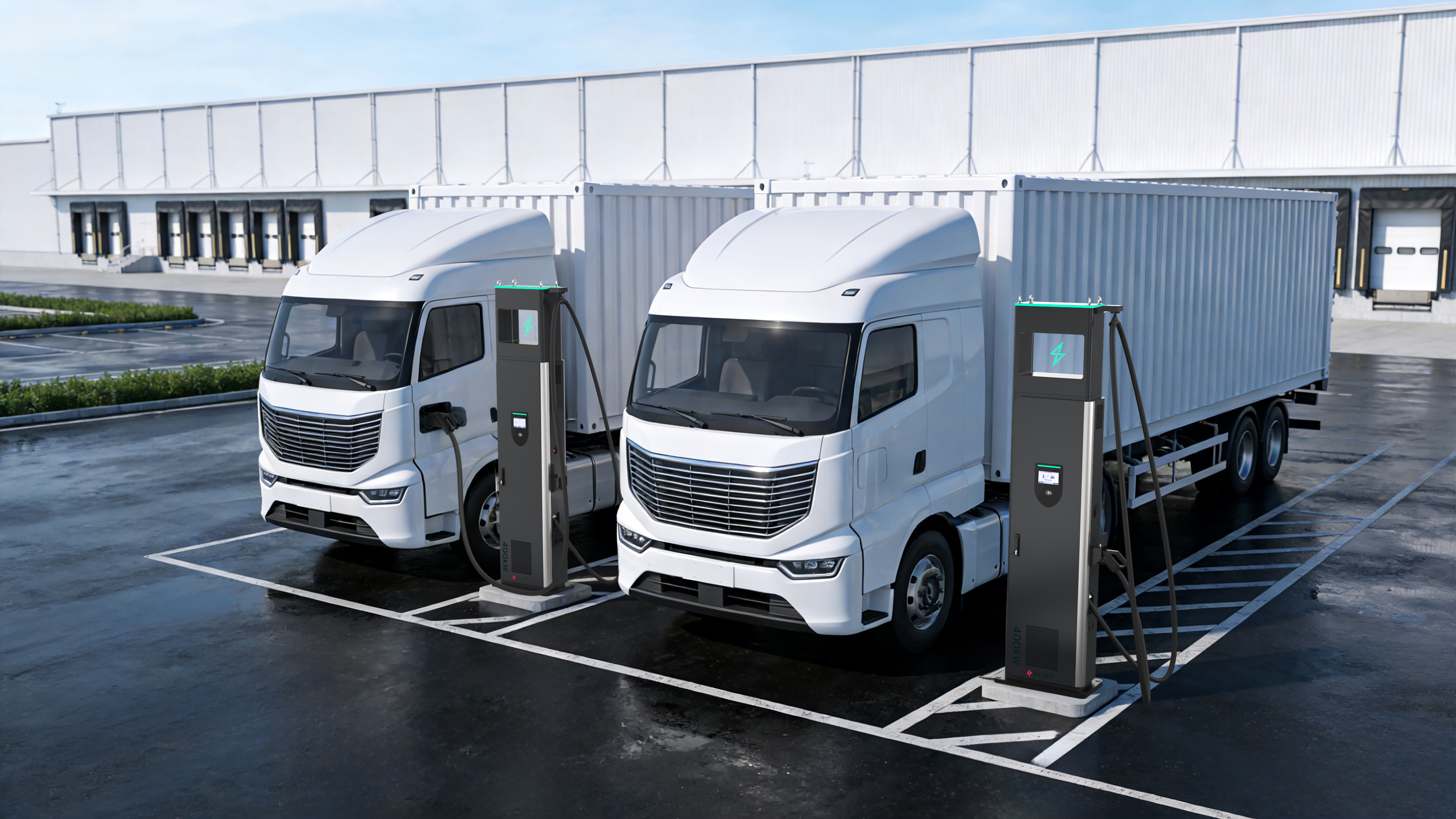
The “Impossible Trinity” of Heavy-Duty Electrification
Heavy-duty logistics currently faces a classic operational dilemma: high power demand, high utilization requirements, and grid interconnection bottlenecks.
First, heavy trucks possess massive battery capacities. Traditional slow charging cannot meet the turnover efficiency required by fleets, necessitating high-power supercharging. However, heavy-duty charging is not just power-intensive; it is also “cluster-oriented.” Fleets typically return to the depot in the evening, requiring dozens of vehicles to charge simultaneously. When using traditional integrated charging piles, operators are often forced to request exorbitantly expensive grid upgrades or “over-provision” transformer capacity to support this high-density charging, keeping infrastructure CAPEX persistently high.
Second, the variance in vehicle charging profiles is extreme. A heavy truck that has just completed a long-haul trip may have a high battery temperature with limited charging current, while another returning vehicle might be in a high-speed charging window. Traditional fixed power allocation turns every charging pile into a “silo.” Even if the adjacent bay is empty and power is available, the system cannot route it. This leads directly to low utilization rates across the charging site, not only slowing down fleet turnover but causing operational costs to leak away invisibly.
We need an architecture that can schedule energy on-demand—like “cloud computing”—rather than relying on simple physical accumulation.
From “Piles” to “Matrix”: A New Paradigm for Heavy-Duty Charging
In seeking a breakthrough, the Injet HanYuan Distributed Charging System (Injet HanYuan) provides a forward-looking perspective: reconstructing charging infrastructure from “hardware terminals” into a dynamic “Power Pool.”
For heavy-duty fleets, the value of this architecture lies in three core dimensions:
First, Full-Matrix Dynamic Routing. Under the Injet HanYuan architecture, charging piles are no longer standalone units but “output terminals” for the power pool. The system deconstructs total power into numerous 40kW Silicon Carbide (SiC) modules. As fleets return to the depot, the system aggregates power in milliseconds based on the real-time BMS (Battery Management System) demand of each truck. This means if a vehicle is in a fast-charging window, the system can instantly allocate more modules to support it. For a vehicle nearing full charge with tapering current, excess power is immediately “routed” to vehicles in urgent need. For logistics fleets where every minute counts, this dynamic scheduling means significantly shorter total clearing times.
Second, High-Density Management for Massive Capacities. The Injet HanYuan system supports a total power output of up to 1920kW. This ultra-high power density not only meets current supercharging demands but, more importantly, reserves capacity for the future. When handling large-scale commercial fleets, the Injet HanYuan Distributed Charging System (Injet HanYuan) not only supports multiple charging terminals operating at high power simultaneously but also utilizes centralized cabling to drastically reduce the complexity and cost of DC cable installation—a significant CAPEX reduction for logistics parks spanning thousands of square meters.
Third, Megawatt-Ready Architecture (MCS-Ready). The ultimate补能 (refueling) form for heavy-duty transport is the “Megawatt Charging System (MCS).” The greatest risk in today’s commercial vehicle charging market is “hardware myopia.” The hardware architecture of the Injet HanYuan Distributed Charging System (Injet HanYuan) is already prepared for a smooth transition to MCS. This means that when operators invest in the Injet HanYuan system today, they are not only solving current operational challenges but also paving the way for next-generation heavy-duty supercharging, avoiding sunk costs from future reconstruction.
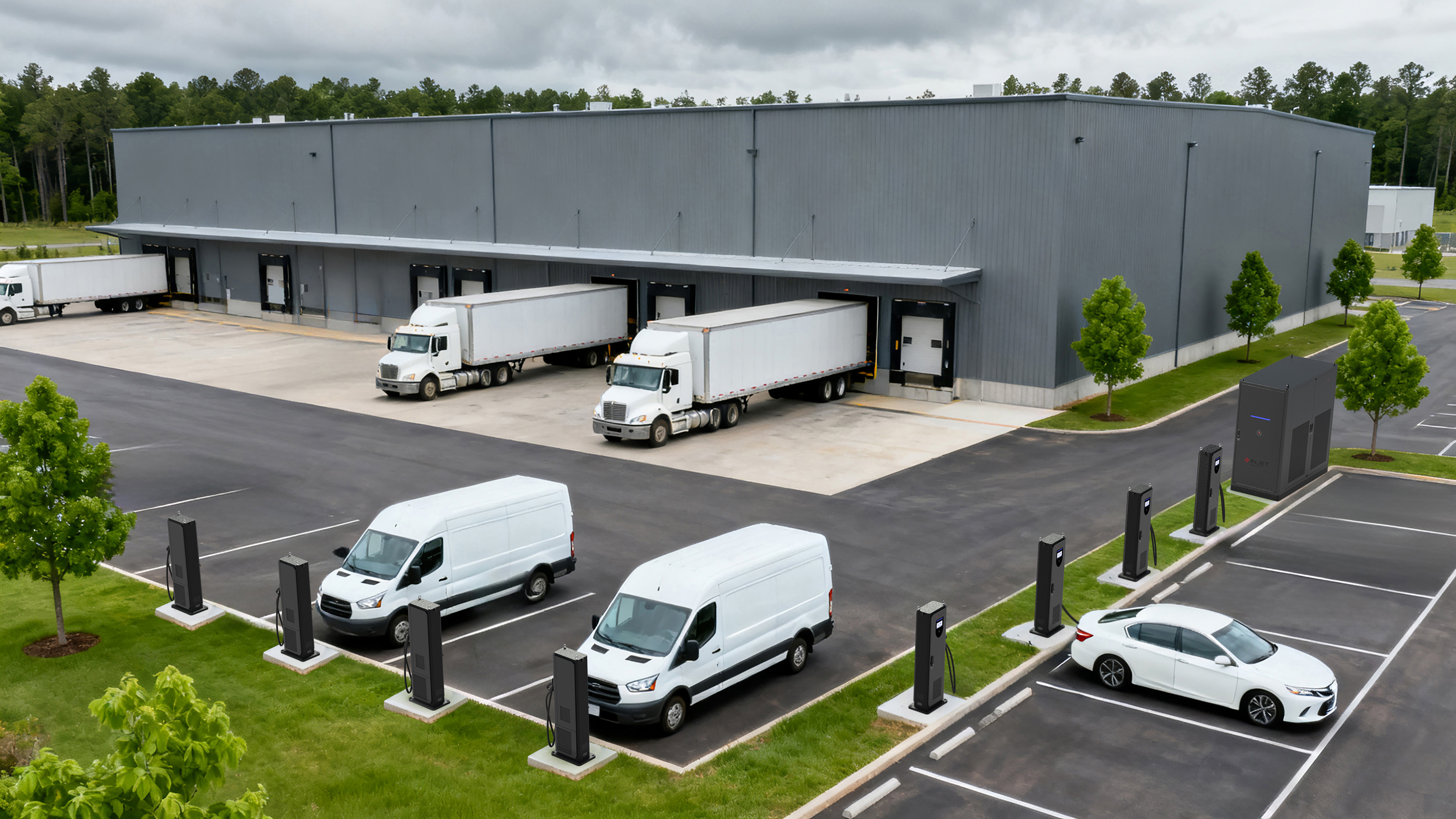
The Operator’s Bottom Line: More Than Just Charging
For logistics companies pursuing lean management, the Injet HanYuan Distributed Charging System (Injet HanYuan) brings more than just faster charging; it delivers a clear economic advantage.
The system’s cloud-based EMS (Energy Management System) combined with the high conversion efficiency of SiC modules (a 1.9% improvement) significantly reduces energy waste during high-frequency, heavy-duty operational cycles. Simultaneously, through peak-shaving and integration with solar-storage-charging microgrids, the Injet HanYuan system helps operators avoid grid peak hours, keeping energy costs within the optimal range.
In many heavy-duty logistics hubs across Europe, we are seeing this evolution from “piles” to “networks.” The Injet HanYuan Distributed Charging System (Injet HanYuan) transforms charging from a simple supply service into an integral part of logistics efficiency, enabling fleets to optimize their energy assets during the critical hours after returning to the depot.
Conclusion: Making Every Charge Efficient and Precise
The comprehensive electrification of heavy-duty transport will not happen overnight; it requires us to reconstruct infrastructure with deeper technological thinking.
As we have seen, the blind accumulation of charging power is not the solution. Precision, elasticity, and future-ready “matrix-style” scheduling are the keys to solving the energy anxiety of heavy-duty logistics. Standing at this intersection of the era, the Injet HanYuan Distributed Charging System (Injet HanYuan) uses modularization and intelligent scheduling to complete the most critical piece of the energy puzzle for logistics loops.
On the road to net-zero logistics, we need more power, but more importantly, we need smarter, more efficient energy flows—the kind delivered by the Injet HanYuan Distributed Charging System (Injet HanYuan).