


Over the past few years, we have seen a clear shift in how businesses approach EV charging infrastructure.
When EV adoption was still in its early stage, centralized charging hubs were the obvious choice. The logic was simple: install a large charging station in one strategic location, maximize power output, and serve as many vehicles as possible.
From our experience working with fleet operators, commercial developers, and distribution partners across multiple markets, that model is now reaching its practical limits.
As EV adoption accelerates across Europe, North America, and Asia-Pacific, we are increasingly seeing challenges around:
1.grid capacity
2.deployment cost
3.site scalability
4.long-term operational flexibility
This is exactly why the distributed charging system is becoming the preferred architecture for modern EV charging deployment.
In our view, this is no longer a future trend — it is already the direction many serious commercial buyers are taking.
What Is a Distributed Charging System?
When we talk about a distributed charging system, we are referring to a network of EV chargers deployed across multiple locations or across different areas within one site, all coordinated through a unified software and communication platform.
The key difference lies in the architecture.
A centralized system focuses charging capacity in one location.
A distributed charging system spreads charging points across multiple nodes while keeping them intelligently connected through a central management layer.
In practical deployment, this often means:
1. chargers distributed across several warehouse zones
2. multiple hotel properties connected to one management platform
3. retail stores operating as one unified charging network
4. residential parking structures with load-balanced chargers on multiple levels
From our industry experience, what truly defines a distributed charging system is not physical distance, but intelligent coordination.
The software layer is what allows multiple charging points to function as one optimized network.
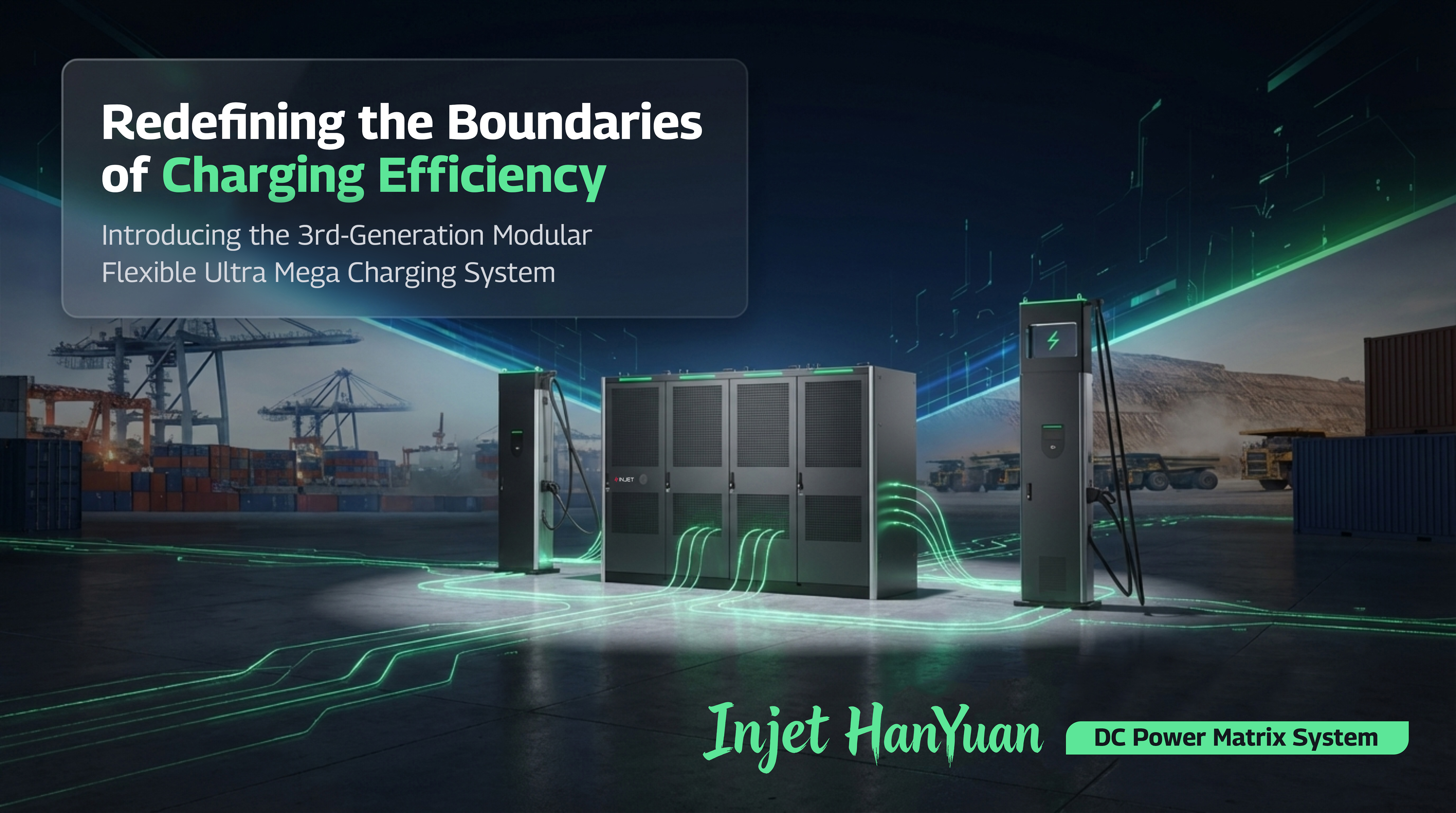
Why the Distributed Charging System Is Becoming the Industry Standard
1. Grid infrastructure is the biggest bottleneck
One of the most common challenges we encounter in commercial projects is grid upgrade cost.
A centralized high-power charging station often requires major electrical upgrades.
In many cases, these upgrades take 12 to 36 months and significantly increase CAPEX.
From a real deployment perspective, hardware is often not the biggest cost.
Grid upgrades, civil works, and installation frequently account for most of the total investment.
A distributed charging system helps solve this problem by spreading power demand across multiple connection points and using dynamic load balancing to stay within existing grid limits.
This dramatically reduces the cost and deployment timeline.
2. Fleet charging is about coverage, not only speed
When working with fleet customers, we consistently see one core requirement:
coverage.
Fleet operators need charging access across multiple touchpoints:
1. depots
2. logistics hubs
3. driver home charging
4. destination charging locations
This is why a distributed charging system aligns much better with real fleet operations than a single centralized charging station.
In our projects, customers are usually less focused on peak charging speed and more focused on questions like:
1. Can the system cover all our operational sites?
2. Can it integrate with fleet telematics?
3. Can we manage all chargers from one backend?
These are exactly the strengths of distributed architecture.
3. Commercial properties need scalable deployment
For commercial real estate, hospitality, and retail projects, EV charging is increasingly becoming a standard requirement.
Property developers rarely want to overinvest in one large installation upfront.
What they need is scalable infrastructure.
This is where a distributed charging system creates real business value.
For example, a site can begin with 10 to 20 AC chargers and gradually expand to 60 or 80 units as EV adoption grows.
This reduces investment risk and allows infrastructure expansion based on real usage data.
4. Energy management and future V2G applications
From an industry perspective, one of the most important long-term drivers is energy flexibility.
Regulatory trends increasingly favor systems that can participate in:
1. demand response
2. peak shaving
3. smart load control
4. future V2G and V2B applications
A distributed charging system naturally fits this model because charging load can be shifted across multiple nodes.
This turns EV charging infrastructure into a distributed energy asset rather than a simple charging station network.
What Makes a Distributed Charging System Actually Work?
Not every network of chargers can be considered a true distributed charging system.
From our practical deployment experience, several technical capabilities are essential.
Dynamic Load Balancing
This is the foundation.
Without dynamic load balancing, distributed deployment quickly runs into breaker trips, inefficient power allocation, and poor user experience.
Real-time intelligent power allocation is what makes the system commercially viable.
OCPP compliance
For multi-site deployment, OCPP 1.6 and OCPP 2.0.1 compliance is a non-negotiable requirement.
It ensures interoperability between hardware and backend software and prevents vendor lock-in.
This is especially important for system integrators and large commercial buyers.
Scalable backend platform
A distributed charging system requires strong backend architecture.
The ability to integrate with:
1. building management systems
2. payment systems
3. telematics
4. energy management platforms
is critical for long-term scalability.
What Buyers Should Evaluate Before Investing
From our perspective, buyers should always focus on these five questions:
- Does the system support genuine dynamic load balancing?
- Is it fully compliant with OCPP 1.6 / 2.0.1?
- Does it support remote diagnostics and OTA firmware updates?
- What is the actual grid requirement for the target site?
- What local after-sales and warranty support is available?
These questions often determine project success more than charger power rating alone.
Our Perspective at Injet
At Injet New Energy, we have been involved in EV charging hardware deployment for commercial and industrial applications for years.
From what we are seeing across global markets, the distributed charging system is no longer a conceptual trend.
It is already the preferred deployment model for:
1. fleet electrification
2. logistics parks
3. commercial real estate
4. retail networks
5. hospitality groups
Our AC and DC charging solutions are specifically designed for this deployment model, with:
1. OCPP 1.6 / 2.0.1 compliance
2. DLB-ready architecture
3. remote management
4. outdoor IP-rated durability
This is exactly the direction sophisticated buyers are already moving toward.
Frequently Asked Questions
What is a distributed charging system?
A distributed charging system is a network of EV chargers deployed across multiple locations or different zones within a site, all managed through a centralized software platform with intelligent coordination and load balancing.
Why is a distributed charging system better than a centralized charging station?
A distributed charging system reduces grid upgrade costs, improves scalability, and provides better coverage for fleets, commercial properties, and multi-site deployments compared to centralized charging stations.
Does a distributed charging system support dynamic load balancing?
Yes, dynamic load balancing is a core feature of distributed charging systems. It allows power to be allocated in real time based on charging demand and available grid capacity.
Is OCPP important for distributed charging systems?
Yes. OCPP 1.6 and OCPP 2.0.1 ensure interoperability between EV chargers and backend management platforms, which is essential for scalable and flexible deployment.
Where are distributed charging systems commonly used?
Distributed charging systems are widely used in fleet depots, logistics parks, commercial properties, hotels, retail chains, office buildings, and residential parking facilities.
Ready to Build Your Distributed Charging System?
Whether you are planning a fleet electrification project, a commercial property deployment, or a multi-site EV charging network, Injet New Energy provides scalable EV charging hardware and system-level solutions to support your project.
Contact Our Team